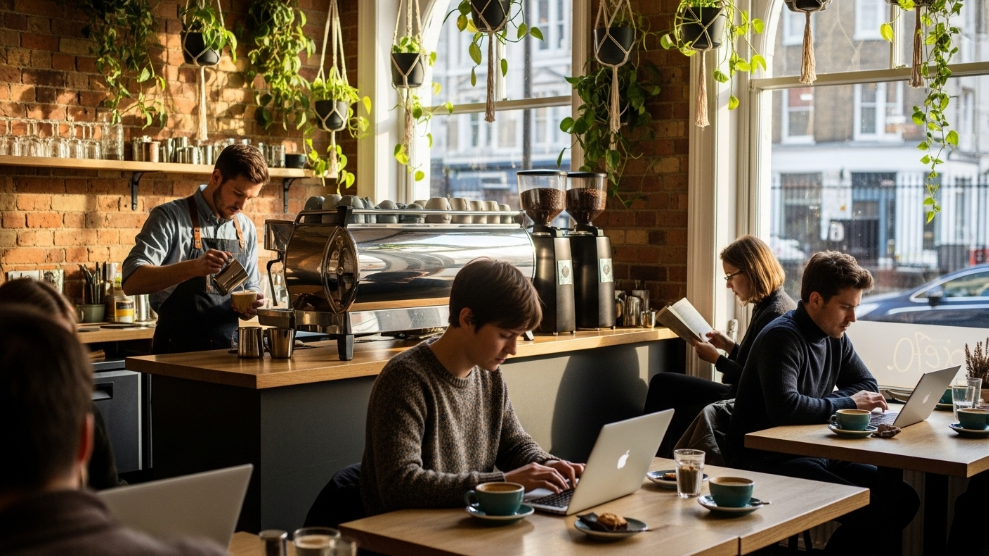
Britain has one of the most unexpected coffee stories in the world. For centuries a tea-drinking nation with a complicated relationship with coffee, the UK has in the space of roughly 25 years become one of the world’s most sophisticated specialty coffee markets. London is now cited alongside Melbourne, Tokyo, and Oslo as one of the global cities that has genuinely pushed what coffee can be.
This guide covers how that transformation happened, what makes British coffee culture distinct from Italian, Australian, or American coffee culture, the regional scenes across the UK, and the specific terms, drinks, and habits that define coffee in Britain today.
Table of Contents
A Brief History of Coffee in Britain
The Original Coffeehouse Era (1650s to 1850s)
Britain’s first coffeehouse opened in Oxford in 1651. By the 1660s, London had hundreds of coffeehouses, each functioning as a social and commercial meeting space. Lloyd’s of London began as a coffeehouse where marine merchants and insurers met. The London Stock Exchange grew from Jonathan’s Coffee-House. The concept of the newspaper was developed and distributed through coffeehouses.
This era makes Britain one of the earliest coffeehouse cultures in the world, predating many Continental European traditions. However, the dominance of coffeehouses began declining in the 18th century as tea, promoted by the East India Company, became the defining British hot beverage.
The Instant Coffee Era (1950s to 1990s)
By the mid-20th century, British coffee culture had largely collapsed into instant coffee. Nescafe and Maxwell House dominated British kitchens. Coffee was what you drank when you did not want tea, and the expectation of quality was minimal. The UK was a tea nation in every meaningful cultural sense.
The Starbucks and Second Wave (1998 to 2010)
Starbucks arrived in the UK in 1998, opening its first store in London. Costa Coffee, which began in London in 1971, expanded rapidly through the 2000s. This second wave introduced espresso-based drinks to a mass British audience and normalised the concept of paying several pounds for a coffee drink.
The flat white arrived in UK cafes around this time, introduced by Australian and New Zealand baristas who began opening specialty cafes in London. This was the beginning of something genuinely new.
The Specialty Revolution (2010 to Present)
From approximately 2010, a specialist coffee scene emerged rapidly in London, led by roasters and cafes that had no interest in competing with Starbucks. Square Mile Coffee Roasters, founded in 2008 by James Hoffmann and Anette Moldvaer, became a focal point. Workshop Coffee, Ozone, and Origin arrived. Hasbean in Stafford and Clumsy Goat in Lancashire brought specialty coffee to regions outside London.
By 2026, the UK has over 700 specialty roasters according to the World Coffee Portal. London alone has over 200. The UK specialty coffee market is one of the fastest-growing in Europe.
What Makes UK Coffee Culture Distinct
The Flat White as National Drink
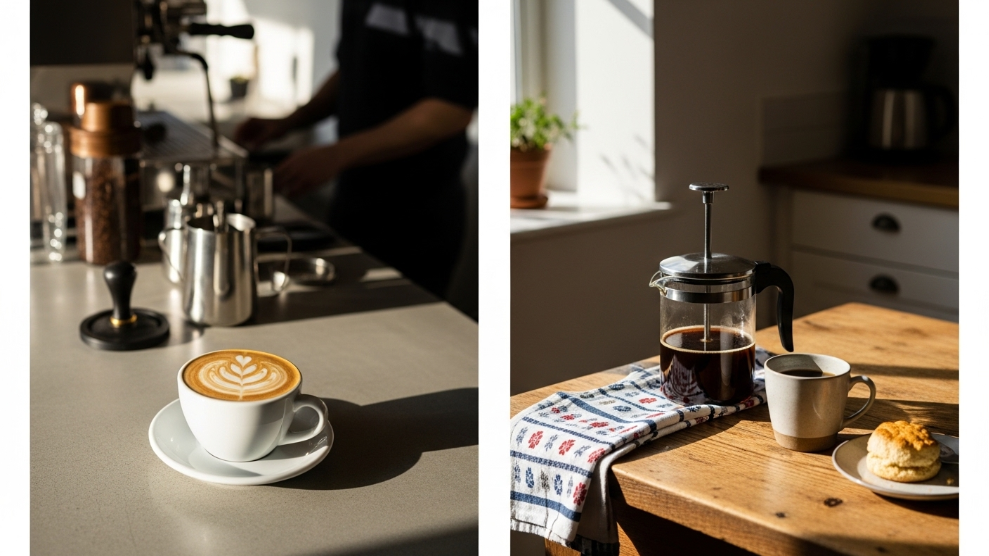
The flat white which originated in Australia and New Zealand has become the most culturally significant espresso drink in UK cafe culture. It arrived with the Australian and New Zealand baristas who opened London’s early specialty cafes in the 2000s and became the drink that signalled sophistication, quality, and knowledge.
The flat white is now on the menu of every UK coffee chain including Costa, Pret a Manger, and Greggs. Its presence on mainstream menus is a measure of how far British coffee culture has travelled.
For the full flat white guide: What Is a Flat White?
The Cafetiere at Home
While cafe culture is espresso-dominated, home coffee in Britain is overwhelmingly cafetiere-driven. The cafetiere (called a French press everywhere else) is the most common manual brewer in British homes. This is partly practical it is simple, produces multiple cups at once, and requires no equipment beyond a kettle and partly cultural. The cafetiere has been a British kitchen fixture since the 1970s.
Tea Heritage and Coffee Seriousness
Britain’s long tea culture has created an unusual characteristic in its coffee culture: British coffee drinkers who care about coffee tend to care quite seriously. The tea tradition meant that hot beverages were already taken seriously as a craft, with detailed attention to temperature, timing, and quality. When specialty coffee arrived, the cultural infrastructure for taking drinks seriously already existed.
Milk-Forward Preferences
British coffee culture is strongly milk-forward. Lattes, flat whites, and cappuccinos dominate UK cafe orders. Black coffee is growing but remains a smaller share than in some European countries. This milk preference explains why the flat white resonated so strongly it provides espresso quality with the comfort of milk.
UK Coffee Terms You Should Know
| UK term | What it means | International equivalent |
|---|---|---|
| Cafetiere | Plunger coffee brewer with metal mesh filter | French press (US, AU, Canada) |
| Flat white | Double ristretto with steamed microfoam milk, 150 to 180ml | Long black equivalent in AU/NZ (but with milk) |
| White coffee | Coffee with milk (any style) | Used colloquially, not a specific drink |
| Americano | Espresso diluted with hot water to 240ml | Standard in UK, US, Europe |
| Filter coffee | Any coffee brewed by gravity through a paper filter | Drip coffee (US) |
| Builder’s tea/coffee | Strong, dark, served hot with milk no-nonsense | UK colloquial only |
| Instant | Soluble coffee powder Nescafe, Maxwell House etc. | Standard across all markets |
Regional Coffee Scenes Across the UK
London
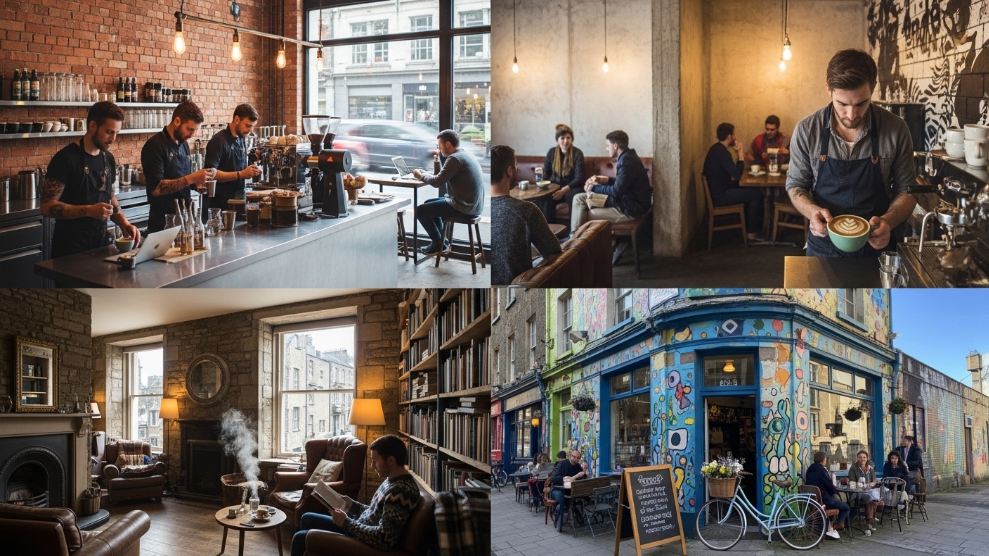
London has the UK’s highest concentration of specialty coffee roasters and cafes. Key neighbourhoods include Shoreditch and Hackney in East London (Dark Arts, Allpress, Climpson and Sons), Brixton and Bermondsey in South London, and Soho and Fitzrovia in central London (Monmouth at Borough Market and Covent Garden).
Square Mile Coffee Roasters is based in Walthamstow. Workshop Coffee has a flagship in Marylebone. Ozone Coffee operates from Shoreditch.
The best London roasters ship nationally via online subscription, meaning their quality is accessible to buyers across the UK without visiting London.
Manchester
Manchester has developed one of the UK’s strongest regional specialty scenes outside London. North Star Coffee, Dark Arts (which has a Manchester presence), and numerous independent cafes have created a genuine Northern specialty coffee culture.
Manchester’s coffee culture tends to be more accessible and less precious than some London specialty scenes quality-focused but community-oriented.
Edinburgh
Edinburgh’s compact city centre and high concentration of students and young professionals has created a strong specialty market. Cairngorm Coffee, Williams and Johnson, and several others have built an Edinburgh specialty scene with an identity distinct from London.
Bristol
Bristol’s independent business culture and food scene has produced a thriving specialty coffee community. Extract Coffee Roasters, based in Bristol, is one of the UK’s most respected B-Corp certified roasters and ships nationally.
Birmingham
Birmingham’s coffee scene has grown significantly since 2020, with independent specialty cafes establishing a presence in Digbeth and Harborne.
UK Coffee at Home vs Cafe
British coffee culture has a notably wider gap between home and cafe quality than some other countries. At home, the cafetiere and instant coffee remain dominant. In cafes, specialty espresso is increasingly the standard.
This gap is narrowing. Home espresso machine sales have grown significantly since 2018, driven primarily by Sage and Nespresso. Coffee subscriptions from UK specialty roasters (Pact, Clumsy Goat, Assembly, Square Mile) have grown from a niche product to a mainstream gifting and household category.
For improving home coffee quality: Best Espresso Machines 2026 and Best Coffee Subscriptions UK 2026
UK Coffee Industry Numbers (2026)
The World Coffee Portal’s 2025 Project Cafe UK report provides the most comprehensive industry data:
- The UK branded coffee shop sector turned over £5.2 billion in 2024
- Over 26,000 branded coffee outlets operate in the UK
- Costa Coffee is the largest chain with over 2,700 UK outlets
- The UK has over 700 specialty roasters as of 2024
- Specialty coffee’s share of the total UK coffee market is growing at approximately 6 to 8% annually
Frequently Asked Questions
Is UK coffee better than European coffee? Different, not better or worse. Italian espresso culture is older and has different standards. French cafe culture emphasises different things. The UK’s specialty coffee scene is genuinely world-class by 2026, particularly in London, and reflects British willingness to adopt and refine cultural imports in this case, Australian and New Zealand specialty espresso culture translated into British context.
Why do British people prefer milk in their coffee? Primarily cultural. Tea, the dominant British beverage, is typically served with milk. When espresso drinks arrived, the milk-based versions (lattes, flat whites, cappuccinos) mapped onto existing British comfort preferences for warm, milky hot drinks. The flat white specifically suits British taste: enough espresso character to feel distinct from tea, enough milk to feel comforting.
When did specialty coffee start in the UK? The current specialty coffee movement began in earnest around 2008 to 2010 in London, catalysed by Australian and New Zealand baristas opening the first wave of truly specialty-focused cafes and roasters. Square Mile (2008), Workshop Coffee (2010), and Ozone (London presence from 2012) were among the early anchors of the modern UK specialty scene.
Is instant coffee still popular in the UK? Yes, significantly so. Despite the specialty coffee growth, instant coffee remains the most commonly consumed coffee at home in the UK by volume. Nescafe is one of the most recognised brands in British households. Specialty coffee and instant coffee exist in parallel markets with different audiences.
Sources: World Coffee Portal Project Cafe UK 2025 / HighNote Roasters Best Specialty Coffee Roasters London 2026 / Balance Journal Best Coffee Roasters London 2026 / UNESCO History of Coffeehouses

Munir Ahmed is the founder of Coffee Craft Guide, dedicated to building the most thorough and honest coffee resource for home brewers worldwide. Combining SCA brewing standards with deep-dive research across global coffee communities (like r/espresso and Home-Barista) and thousands of verified reviews, Munir and his team deliver data-backed, expert coffee insights you can trust.