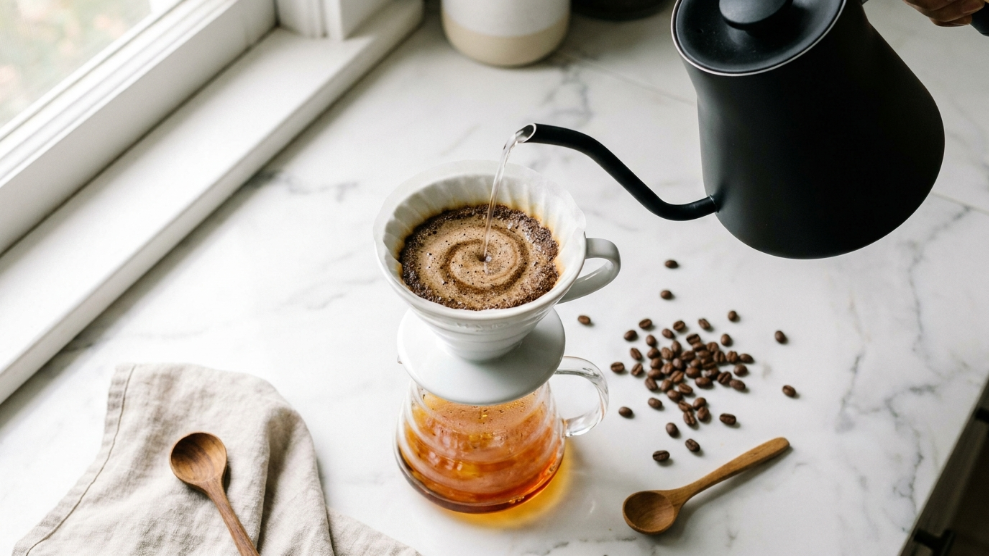
Pour-over coffee produces the clearest, most nuanced cup of any manual brewing method. When done well, it highlights flavours in specialty coffee that espresso concentrates into intensity and French press masks with sediment. Ethiopian Yirgacheffe poured through a V60 tastes different from any other brewing method, and for many specialty coffee drinkers, that difference is the entire point.
This guide covers everything you need to brew pour-over coffee at home, from the equipment to buy at every budget, to the step-by-step technique, to the most common mistakes that quietly ruin an otherwise good cup.
Table of Contents
How We Compiled This Guide
Our research process:
Community reference: Cross-referenced with guidance from the Specialty Coffee Association brewing protocols, the r/Coffee pour-over community with over 4.7 million members, and the r/V60 and r/pourover communities.
Product data: Equipment specifications sourced from manufacturer documentation and cross-referenced with verified purchaser reviews across Amazon US, Amazon UK, and Australian specialty retailers.
Technique verification: Step-by-step instructions are aligned with World Brewers Cup competition protocols, which represent the current peak of pour-over technique standardisation.
What Is Pour Over Coffee?
Pour-over is a manual brewing method where hot water is poured over coffee grounds held in a filter. Gravity pulls the water through the coffee and through the filter into a cup or carafe below.
The key distinction from other brew methods is control. Unlike a drip machine that automates the entire process, pour-over gives you direct control over the water temperature, pour speed, pour pattern, and bloom time. This control allows you to extract more specific compounds from the bean, producing a cleaner, brighter, and more complex cup than most automated methods.
Pour-over is not faster than other methods. A complete brew takes 3 to 4 minutes of active attention. It is the method for drinkers who consider the brewing process part of the coffee experience, not an inconvenience before it.
☕ Free Tools for This Guide
Getting the ratio right is the heart of great pour over. Use our Coffee to Water Ratio Calculator for exact grams, and check the Coffee Grind Size Chart for your grind. Free download: the Brewing Ratio Cheat Sheet (PDF).
Equipment You Need
The dripper
The dripper holds the filter and coffee grounds and determines how quickly water flows through. Three drippers dominate the market:
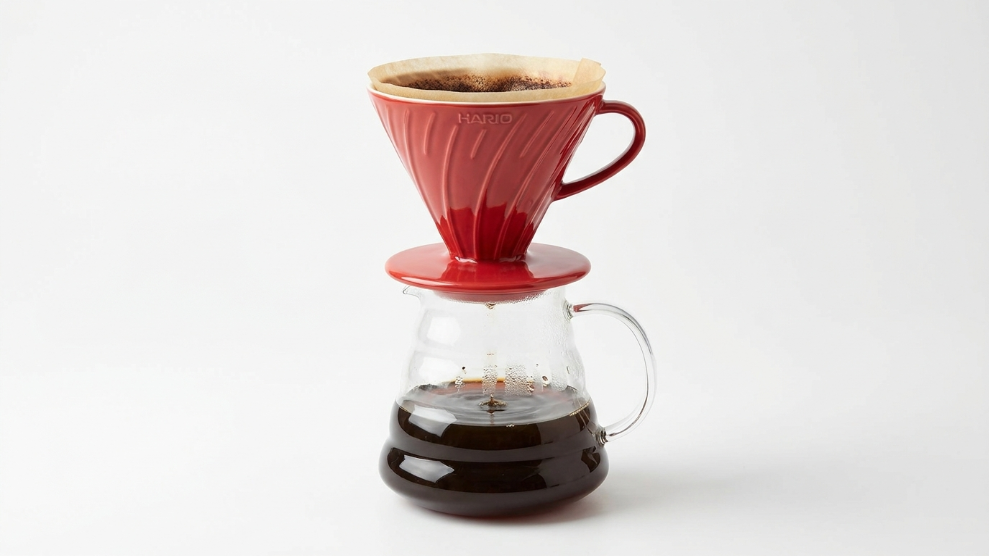
Hario V60 Most widely used globally
Check current price: Amazon US Hario V60 Ceramic Size 02 / Amazon US Hario V60 Ceramic Set with Filters / Amazon UK Hario V60 / Hario UK Official Store / Amazon AU Hario V60
Price: from $25 ceramic / $9 plastic (USA) | from £22 ceramic (UK) | from AU$35 ceramic
The V60 was released by Japanese glassware company Hario in 2005 and has become the most used dripper in specialty coffee globally. It is named for its V-shape and 60-degree angle. The spiral ribs on the interior wall and single large opening at the bottom allow fast drainage, which requires controlled pouring technique.
Available in ceramic (best heat retention), glass, plastic (most affordable and excellent for travel), and copper. Size 01 brews one cup, size 02 brews one to four cups. Size 02 is the standard recommendation.
Who it is for: Anyone who wants full control over their pour-over. The V60 is the most commonly used dripper in World Brewers Cup competition and specialty cafes globally.
Who should consider something else: Complete beginners who want a more forgiving first dripper. The Chemex below is more tolerant of pour technique errors.
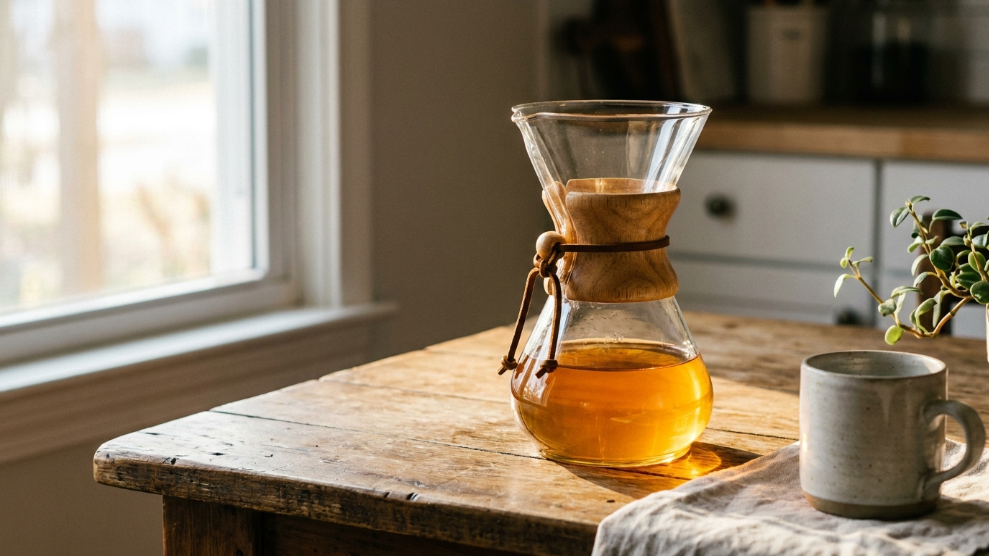
Chemex Most beginner-friendly
Check current price: Amazon US Chemex 6-Cup Classic / Amazon UK Chemex 6 Cup / Amazon AU Chemex
Price: from $45 (USA) | from £45 (UK) | from AU$70
The Chemex was designed in 1941 by chemist Peter Schlumbohm and its hourglass shape makes it one of the most visually distinctive coffee makers in any kitchen. It uses a proprietary thick paper filter that removes more oils and fine particles than the V60 filter, producing a cleaner, lighter-bodied cup.
The Chemex’s thick filter and slower drainage rate make it significantly more forgiving of pour technique inconsistencies. If you pour too fast or the spiral pattern is imperfect, the filter compensates by slowing the flow. This makes the Chemex the recommended starting point for pour-over beginners.
It also brews directly into the carafe, so you need one fewer piece of equipment than the V60, which requires a separate server.
Who it is for: Beginners, households brewing for two to four people at once, and anyone who values the visual aesthetic of the brewing process.
Who should consider something else: Buyers who want more flavour complexity and extraction control once technique improves. The V60 offers more nuance at the cost of higher technique demands.
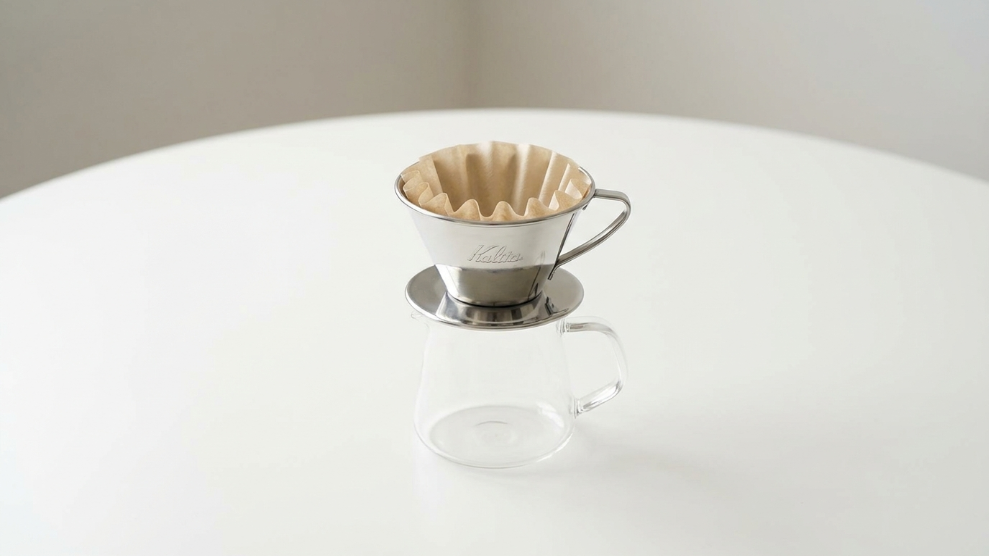
Kalita Wave Flat-bottom consistency
Check current price: Amazon US Kalita Wave 185 Stainless / Amazon UK Kalita Wave 185
Price: from $30 stainless (USA) | from £28 (UK)
The Kalita Wave uses a flat-bottom basket design with three small drainage holes rather than the single large bottom opening of the V60. This design produces more even extraction across all the coffee grounds because water distributes evenly over the flat bed rather than concentrating at the centre cone.
The Wave is considered the most consistent dripper for beginners who want specialty-level results because the flat-bottom extraction is more forgiving of uneven pouring. It does not reach the flavour complexity ceiling of a well-brewed V60, but for everyday consistent brewing it is highly regarded.
Note: The Kalita Wave uses proprietary wave-shaped filters. Do not substitute standard cone filters.
The gooseneck kettle: not optional
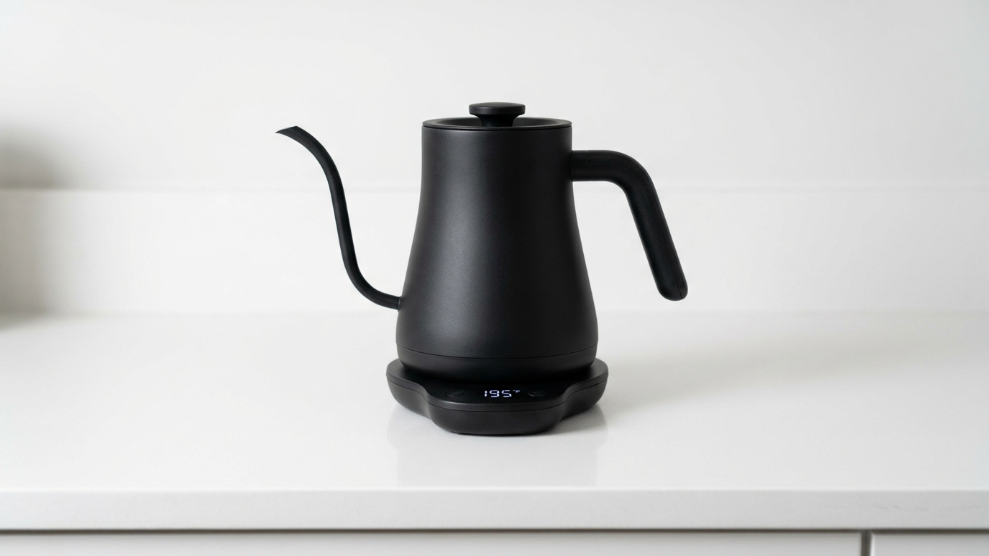
A standard kettle with a wide spout cannot produce the controlled, slow, circular pour that pour-over requires. A gooseneck kettle, with its long curved narrow spout, gives you precise control over exactly where the water lands and how fast it flows.
Without a gooseneck kettle, pour over coffee is genuinely harder to brew well. This is not optional equipment.
Fellow Stagg EKG Best gooseneck kettle
Check current price: Amazon US Fellow Stagg EKG Electric Gooseneck Kettle / Amazon UK Fellow Stagg EKG / Fellow Official Store
Price: from $165 (USA) | from £149 (UK) | from AU$249
The Fellow Stagg EKG is the most recommended electric gooseneck kettle in pour-over communities. It holds temperature to within one degree Celsius of your target, has a built-in brew stopwatch, and holds temperature for up to 60 minutes. The variable temperature dial covers 50 to 100 degrees Celsius.
Hario Buono Electric Best budget gooseneck kettle
Check current price: Amazon US Hario Buono Electric Gooseneck Kettle / Amazon UK Hario Buono Kettle
Price: from $60 (USA) | from £55 (UK)
The Hario Buono is Hario’s own gooseneck kettle and is the most iconic budget option. It does not have variable temperature control (boils to 100 degrees, then you wait for it to cool to your target temperature), but the pour control is excellent and it has been a staple of pour-over brewing for over a decade.
Scale with timer
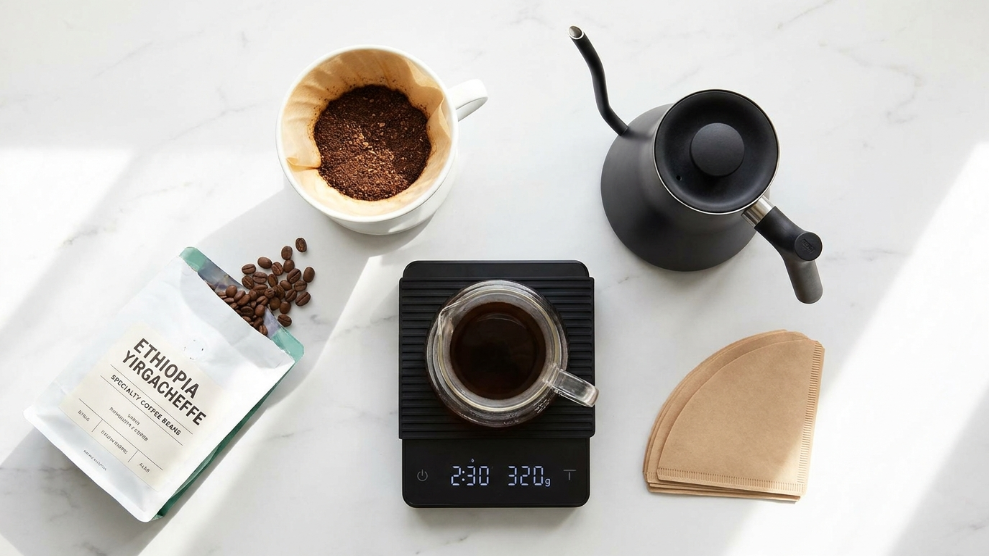
You cannot pour-over accurately without weighing your coffee and water. A kitchen scale that measures to one gram is the minimum. A scale with a built-in timer is better because it allows you to track brew time and pour speed simultaneously without a separate phone timer.
Recommended options:
- Timemore Black Mirror Scale: around $35 (USA), £30 (UK), AU$50
- Hario V60 Drip Scale: around $50 (USA), £45 (UK)
- Any kitchen scale measuring to 1 gram accuracy works as a starting point
The grinder
A quality burr grinder is more important to pour-over quality than which dripper you choose. Pre-ground coffee loses volatile aromatic compounds within 15 minutes of grinding and cannot be calibrated to the correct particle size for pour-over.
For pour-over, use a medium-fine grind setting. The Baratza Encore ESP at around $169, or the Timemore C3 Pro manual grinder at around $89, are the most commonly recommended starting points.
Full guide: Best Coffee Grinders 2026
For the exact grind size setting on your specific grinder: Coffee Grind Size Chart
The Pour-Over Ratio
The standard pour-over ratio is 1:16, meaning 1 gram of coffee for every 16 grams (millilitres) of water. For a 300ml cup, this means 19 grams of coffee.
Common starting ratios:
- 250ml cup: 16g coffee (1:16 ratio)
- 300ml cup: 19g coffee (1:16 ratio)
- 400ml Chemex 2-cup: 25g coffee (1:16 ratio)
- 700ml Chemex 4-cup: 44g coffee (1:16 ratio)
Adjust from there: if your cup tastes too weak, increase coffee by 1 to 2 grams. If too strong, reduce by 1 to 2 grams.
For an interactive calculator that adjusts for any amount: Coffee to Water Ratio Calculator
Step-by-Step Pour-Over Technique
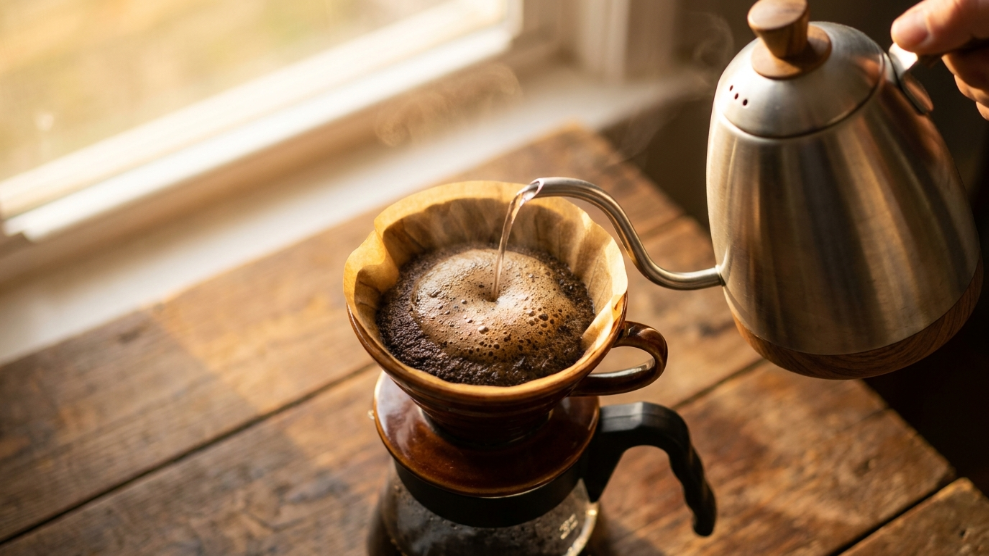
This guide uses the V60 as the reference dripper. Adapt timing slightly for Chemex (slower drainage) and Kalita Wave (similar to V60).
What you need:
- 300ml cup = 19g coffee, 300ml water at 94°C
- Gooseneck kettle
- Scale with timer
- Burr grinder set to medium-fine
- V60 size 02 with paper filter
- Server or mug
Step 1: Heat your water Heat water to 94°C (201°F). If using a standard kettle without temperature control, boil the water and let it sit for 30 to 45 seconds before pouring.
For lighter roasts, increase temperature slightly to 96°C to extract more compounds. For darker roasts, lower slightly to 90°C to reduce bitterness.
Step 2: Rinse the filter Place the paper filter in the V60 and pour hot water through it into your server or mug. This removes any papery taste from the filter and preheats your equipment. Discard the rinse water.
Step 3: Add coffee and tare the scale Add 19g of freshly ground coffee (medium-fine grind) to the filter. Shake the dripper gently to level the grounds. Place on the scale and tare to zero. Start your timer.
Step 4: The bloom pour (0:00 to 0:30) Pour approximately 40ml of water, which is roughly twice the weight of your coffee, directly onto the grounds in a slow circular motion covering all the coffee. This releases trapped carbon dioxide from freshly roasted beans (a process called blooming or pre-infusion). You will see the grounds bubble and expand.
Wait 30 seconds without pouring. This is the bloom phase. Beans roasted within the last two weeks bloom visibly. Very old beans barely bloom, which is one visual sign of staleness.
Step 5: First main pour (0:30 to 1:00) Pour slowly in a circular spiral from the centre outward, bringing the total water to approximately 150ml. Keep the pour steady and avoid pouring directly onto the filter paper.
Step 6: Second main pour (1:00 to 1:30) Continue pouring in spirals, bringing the total water to 250ml. Maintain a steady, slow pace. The bed of coffee should stay relatively flat, which indicates even extraction.
Step 7: Final pour (1:30 to 2:00) Complete the remaining water, bringing the total to 300ml. Pour the last 50ml in a slower, controlled spiral.
Step 8: Wait for drawdown Stop pouring and wait for all the water to drain through. The total time from first pour to last drip should be 3 to 3.5 minutes.
If it drains in under 2.5 minutes: grind finer next time. If it takes over 4 minutes: grind coarser next time.
Step 9: Serve Remove the dripper and discard the used filter and grounds. Swirl the server gently and pour into your cup.
Common Pour Over Mistakes
Mistake 1: Skipping the bloom The bloom releases carbon dioxide from fresh beans. Skipping it means CO2 escapes during extraction, creating an uneven brew. If your beans are very fresh (roasted within the last week), the bloom is especially important.
Mistake 2: Pouring too fast Fast pouring agitates the coffee bed unevenly and channels water through certain areas while bypassing others. Slow, deliberate spirals produce more even extraction.
Mistake 3: Grinding too coarse for pour-over Coarse grounds drain too fast and under-extract. The result is sour, thin, and harsh. Pour-over requires medium-fine grind, not the coarse setting used for French press.
Mistake 4: Using water that is too hot Very dark roasts extracted at 96°C can become harsh and bitter. For dark roasts, drop the temperature to 88 to 92°C. The commonly cited 94°C is a good universal starting point but is not a fixed rule.
Mistake 5: Not rinsing the filter Unrinsed paper filters add a papery taste that is most noticeable in lighter, more delicate single-origin coffees. This step takes 10 seconds and makes a consistent difference.
Pour Over Coffee in the UK
In the UK, pour-over has grown significantly in the specialty coffee scene, particularly in London, Manchester, Edinburgh, and Bristol. The V60 is the most used dripper in UK specialty cafes.
Hario UK operates a dedicated UK store at hario.co.uk, which stocks the full V60 range with UK-appropriate pricing, avoiding import costs from Japan or US retailers.
UK water note: Hard water, particularly in London and the South East, affects pour-over quality. Hard water reduces extraction efficiency and can make light roasts taste flat. A water filter jug such as a Brita can noticeably improve pour-over results in hard water areas by bringing mineral content to the recommended 150 ppm TDS (total dissolved solids).
UK buyers looking for specialty pour-over beans: Pact Coffee and Clumsy Goat both offer subscription options with single-origin beans suited to V60 brewing. See our Best Coffee Subscriptions UK guide.
Pour Over Coffee in Australia and New Zealand
Australia’s specialty coffee culture is primarily espresso-focused, but pour-over has strong roots in the specialty cafe scene in Melbourne’s CBD, Sydney’s Surry Hills, and Wellington’s inner city.
The V60 is the most used pour-over dripper in Australian and New Zealand specialty cafes. Ethiopian Yirgacheffe and Colombian single-origins are the most popular beans for V60 brewing in both countries.
Equipment availability: Hario products are available through Australian specialty retailers including Coffee Hit AU, Five Senses, and Campos Coffee equipment, as well as Amazon AU. In New Zealand, Hario is available through specialty coffee retailers in Auckland and Wellington and through TheMarket.co.nz.
Water: Most Australian capital cities have soft to moderate water, which is generally well-suited to pour-over brewing. Melbourne’s water quality is particularly noted by specialty coffee professionals.
For the right espresso equipment if you brew both pour-over and espresso: Best Espresso Machines Australia 2026
Frequently Asked Questions
Do I need a gooseneck kettle for pour-over coffee?
Yes, practically speaking. A standard kettle’s wide spout cannot produce the controlled, slow, circular pour that pour-over extraction requires. Pouring from a standard kettle produces an uneven, fast pour that agitates the coffee bed and leads to uneven extraction. A basic gooseneck kettle starts at around $25 to $30 (Timemore Fish Kettle) for stovetop options. The Hario Buono at $60 adds electric heating. The Fellow Stagg EKG at $165 adds precise temperature control. Any gooseneck improves results over a standard kettle.
What is the difference between V60 and Chemex?
The V60 is a cone dripper with a thin paper filter and fast drainage. It requires more precise pouring technique but produces a more nuanced, complex cup when done correctly. The Chemex uses a thick proprietary paper filter that removes more oils and produces a cleaner, lighter-bodied cup. The Chemex is more forgiving of pour technique errors, making it better for beginners. The V60 offers a higher ceiling for experienced brewers.
What grind size should I use for pour-over?
Medium-fine, which is roughly the texture of fine sand. On the Baratza Encore ESP, start at setting 13. On the Timemore C3 Pro manual grinder, start at 13 clicks. Adjust finer if the cup tastes sour or the water drains in under 2.5 minutes. Adjust coarser if the cup tastes bitter or drawdown takes over 4 minutes. Full reference: Coffee Grind Size Chart
How long should pour-over take?
Total brew time from first pour to last drip should be 3 to 3.5 minutes for a V60. Chemex typically runs 4 to 6 minutes due to the thicker filter. If your brew finishes significantly faster or slower, adjust your grind size first, then your pour speed.
Does pour-over have more or less caffeine than espresso?
Per cup, pour-over typically contains more caffeine than a single espresso shot because you are brewing more liquid. A 300ml pour-over contains approximately 100 to 150 mg of caffeine. A single 30ml espresso contains approximately 63 mg and a double contains approximately 125 mg. Per millilitre, espresso is more concentrated, but pour-over is consumed in larger volumes.
Can I use pre-ground coffee for pour-over?
Yes, but the results are significantly lower than freshly ground beans. Pre-ground coffee loses most of its aromatic compounds within 15 to 30 minutes of grinding. For pour-over specifically, which is designed to highlight delicate flavour nuances, pre-ground coffee defeats a large part of the purpose. If you do not have a grinder, choose a medium-fine pre-ground coffee and use it within one week of opening the bag.
Is pour-over better than French press?
It produces a different result rather than a simply better one. Pour-over produces a cleaner, brighter cup with more aromatic clarity. French press produces a fuller-bodied cup with more texture. Neither is objectively superior: they suit different preferences and different bean types. Single-origin light roasts are generally better in a V60. Full-bodied dark roasts often perform better in a French press.
Our Verdict
For most people starting their pour-over journey, the Hario V60 Ceramic Size 02 is the right starting dripper. It is affordable, durable, globally available, used by professionals worldwide, and widely supported by tutorials and community guidance.
Pair it with the Hario Buono kettle as a budget gooseneck option, or the Fellow Stagg EKG if you want temperature precision from day one.
Beginners who want a more forgiving first experience should start with the Chemex 6-cup before moving to the V60.
Check current price: Amazon US Hario V60 Ceramic Set / Amazon UK Hario V60 / Hario UK Official Store / Amazon AU Hario V60
Sources used for this article: Specialty Coffee Association Brewing Standards My Coffee Explorer Chemex vs V60 review 2026 Hario official r/Coffee pour-over guide and community recommendations.

Munir Ahmed is the founder of Coffee Craft Guide, dedicated to building the most thorough and honest coffee resource for home brewers worldwide. Combining SCA brewing standards with deep-dive research across global coffee communities (like r/espresso and Home-Barista) and thousands of verified reviews, Munir and his team deliver data-backed, expert coffee insights you can trust.