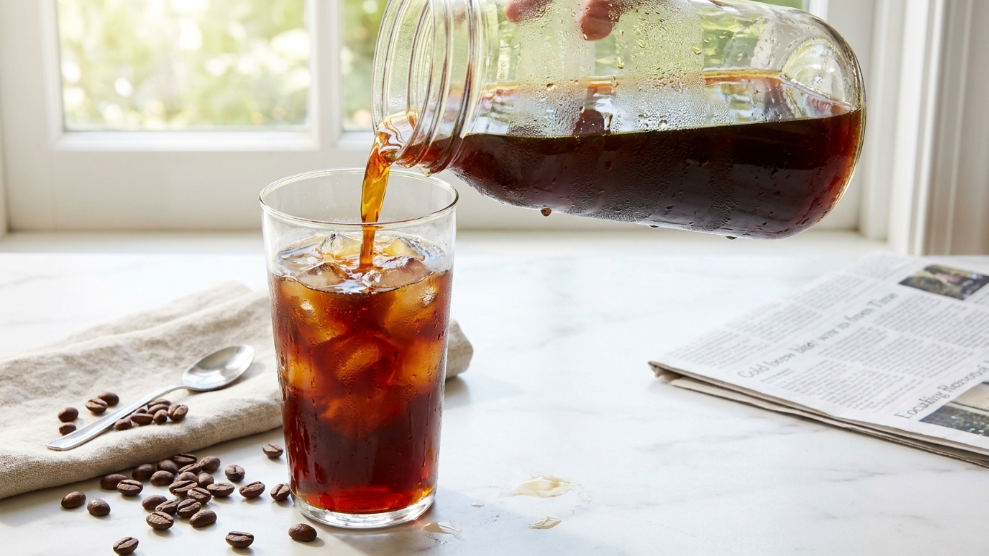
Cold brew coffee has moved from specialty cafe menus into everyday home brewing for a straightforward reason: it produces a smoother, sweeter, and less acidic cup than any hot brewing method, with almost no active effort required. You add coffee and cold water to a container, wait 12 to 24 hours, and the work is done.
This guide covers every aspect of cold brew coffee, from the science of why it tastes different to hot-brewed coffee, to the correct ratios for concentrate and ready-to-drink versions, to the best cold brew makers at every budget. It also covers the most important distinction that many guides miss: cold brew and iced coffee are not the same thing.
Table of Contents
How We Compiled This Guide
Our research process:
Product testing data: Equipment specifications and performance verified against buyer reviews across Amazon US, Amazon UK, and Australian specialty retailers, plus verified 2026 testing reports from Yahoo Life and Trade Coffee’s equipment comparison.
Technique sourcing: Step-by-step ratios and steep times aligned with Specialty Coffee Association cold brew protocols and r/Coffee community cold brew guidelines.
Pricing: All prices verified from official brand and retailer websites as of May 2026.

Cold Brew vs Iced Coffee: An Important Distinction
These two drinks are frequently confused and they are genuinely different products, brewed differently and tasting different.
Cold brew coffee is made by steeping coarsely ground coffee in cold or room-temperature water for 12 to 24 hours. No heat is used at any stage. The slow cold extraction produces a coffee that is sweeter, smoother, and significantly less acidic than hot-brewed coffee. Studies have found cold brew contains up to 67% less acid than hot-brewed coffee extracted from the same beans, which is the reason many people with acid sensitivity can drink cold brew without discomfort.
Iced coffee is hot-brewed coffee, made at double strength by halving the water, then poured directly over ice. The ice melts and dilutes the coffee to normal strength. It is faster to make than cold brew (minutes rather than hours) but retains the same acidity and flavour profile as hot coffee, just served cold.
For this guide, we focus entirely on cold brew made with the cold steep method.
Cold Brew Concentrate vs Ready-to-Drink
This is the second most important distinction in cold brew brewing, and it is the source of most beginner mistakes.
Cold brew concentrate uses a higher coffee-to-water ratio, typically 1:5 (1 gram of coffee per 5 grams of water). The result is a very strong, dense liquid that is not meant to be drunk straight. It is diluted 1:1 with water, milk, or plant-based milk before serving. This is what most commercial cold brew products (Wandering Bear, Stumptown, La Colombe concentrate) are: concentrate intended for dilution.
Ready-to-drink cold brew uses a lower ratio, typically 1:8 to 1:12 (1 gram of coffee per 8 to 12 grams of water). The result can be poured directly over ice and drunk without dilution. It has a lighter body and lower caffeine per serving than concentrate.
Most home cold brew makers are designed to produce concentrate. If you brew with a Toddy or OXO system and drink the result undiluted, it will be extremely strong, with very high caffeine, and many people mistakenly conclude that cold brew is always overwhelming. Dilute concentrate 1:1 before drinking.
For the exact ratio to use with any amount of coffee or water: Coffee to Water Ratio Calculator
Best Cold Brew Coffee Makers 2026
Hario Mizudashi Best for everyday home brewing

Price: $29.50 USA / £28 UK / AU$45
Check current price: Amazon US Hario Mizudashi Cold Brew Coffee Maker 1000ml Black / Amazon UK Hario Mizudashi Cold Brew Pot / Hario UK Official Store / Amazon AU Hario Mizudashi
The Hario Mizudashi is the most purchased home cold brew maker globally, and for good reason. It is a simple, elegant borosilicate glass pitcher with a built-in fine mesh filter basket. Add ground coffee to the basket, pour cold water over it, place in the fridge, and come back in 8 to 24 hours. Pour directly from the slender spout.
Unlike concentrate systems such as the Toddy and OXO, the Mizudashi produces a ready-to-drink cold brew at standard strength rather than concentrate. This makes it the simplest system for beginners because there is no dilution step required.
Key specifications:
- Capacity: 1000ml (5 cups), brewed volume 1000ml
- Material: Hario borosilicate glass, made in Japan
- Filter: Removable fine mesh basket, reusable, no disposable filters needed
- Dimensions: 138 x 94 x 294mm, fits in most standard fridge doors
- Available in black, red, and clear
What buyers say:
The Mizudashi consistently receives praise for how little space it takes in the fridge, the quality of the glass, and the ease of the entire process. The most common criticism is that the mesh filter, while functional, allows some very fine particles through if you grind too fine, producing slight sediment.
Who it is for: Anyone who wants the simplest possible cold brew setup at a low price. The Mizudashi is ideal for one to two person households who brew 1 litre of cold brew every few days.
Who should consider something else: Households brewing large volumes daily, or buyers who want to produce concentrate for diluting. The Toddy or OXO systems below are better suited to those needs.
Toddy Cold Brew System Best for concentrate production

Price: from $34.97 USA / £35 UK
Check current price: Amazon US Toddy Cold Brew System / Amazon UK Toddy Cold Brew / Toddy Official Website
The Toddy is the original home cold brew system, in production since 1964. It is an immersion brewer: ground coffee and water steep together in a plastic bucket, then drain through a felt filter into a glass decanter below. The system produces a smooth, clean concentrate with the felt filter removing essentially all fine particles.
Toddy’s own data indicates cold brew made with their system contains up to 67% less acid than hot-brewed coffee from the same beans, making it particularly well-regarded among drinkers with acid sensitivity.
The concentrate stays fresh in the fridge for up to two weeks, which makes the Toddy efficient for households that want to brew once and drink over multiple days.
Key specifications:
- Capacity: brewing container holds enough for approximately 1.4 litres of concentrate
- Filter: disposable felt filters (2 included, replacements available) or reusable cloth filters
- Glass decanter included with lid
- Steep time: 12 to 24 hours
What buyers say:
The most consistent praise is for the smoothness of the resulting cold brew, which multiple reviewers describe as the closest home result to commercial cold brew. The most common criticism is the cleanup process, which involves removing the soggy felt filter full of spent grounds, which some buyers find messy.
Important note: The Toddy produces concentrate, not ready-to-drink cold brew. Dilute 1:1 with water, milk, or plant milk before drinking.
Who it is for: Buyers who want concentrate for diluting, those with acid sensitivity who have been specifically recommended the Toddy, and anyone who wants to produce a larger batch that stores for two weeks.
OXO Good Grips Cold Brew Coffee Maker Easiest cleanup

Price: $59.99 full size USA / $39.99 compact USA / £45 to £55 UK
Check current price: Amazon US OXO Good Grips Cold Brew Coffee Maker / Amazon UK OXO Cold Brew Maker / OXO Official Website
The OXO Cold Brew system is a bucket-style immersion brewer with a stainless steel mesh filter, no disposable filters required. The key feature is the rainmaker lid that distributes water evenly over the grounds when filling, and the perforated bottom that drains cleanly into the included glass carafe when you flip a switch.
A 2026 verified test found the OXO produced approximately 28 ounces of strong concentrate from one batch, similar in strength to the Toddy system. The decanter is smaller than the Toddy setup but the OXO takes up more counter space during brewing.
The OXO Compact version at $39.99 is a smaller version of the same system with a 24-ounce concentrate yield and cork and rubber lid. It is the better option for smaller households or limited fridge space.
Who it is for: Buyers who prioritise easy cleanup, no disposable filters, and a cleaner draining mechanism than the Toddy’s rubber stopper system.
Who should consider something else: Buyers with limited counter or fridge space may find the standard OXO system bulky. The Hario Mizudashi or OXO Compact are more fridge-friendly.
Mason Jar Method No equipment needed
For buyers who want to try cold brew before investing in a dedicated maker, a standard one-litre mason jar and a standard coffee filter or fine mesh strainer is all that is required. The brewing process and result are the same as any immersion system.
What you need:
- One-litre mason jar with lid
- 80g coarsely ground coffee
- 640ml cold filtered water (1:8 ratio for ready-to-drink)
- Standard paper coffee filter or fine mesh strainer for filtering after steep
This produces the same cold brew as any dedicated system. The only disadvantage is the manual filtering step, which takes a few minutes and can produce some sediment if the paper filter tears.
The Complete Cold Brew Recipe: Step by Step
This recipe uses the standard method applicable to any system. Quantities use a 1:8 ratio (ready-to-drink) and a 1:5 ratio (concentrate) for comparison.

Recipe 1: Ready-to-Drink Cold Brew (1:8 ratio)
Makes 640ml of finished cold brew.
Ingredients:
- 80g coarsely ground coffee
- 640ml cold filtered water
Step 1: Grind 80g of coffee on a coarse setting, similar to French press. On the Baratza Encore ESP, use settings 30 to 35. On the Timemore C3 Pro, use 30 to 35 clicks.
Step 2: Add ground coffee to your cold brew maker or mason jar.
Step 3: Pour 640ml of cold filtered water slowly over the grounds, ensuring all grounds are saturated. Stir gently once to ensure even saturation.
Step 4: Cover and place in the fridge.
Step 5: Steep for 12 to 24 hours. Twelve hours produces a lighter, more delicate cup. Twenty-four hours produces a richer, more full-bodied result. Start with 18 hours and adjust from there.
Step 6: Filter the coffee by draining through your maker’s filter, or through a paper filter if using the mason jar method.
Step 7: Pour over ice and serve. No dilution needed at the 1:8 ratio.
Shelf life: Keeps in the fridge in a sealed container for 7 to 10 days.
Recipe 2: Cold Brew Concentrate (1:5 ratio)
Makes approximately 500ml of concentrate, which dilutes to approximately 1 litre of ready-to-drink cold brew.
Ingredients:
- 100g coarsely ground coffee
- 500ml cold filtered water
Follow the same steps as Recipe 1. After steeping and filtering, dilute the concentrate 1:1 with cold water, milk, or plant-based milk before drinking. Do not drink the concentrate undiluted unless you specifically want an extremely strong, high-caffeine coffee.
Shelf life: Cold brew concentrate keeps for up to 2 weeks refrigerated.
For caffeine content of your cold brew at different ratios: Daily Caffeine Calculator
☕ Free Tools for This Guide
Planning a batch? Our Cold Brew Calculator gives exact coffee, water, dilution and a ready-by time. Free download: the Brewing Ratio Cheat Sheet (PDF).
Cold Brew Ratio Quick Reference
| Style | Coffee | Water | Result |
|---|---|---|---|
| Ready-to-drink light | 60g | 720ml | 1:12 light body, mild |
| Ready-to-drink standard | 80g | 640ml | 1:8 smooth, medium body |
| Concentrate standard | 100g | 500ml | 1:5 dilute 1:1 before drinking |
| Concentrate strong | 120g | 360ml | 1:3 very intense, dilute 2:1 |
For interactive ratio calculation by any amount: Coffee to Water Ratio Calculator
Best Coffee Beans for Cold Brew
Cold brew amplifies sweetness and suppresses acidity and bitterness, which means the characteristics that perform well in cold brew differ from those suited to espresso or pour-over.
Roast level: Medium to dark roasts perform best in cold brew. Light roasts can produce flat, thin cold brew because cold water does not extract the delicate aromatic compounds that are the main attraction of light roast beans. Medium-dark roasts produce a chocolate, caramel, and nutty profile in cold brew that many drinkers find ideal.
Origin: Brazilian, Colombian, and Guatemalan beans are widely considered the best origins for cold brew due to their naturally chocolatey and nutty flavour profiles. Ethiopian light roasts, which shine in pour-over, are less suited to cold brew.
Specialty brands suited to cold brew:
- Volcanica Coffee their Brazilian and Colombian options are well suited to cold brew at a 1:8 ratio
- Bulletproof Coffee specifically markets some of their medium roasts as cold brew-friendly
- For subscription options that include cold brew-suited beans: Best Coffee Subscriptions 2026
Steep Time Guide
| Steep Time | Temperature | Result |
|---|---|---|
| 8 hours | Fridge (4°C) | Light, delicate, some sourness |
| 12 hours | Fridge (4°C) | Smooth, moderate body, good for light palates |
| 18 hours | Fridge (4°C) | Rich, balanced, most recommended starting point |
| 24 hours | Fridge (4°C) | Full body, deep flavour, higher caffeine |
| Over 24 hours | Fridge (4°C) | Diminishing returns, risk of over-extraction bitterness |
| 12 to 16 hours | Room temperature | Faster extraction, nuttier profile, higher bacteria risk |
Room temperature brewing is faster but the higher ambient temperature increases the rate of bacterial growth in the grounds. The fridge method is safer and produces a cleaner result. If you brew at room temperature, strain immediately at 12 to 16 hours and refrigerate promptly.
Cold Brew in the UK
Cold brew coffee has grown substantially in UK specialty cafes over the past five years. In London particularly, nitro cold brew on tap has become a standard offering in third-wave cafes.
UK considerations for home cold brew:
Water quality matters more for cold brew than most buyers expect. Hard water, which affects most of England, reduces extraction in cold water even more than it does in hot brewing. Filtering water through a Brita or similar before using in cold brew noticeably improves the result in hard water areas, producing a cleaner, sweeter cup.
The Hario Mizudashi is available directly from Hario UK with UK pricing and warranty. This avoids import costs from US or Japanese retailers and ensures UK-appropriate electrical and product specifications.
For the best UK coffee subscriptions with beans suited to cold brew: Best Coffee Subscriptions UK
Cold Brew in Australia and New Zealand
Cold brew has become a standard summer drink in Australia and New Zealand, where the hot climate creates strong demand for cold coffee from October through March in both countries.
Major Australian cafes, particularly in Sydney, Melbourne, and Brisbane, have served cold brew since around 2014. Canned and bottled cold brew is now stocked in major supermarkets in both countries, including Woolworths, Coles, and Countdown NZ.
For home brewing in Australia and New Zealand:
The Hario Mizudashi is the most widely available cold brew maker in both countries, stocked through specialty coffee retailers in Melbourne and Sydney, Briscoes in New Zealand, and Amazon AU.
Summer cold brew tip for AU and NZ: Oat milk cold brew lattes have become one of the most popular summer drinks in Australian cafes. Use cold brew concentrate at 1:5 ratio, dilute 1:1 with Oatly Barista Edition or Minor Figures oat milk for a ready-to-drink cold latte without any heat or steaming.
Common Cold Brew Mistakes
Mistake 1: Grinding too fine Fine grounds in cold water over-extract even at cold temperatures, producing a bitter, murky, sediment-heavy result. Cold brew requires a coarse grind, similar to French press. On the Baratza Encore ESP, use settings 30 to 38. On the Timemore C3 Pro, use 30 to 38 clicks.
For a full grind size guide: Coffee Grind Size Chart
Mistake 2: Drinking concentrate undiluted Cold brew concentrate at a 1:5 ratio is not meant to be consumed straight. It contains very high caffeine, often 200 mg or more per serving. Always dilute concentrate 1:1 before drinking.
Mistake 3: Brewing at room temperature and forgetting about it Room temperature brewing is faster but also accelerates bacterial growth. If you brew at room temperature, set a timer for 12 to 16 hours and strain immediately when it is done. Do not leave it on the counter and forget.
Mistake 4: Using dark roast beans and wondering why it tastes bitter Very dark roasts can over-extract even in cold water, producing bitterness. Medium-dark is the sweet spot for cold brew. True dark or French roast beans are generally not recommended for cold brew.
Mistake 5: Steeping in tap water with high chlorine Tap water in many cities contains chlorine that is detectable in the finished cold brew. Using filtered water costs almost nothing and produces a noticeably cleaner, sweeter result.
Frequently Asked Questions
How long should I steep cold brew coffee?
The recommended starting point is 18 hours in the fridge. This produces a rich, balanced result for most beans and most ratios. If you prefer a lighter cup, reduce to 12 hours. For a stronger, more full-bodied result, go to 24 hours. Steeping beyond 24 hours offers diminishing returns and risks bitterness from over-extraction.
What is the difference between cold brew and iced coffee?
Cold brew is made by steeping coffee in cold water for 12 to 24 hours with no heat at any stage. Iced coffee is hot-brewed coffee poured over ice. Cold brew is smoother, sweeter, and less acidic than iced coffee. Iced coffee is faster to make. They taste distinctly different despite both being served cold.
How much caffeine is in cold brew coffee?
Cold brew concentrate at a 1:5 ratio contains approximately 200 mg of caffeine per 240ml serving. Ready-to-drink cold brew at a 1:8 ratio contains approximately 155 to 165 mg per 240ml serving. Both are higher per volume than standard drip coffee at 95 mg per 240ml, because the longer steep time extracts more caffeine. Use our Daily Caffeine Calculator to track your intake.
Can I make cold brew without a special maker?
Yes. A mason jar, coarsely ground coffee, cold water, and a paper coffee filter for straining is all you need. The brewing process and result are identical to a dedicated cold brew maker. A dedicated maker adds convenience, cleaner filtering, and in the case of the Hario Mizudashi, a fridge-friendly design, but is not required to produce good cold brew.
Does cold brew go bad?
Ready-to-drink cold brew keeps for 7 to 10 days refrigerated in a sealed container. Cold brew concentrate keeps for up to 2 weeks refrigerated. Signs that cold brew has gone bad include off-smells, visible mould, or a noticeably sour or rancid taste. Always brew with clean equipment and refrigerate promptly after straining.
Is cold brew better for people with acid reflux?
Cold brew consistently tests as significantly less acidic than hot-brewed coffee from the same beans, with some studies showing up to 67% less total acid. Many people with acid sensitivity report that they can drink cold brew comfortably when hot coffee causes discomfort. It is not a medical recommendation, but the lower acidity is a well-documented characteristic of the cold brew process. For the lowest-acid coffee beans, see our Lifeboost Coffee Review.
What grind size should I use for cold brew?
Coarse, similar to French press. On the Baratza Encore ESP, use settings 30 to 38. On the Timemore C3 Pro, use 30 to 38 clicks. On the Breville or Sage Smart Grinder Pro, use settings 48 to 58. Using medium or fine grounds in cold brew produces excessive sediment and can cause over-extraction bitterness even in cold water. See the full guide: Coffee Grind Size Chart
Our Verdict
For most home cold brew brewers, the Hario Mizudashi at $29.50 is the right starting point. It is simple, elegant, produces ready-to-drink cold brew without a dilution step, requires no disposable filters, and fits in a standard fridge door. Hario’s borosilicate glass quality is reliably high.
For households who want to produce larger batches of concentrate that last two weeks, the Toddy Cold Brew System is the established choice with a 60-year track record and excellent concentrate quality.
For buyers who prioritise easy cleanup with no disposable filters, the OXO Good Grips Cold Brew Maker is the cleaner alternative to the Toddy.
Check current price: Amazon US Hario Mizudashi 1000ml / Amazon UK Hario Mizudashi / Hario UK Official Store / Amazon AU Hario Mizudashi / Amazon US Toddy Cold Brew System / Amazon US OXO Cold Brew Maker
Sources used for this article: Specialty Coffee Association Brewing Standards / Yahoo Life cold brew maker testing 2026 / Trade Coffee cold brew / Hario official / Toddy cold brew official website / r/Coffee

Munir Ahmed is the founder of Coffee Craft Guide, dedicated to building the most thorough and honest coffee resource for home brewers worldwide. Combining SCA brewing standards with deep-dive research across global coffee communities (like r/espresso and Home-Barista) and thousands of verified reviews, Munir and his team deliver data-backed, expert coffee insights you can trust.