Sour espresso is the most common problem home baristas encounter and it has one root cause in almost every case: under-extraction. Understanding what under-extraction is, why it happens, and which specific variable in your setup is causing it turns this from a frustrating mystery into a solvable problem.
This guide covers the seven most common causes of sour espresso in order from most likely to least likely, with the exact fix for each one. If you work through this list systematically, you will have identified and fixed the problem before you reach the end.
Table of Contents
What Under-Extraction Actually Means
When you pull an espresso shot, hot water at 9 bars of pressure passes through a bed of finely ground coffee. This pressure and heat cause the water to dissolve compounds from the coffee grounds. These compounds include acids, sugars, bitter compounds, aromatic oils, and other molecules.
The Specialty Coffee Association defines optimal espresso extraction as occurring between 18% and 22% extraction yield, meaning 18 to 22 grams of dissolved material per 100 grams of coffee used.
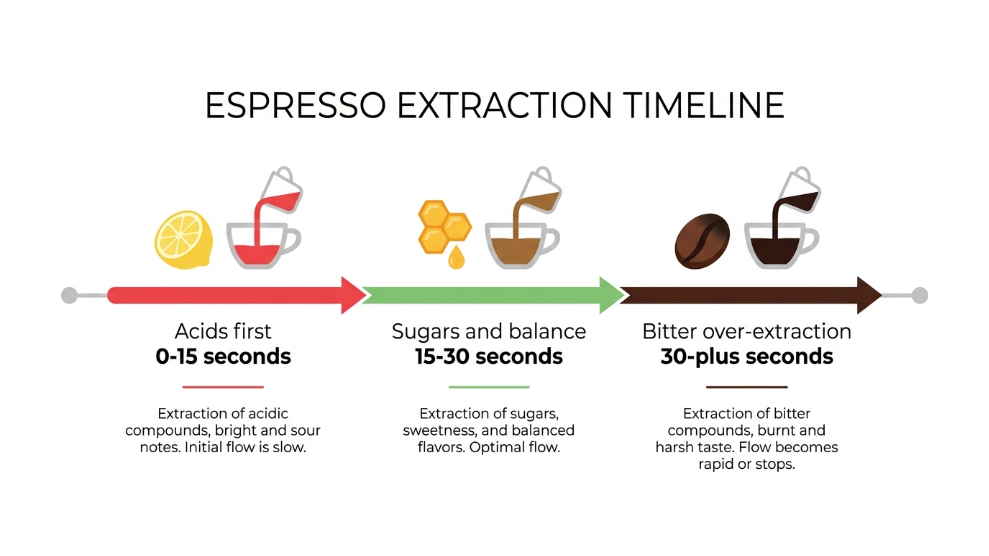
Under-extraction means the water moved through the grounds too quickly and dissolved too little. The shot pulled less than 18% of the available compounds. The problem is which compounds extract first: acids extract quickly in the early part of a shot, while sugars and heavier flavour compounds take longer. A shot that ends too early collects mostly acids and almost none of the sweetness and body that balance them.
The result is sour, sharp, thin, and often harsh espresso.
The good news: every cause of under-extraction is fixable by adjusting one variable.
How to Diagnose Sour Espresso Before Adjusting Anything
Before changing any variable, pull one shot and record three things:
Shot time: Start the timer when the pump starts and stop it when the pump stops. Target: 25 to 30 seconds for a standard double shot (18g coffee yielding 36g espresso).
If your shot ran in under 20 seconds: under-extraction is the confirmed issue. The water moved too fast. If your shot ran in 25 to 30 seconds and still tastes sour: the problem is likely grind size, dose, or water temperature rather than extraction time alone.
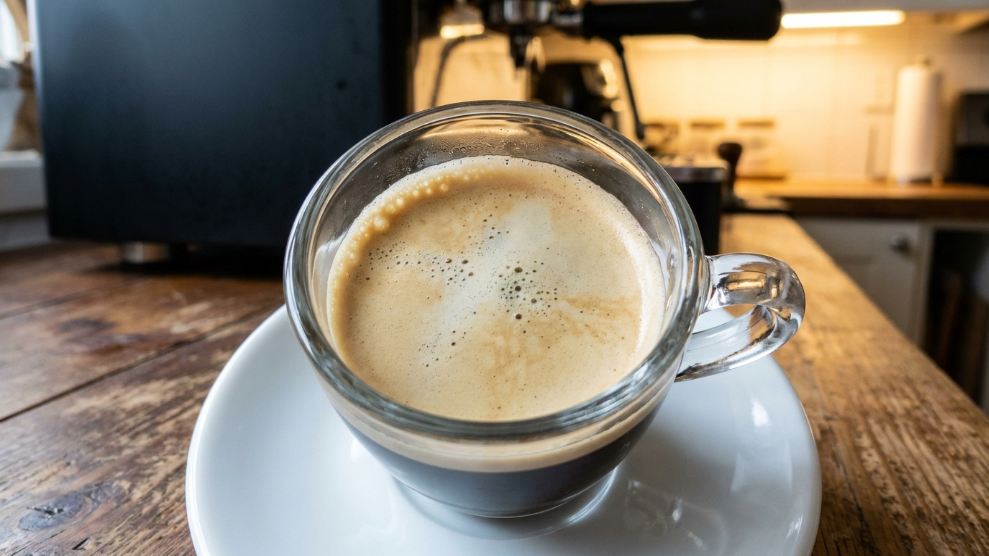
Crema: Healthy crema should be a warm golden-brown or hazelnut colour with a consistent texture. Thin, pale, or quickly disappearing crema indicates under-extraction.
Taste: Sour and sharp with little sweetness or body confirms under-extraction. If the sour is accompanied by some richness, you are closer to correct and may only need a small adjustment.
Now work through the causes below.
☕ Fix It Fast
Want an instant diagnosis? Our free Espresso Dial-In Assistant tells you exactly how to fix a sour shot, and the Espresso Ratio Calculator helps set your recipe.
Cause 1: Grind Is Too Coarse (Most Common Cause)
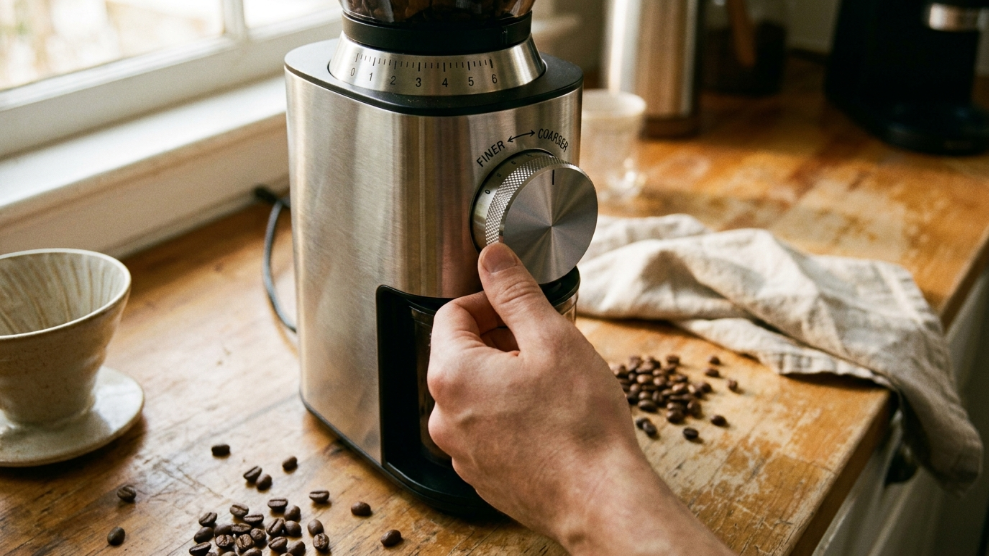
Coarse grounds have less surface area and larger gaps between particles. Water passes through them with less resistance and in less time, extracting fewer compounds. This is the single most common cause of sour espresso in home brewing.
How to confirm this is your problem: Shot time under 25 seconds. The shot ran fast.
The fix: Adjust your grinder one setting finer. Pull another shot and check the time. Repeat until your shot runs 25 to 30 seconds.
Specific settings for common grinders:
On the Baratza Encore ESP: the espresso range is settings 1 to 20. If you are currently using setting 12, try 10. Each step change is approximately 2 seconds of extraction time.
On the Breville or Sage Smart Grinder Pro: if you are at setting 12, try setting 10. The SGP responds well to 1 to 2 setting changes at a time.
On the Timemore C3 Pro manual grinder: if you are at 8 clicks, try 6 clicks.
Important: Change the grind by one step at a time and pull a full shot before changing again. Changing two or more steps simultaneously makes it impossible to identify the correct position.
Full grind settings by method: Coffee Grind Size Chart
Cause 2: Water Temperature Is Too Low
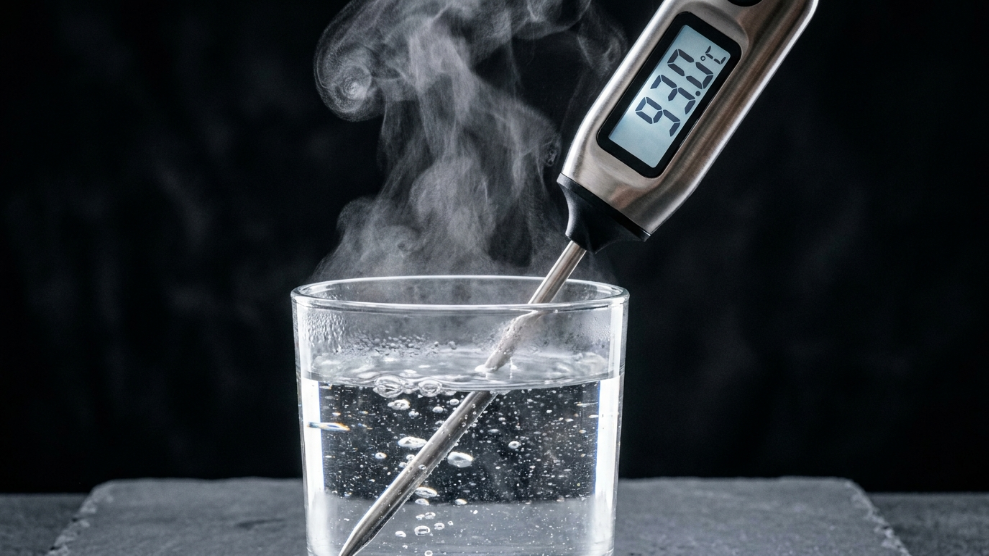
The SCA standard for espresso water temperature is 90 to 96°C (194 to 205°F). Water below 90°C does not have enough thermal energy to dissolve the sugar and flavour compounds that balance espresso acidity. Acids still extract readily at lower temperatures, but the sweetness does not.
How to confirm this is your problem: Your grind time is correct (25 to 30 seconds) but the espresso still tastes sour and lacks sweetness.
The fix varies by machine:
Breville Barista Express and Sage Barista Express: The machine has a PID temperature control. Go to Settings and check the brew temperature. If it is below 93°C, increase it by 1 to 2 degrees. The default setting on many units ships at 93°C but this can drift or be accidentally changed.
De’Longhi Dedica Arte and similar budget machines: These machines do not have adjustable temperature. If sour shots are consistent, the heating element may not be reaching optimal temperature. Allow the machine to heat for a full 30 minutes before pulling a shot, and pull a blank shot (water only, no coffee) to flush the group head to optimal temperature first.
All machines: Always run a blank shot through the group head before pulling your first espresso shot of the day. This warms the portafilter, group head, and thermal path to optimal temperature and prevents the first shot from being brewed into a cold system.
Cause 3: Dose Is Too Low
Using too little coffee creates a thinner puck with less resistance for the water to push through. The water finds the path of least resistance and channels through quickly without extracting properly.
Standard dose for a double espresso: 18g in the portafilter, targeting 36g of liquid espresso out (a 1:2 ratio).
How to confirm this is your problem: Weigh your dose. If you are using 14g or less for a double shot, the dose is likely contributing to under-extraction.
The fix: Increase your dose to 18g for a standard double shot. Use a scale that measures to 0.1g accuracy. Guessing the dose with a spoon introduces too much variation to diagnose other problems reliably.
Note: If your portafilter basket is a single-shot basket (typically 7 to 9g capacity), use it for single shots only. Underfilling a double basket with a single dose creates uneven extraction.
Full ratio guide by shot type: Coffee to Water Ratio Calculator
Cause 4: Tamp Pressure Is Too Light or Uneven
Tamping compresses the coffee puck. An under-tamped or unevenly tamped puck has gaps and channels through which water moves without contact with coffee, extracting less than it should and running fast.
How to confirm this is your problem: Shot runs fast (under 22 seconds) and your grind is already at a fine setting.
The fix: Apply firm, level pressure when tamping. The standard guidance from barista training is approximately 15 to 20kg of force, but the more important element is consistency and level application rather than a specific weight.
How to check your tamp is level: after tamping, look at the surface of the puck from eye level. The coffee surface should be perfectly flat and parallel to the rim of the basket. Any tilt in the puck creates an uneven path and channels.
For Sage and Breville machine owners: The Sage Oracle Touch and Breville Oracle Touch have automatic tamping. If you own one of these and experience sour shots, tamping is not the cause. Move to cause 1 or 2.
Cause 5: Beans Are Too Old or Too Fresh
Too old: Coffee beans stale as they lose volatile compounds to oxidation. Beans more than 4 to 6 weeks past their roast date have lost much of the sweetness and aromatic complexity that balances espresso acidity. The result is a sour, flat, thin cup regardless of how well you dial in other variables.
Check: Look for a roast date on the bag. If there is no roast date, only a best-before date, the beans are likely commercially roasted and may be many months old. Specialty coffee bags always show a roast date.
Too fresh: Beans roasted within the last 3 days are often still degassing significant carbon dioxide. This CO2 interferes with extraction by creating channels in the puck as gas escapes during the shot. The result can include sourness alongside an uneven, fast pull.
The fix: Use beans roasted 7 to 21 days before your brew date. This is the optimal window for espresso. Most specialty subscription services roast to order and ship within 48 hours, which means beans arrive 2 to 4 days after roasting. Let them rest on the counter for 3 to 7 more days before pulling espresso shots.
For the best specialty coffee subscriptions with fresh roast dates: Best Coffee Subscriptions 2026
Cause 6: Water Quality Is Poor (Especially UK Buyers)
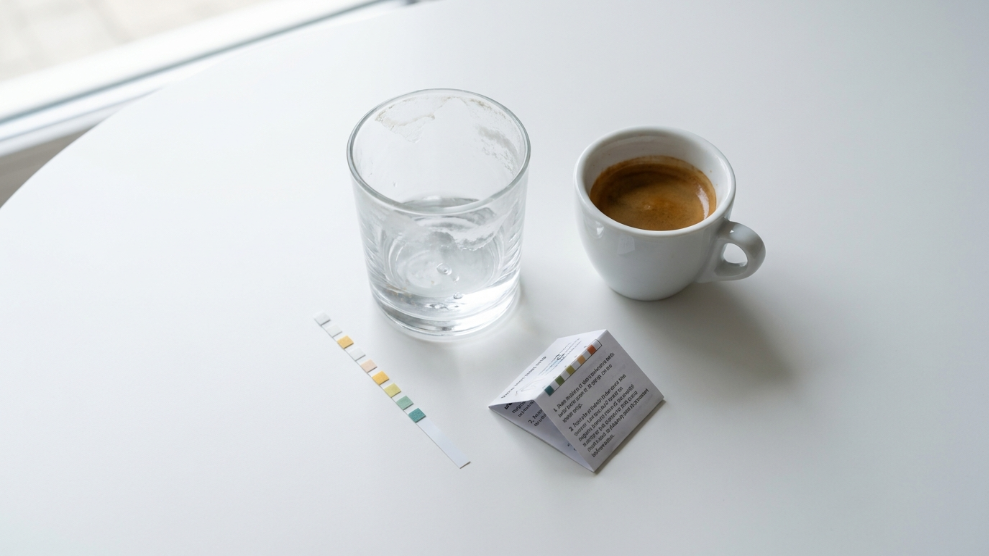
Water quality affects espresso extraction in two ways: mineral content and chlorine.
Mineral content (TDS): The SCA recommends water with 75 to 250 ppm total dissolved solids for optimal extraction. Water that is too soft (very low TDS, common in Scotland and parts of Wales and Ireland) under-extracts because minerals help carry flavour compounds. Very hard water (high TDS, common in London and South East England) can also reduce extraction efficiency and leave mineral deposits that eventually affect machine performance.
UK note: If you are in a hard water area, the water itself may be contributing to consistently sour or flat espresso. Using filtered water (Brita or a similar filter jug that reduces TDS to 75 to 150 ppm) can produce a noticeable improvement in espresso quality. This is one of the most underappreciated fixes in UK home espresso.
Chlorine: Tap water treated with chlorine has a detectable effect on espresso flavour. If your tap water smells or tastes of chlorine, use a filter or let the water stand uncovered for 30 minutes before using, which allows most chlorine to evaporate.
More on UK water and coffee: Hard Water and Coffee: UK Guide
Cause 7: Machine Needs Descaling
Limescale buildup inside the boiler and heating path reduces the machine’s ability to reach and maintain optimal brew temperature. The result is espresso brewed at lower than intended temperature, which produces under-extraction and sourness.
How to confirm this is your problem: Sour shots that were previously normal, with no changes to grind, dose, or technique. Machine is used in a hard water area. Descaling has not been done for more than 6 months.
The fix: Descale your machine. All major espresso machines have a descaling mode. Use a proprietary descaling solution (Sage or Breville branded, or Durgol, which is widely recommended) rather than vinegar, which can damage internal components.
Descaling frequency guidelines:
- Hard water areas (most of England): every 2 to 3 months
- Moderate water: every 3 to 4 months
- Soft water: every 4 to 6 months
Using the water filter that comes with Sage and Breville machines significantly reduces descaling frequency.
Machine-Specific Fixes: Sage and Breville
For buyers of Sage Barista Express (UK) or Breville Barista Express (USA and AU), two specific settings are worth checking when diagnosing sour shots:
Shot volume: The Barista Express has programmable shot volumes. If the shot volume is set too high (too much water through the same amount of coffee), the shot runs too long and risks over-extraction, but a common beginner mistake is programming too large a volume too early, which combined with a coarse grind creates a fast, high-volume under-extracted shot. Check the shot volume is set to approximately 36 to 40ml for a double shot.
Pre-infusion: The Barista Express includes a pre-infusion phase that wets the puck at low pressure before the full 9-bar extraction begins. This helps produce a more even extraction. If pre-infusion has been disabled in the settings, re-enabling it may improve shot consistency.
For the full guide to Sage and Breville espresso machines: Best Espresso Machines 2026
Quick Diagnosis Reference Table
| Symptom | Most Likely Cause | First Fix |
|---|---|---|
| Shot ran under 20 seconds, very sour | Grind too coarse | Grind 2 settings finer |
| Shot ran 20 to 25 seconds, sour | Grind slightly coarse or temp low | Grind 1 setting finer, check temp |
| Shot ran 25 to 30 seconds, still sour | Temperature, dose, or water quality | Check temp setting, weigh dose |
| Shot ran correctly, flat and dull | Old beans or water quality | Check roast date, try filtered water |
| Previously good shots now sour | Descaling due, beans changed | Descale, check new bean age |
| First shot of day always sour | Group head cold | Run a blank shot first every morning |
Frequently Asked Questions
Is sour espresso always under-extracted?
In the vast majority of cases, yes. Sourness in espresso is the flavour signature of acids that extracted quickly without the sugars and heavier compounds that balance them. The only exception is certain light roast single-origin beans that have naturally high acidity and read as sour even when properly extracted. If you have ruled out all seven causes above and the sourness remains, try a medium roast bean and see if the result changes. If it does, the bean itself is the cause rather than your technique.
Can I fix sour espresso by adding more hot water?
Adding hot water after extraction (making an Americano) dilutes the sourness but does not fix the underlying issue. The cup will be less intensely sour but will still lack the sweetness and balance of a properly extracted shot. Fix the extraction rather than diluting the result.
How do I know if my water temperature is correct without a thermometer?
Most modern espresso machines with PID temperature control display the temperature or allow setting it digitally. On the Sage Barista Express, hold the single-shot and two-cup buttons simultaneously to enter the temperature setting menu. On the Breville Barista Express in the USA, hold the single-shot button for 3 seconds. On the De’Longhi La Specialista, the temperature is displayed on the digital screen. If your machine has no temperature display or adjustment, consult the manual or the manufacturer’s support page.
My shots were fine last week and are now sour. What changed?
The most common causes of suddenly sour shots after a period of normal performance are: a new bag of beans (different origin, roast level, or freshness), a change in ambient temperature in your kitchen (cold winter mornings reduce group head temperature), or limescale buildup. Pull a shot and time it. If the time is similar to before, check the bean bag roast date. If the shot is running noticeably faster than before, start with the grind.
How many adjustments should I make before pulling a test shot?
One. Change one variable, pull one shot, evaluate. Changing two or more things simultaneously makes it impossible to know which change produced the improvement. The process takes longer but produces reliable results. Changing grind and temperature and dose at the same time and ending up with a good shot tells you nothing about which of the three changes actually fixed the problem.
Summary: The Fix in Order
Work through this sequence and stop when your shot tastes correct:
- Pull a shot and time it. Under 25 seconds means grind finer immediately.
- Weigh your dose. Less than 17g for a double shot means increase the dose.
- Check your water temperature setting. Below 90°C means increase it.
- Check your tamp. Uneven or very light means practise firmer, level tamping.
- Check the roast date on your beans. More than 6 weeks past roast means buy fresher beans.
- Try filtered water if you are in a hard water area, particularly in England.
- Descale your machine if it has not been done in over 3 months.
Sources used for this article: Specialty Coffee Association / r/espresso / Sage Appliances UK / Breville USA

Munir Ahmed is the founder of Coffee Craft Guide, dedicated to building the most thorough and honest coffee resource for home brewers worldwide. Combining SCA brewing standards with deep-dive research across global coffee communities (like r/espresso and Home-Barista) and thousands of verified reviews, Munir and his team deliver data-backed, expert coffee insights you can trust.