

The flat white is simultaneously one of the most ordered espresso drinks in the world and one of the most misunderstood. Ask three baristas to define it and you will get three slightly different answers. Order one in Sydney, London, and New York and you may receive three noticeably different drinks.
This guide covers what a flat white actually is, where it came from, exactly how it differs from a latte, cappuccino, and cortado, and how to make one at home that tastes like the real thing.
Table of Contents
What Is a Flat White?
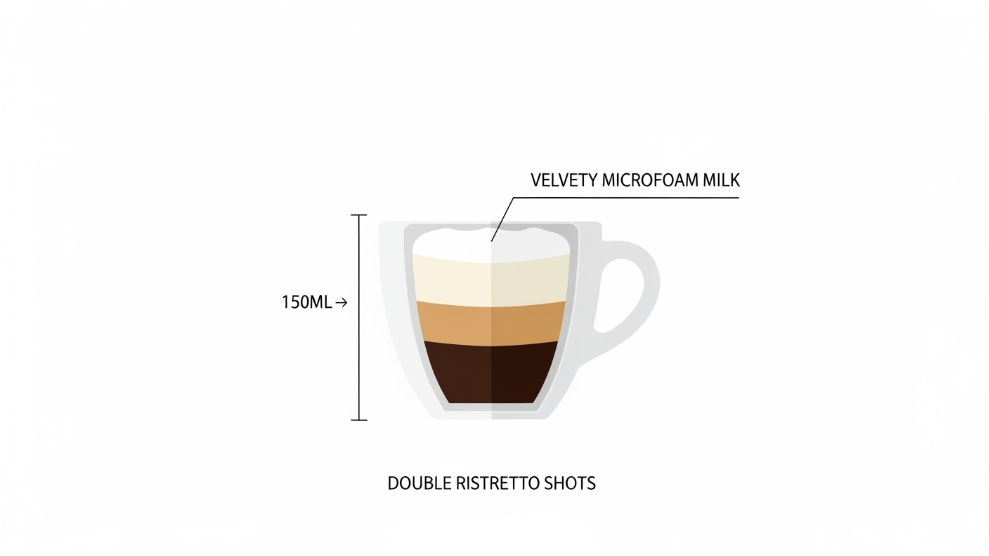
A flat white is a small espresso-based drink consisting of two ristretto shots topped with velvety steamed microfoam milk, served in a ceramic cup of approximately 150 to 180ml.
The three defining characteristics that separate a genuine flat white from other espresso-milk drinks are:
Ristretto shots, not standard espresso shots. A ristretto is a shorter espresso extraction using the same dose of coffee but less water, typically 18g of coffee yielding approximately 18 to 22ml of liquid rather than the 36ml of a standard double shot. Ristretto shots are sweeter and more concentrated because the extraction stops before the heavier, more bitter compounds extract.
Microfoam milk texture, not stiff froth. The milk in a flat white is steamed to a silky, glossy, velvety texture where the foam is fully integrated into the liquid rather than sitting on top as a separate layer. This texture is called microfoam or wet foam. When done correctly the steamed milk pours like wet paint.
Small cup volume. A flat white is served in 150 to 180ml. This smaller volume means a higher ratio of coffee to milk than a latte (typically 250 to 300ml) made with the same two shots, producing a stronger, more coffee-forward flavour per sip.
Flat White vs Latte vs Cappuccino vs Cortado: The Exact Differences
| Drink | Volume | Espresso base | Milk texture | Coffee strength |
|---|---|---|---|---|
| Flat White | 150 to 180ml | Double ristretto | Velvety microfoam | Strong |
| Latte | 240 to 300ml | Double espresso | Light foam on top | Mild |
| Cappuccino | 150 to 180ml | Single or double espresso | Thick dry foam layer | Moderate |
| Cortado | 90 to 120ml | Double espresso | Warm milk, minimal foam | Very strong |
| Macchiato (traditional) | 35 to 60ml | Single espresso | Small foam dollop | Very strong |
| Americano | 240ml | Double espresso | No milk | Moderate |
Flat White vs Latte The Main Confusion
The flat white and the latte are the two drinks most frequently confused, often because cafes outside Australia and New Zealand treat them as interchangeable. They are not.
The key differences in practice:
Volume: A latte is typically 240 to 300ml. A flat white is 150 to 180ml. This alone changes everything about how the drink tastes because the same two shots of coffee are diluted into very different volumes of milk.
Espresso base: A latte typically uses a standard double espresso (18g in, 36g out). A flat white uses two ristretto shots (18g in, approximately 36 to 44g total from both ristrettos). Ristrettos are sweeter and more intense.
Result: The flat white has a more assertive coffee presence with every sip. The latte is gentler, milkier, and more approachable for drinkers who are sensitive to strong coffee. Neither is superior they suit different preferences.
Flat White vs Cappuccino The Foam Difference
Both drinks are served in a similar size cup (150 to 180ml). The difference is the milk.
A cappuccino uses steamed milk with a significant thick layer of dry foam on top, which is separate from the liquid milk below. A flat white uses fully integrated microfoam where there is no distinct foam layer the milk and foam are blended into a single velvety liquid. The flat white sits lower in the cup because it has no foam pile. The cappuccino has a visible foam dome.
The cappuccino’s dry foam layer also makes it lighter in body because you are drinking some foam (which is mostly air) rather than solid microfoam. The flat white has a denser, richer mouthfeel.
Flat White vs Cortado The Size Question
The cortado is smaller (90 to 120ml) and uses equal parts espresso and warm milk with almost no foam. It is the most espresso-forward of all milk drinks. The flat white is larger and uses proportionally more milk, producing a slightly more balanced drink. In specialty coffee terminology, the cortado sits between a macchiato and a flat white on the strength spectrum.
Where Did the Flat White Come From?
The flat white’s origin is one of the most debated questions in coffee history. The central dispute is between Australia and New Zealand, and both countries make credible claims.
The Australian claim: The term “flat white” appears in Australian cafe menus from Sydney in the mid-1980s. The Moors Espresso Bar in Sydney and several Melbourne cafes are cited as early adopters. Australian barista culture in the 1980s was experimenting with alternatives to the cappuccino, which was seen as too foamy by many customers who wanted a smaller, stronger milk drink.
The New Zealand claim: Wellington cafe owners and baristas make equally documented claims to inventing the drink around the same period. Derek Townsend and Darrell Ahlers of DKD Cafe in Auckland are cited in some accounts as creating the term and drink as early as 1984.
What is not disputed: The flat white became a defining product of Australian and New Zealand specialty coffee culture through the 1990s and 2000s. When Australian and New Zealand baristas emigrated to the UK and USA, they brought the drink with them. The UK adopted the flat white as a standard cafe menu item through the 2000s, and Starbucks introduced it to the US market in January 2015.
Starbucks and the flat white: Starbucks’ introduction of the flat white in 2015 was significant for awareness but controversial among specialty coffee professionals. The Starbucks version uses ristretto shots and whole milk, which is technically correct, but is served in a 12oz (355ml) Tall cup nearly double the traditional volume which specialists argue makes it a large latte rather than a genuine flat white.
How to Make a Flat White at Home

Equipment you need
A genuine flat white requires an espresso machine with a steam wand. The milk texture (integrated microfoam) cannot be achieved with a pod machine without a steam wand or with a separate milk frother. If you only have a Nespresso machine without a milk attachment, you can approximate but not replicate a true flat white.
For espresso machine recommendations: Best Espresso Machines 2026
For the grinder needed to dial in ristretto shots properly: Best Coffee Grinders 2026
The recipe
Ingredients:
- 18g freshly ground coffee (fine grind, espresso setting)
- 36 to 44g total yield from two ristretto pulls (approximately 18 to 22g liquid per shot)
- 100 to 130ml whole milk (full-fat milk produces the best microfoam texture)
Step 1: Pull the ristretto shots Grind 18g of coffee. Tamp evenly. Pull two shots stopping at approximately 18 to 22ml each (total yield 36 to 44g). The shot time should still be 25 to 30 seconds. Stopping at a lower yield rather than a shorter time is the correct approach lower the volumetric setting on your machine if it has one.
If your shots taste too sharp or sour at ristretto length, grind slightly finer to slow the extraction and develop more sweetness before you stop.
For espresso troubleshooting: Why Does My Espresso Taste Sour?
Step 2: Steam the milk to microfoam Pour 100 to 130ml of cold whole milk into a small steaming jug. Position the steam wand just below the milk surface at a slight angle. Turn on the steam fully. For the first 2 to 3 seconds, introduce a small amount of air by keeping the wand tip just at the surface (this adds volume). Then submerge the tip slightly and create a circular swirling motion in the milk. Stop at 60 to 65°C (use a thermometer or learn to judge by hand heat through the jug).
The correctly steamed milk should look glossy and flow like wet paint when you swirl the jug. No visible bubbles. No stiff foam sitting separately.
Step 3: Pour and serve Pour the microfoam milk into the espresso in a small 150 to 180ml ceramic cup. The milk should blend naturally with the espresso, creating a caramel-brown drink with a thin layer of white microfoam on top. Skilled baristas use the pour to create latte art, but the taste is identical without it.
☕ Free Espresso Tools
A flat white starts with a great shot. Set your recipe with the Espresso Ratio Calculator, fix off-tasting shots with the Espresso Dial-In Assistant, and for fun find your match with the What Coffee Are You? Quiz.
Milk alternatives: Oat milk, particularly Oatly Barista Edition or Minor Figures, produces the best microfoam among plant-based milks and is the standard choice in Australian and New Zealand specialty cafes for dairy-free flat whites. Standard supermarket oat milk does not froth well enough for flat white texture.
Flat White Caffeine Content
A flat white made with two ristretto shots contains approximately 120 to 130mg of caffeine per drink.
Comparison:
- Flat white (double ristretto): approximately 120 to 130mg
- Latte (double espresso): approximately 125mg
- Cappuccino (double espresso): approximately 125mg
- Standard drip coffee (240ml): approximately 95mg
The caffeine difference between a flat white and a latte is minimal despite the flat white’s reputation for being stronger. The stronger taste perception comes from the higher coffee-to-milk ratio and the smaller volume, not from significantly higher caffeine.
For full caffeine comparison across every coffee drink: Caffeine Content in Every Coffee Type
Flat White in the UK, Australia and New Zealand
UK: The flat white became mainstream in UK cafes through the 2000s as Australian and New Zealand baristas opened specialty cafes in London. It is now a standard menu item in all UK coffee chains including Costa, Caffe Nero, and Pret a Manger, as well as every independent specialty cafe. The UK flat white is typically well-executed with genuine ristretto shots in quality independent cafes, though some chains serve a larger version.
Australia: The flat white is considered one of Australia’s contributions to global coffee culture. It is the standard order in Melbourne and Sydney specialty cafes, served in a 150 to 160ml ceramic cup with two ristretto shots and velvety microfoam. Melbourne’s cafe culture specifically is globally recognised as a benchmark for espresso quality and the flat white is at the centre of it.
New Zealand: New Zealand’s claim to the flat white is taken seriously, and the standard of execution in Wellington and Auckland specialty cafes matches or exceeds Melbourne. Kiwi baristas have won World Barista Championship titles and New Zealand’s flat white culture has influenced cafes internationally.
Frequently Asked Questions
Is a flat white stronger than a latte?
Per sip, yes. Per drink, the caffeine is nearly identical. A flat white (150 to 180ml with double ristretto) has approximately the same total caffeine as a latte (240 to 300ml with double espresso), but the smaller volume concentrates the coffee flavour, making it taste significantly stronger. If you want more coffee flavour without more caffeine, choose a flat white over a latte.
What milk is best for a flat white?
Whole full-fat milk produces the best microfoam texture for a flat white because the fat content contributes to the velvety, integrated texture. Semi-skimmed milk works but produces slightly lighter microfoam. For dairy-free, Oatly Barista Edition and Minor Figures oat milk are the most recommended options in specialty cafe communities.
Can I make a flat white with a Nespresso machine?
You can approximate one using a Nespresso machine with a milk frother attachment (such as the Nespresso Aeroccino). Froth approximately 100ml of whole milk to a smooth consistency rather than stiff foam. The result is closer to a flat white than using a pod machine without any milk device, but the milk texture will not match the velvety microfoam produced by a steam wand.
Why is the flat white served in a ceramic cup?
Ceramic retains heat better than glass or paper and allows the drink to maintain temperature for longer at the small 150ml volume. Glass cups (used for cortados in some cafes) look beautiful but cool faster. The ceramic cup is also part of the drink’s identity it signals a deliberate, crafted preparation rather than a takeaway product.
Is the Starbucks flat white a real flat white?
The Starbucks flat white uses ristretto shots and whole milk, which are the correct ingredients. However, it is served in a 355ml (12oz) Tall size, which specialty coffee professionals argue is too large to qualify as a genuine flat white. At that volume the higher coffee-to-milk ratio that defines the drink is lost and the result is closer to a large latte. The Starbucks version is an accessible approximation rather than a traditional flat white.
What is the difference between a flat white and a cortado?
Both are smaller, stronger espresso-milk drinks. The cortado (from Spain) is approximately 90 to 120ml with equal parts espresso and milk, almost no foam, and a very strong coffee taste. The flat white is 150 to 180ml with proportionally more milk and a velvety microfoam texture. The flat white is slightly more balanced; the cortado is more intense and espresso-forward.
Key Takeaway
For making espresso at home: Best Espresso Machines 2026
For the grinder that makes ristretto shots consistent: Best Coffee Grinders 2026
For coffee-to-milk ratios across all espresso drinks: Coffee to Water Ratio Guide
Sources used for this article: Specialty Coffee Association Espresso Brewing Standards / Perfect Daily Grind History of the Flat White / Starbucks Flat White Product Page / Barista Institute Milk Steaming Guide

Munir Ahmed is the founder of Coffee Craft Guide, dedicated to building the most thorough and honest coffee resource for home brewers worldwide. Combining SCA brewing standards with deep-dive research across global coffee communities (like r/espresso and Home-Barista) and thousands of verified reviews, Munir and his team deliver data-backed, expert coffee insights you can trust.