

Milk is the most important variable in a flat white after the espresso shot itself. The quality of your microfoam its temperature, texture, and integration with the espresso determines whether you have a cafe-quality flat white or a disappointing approximation. And as Australia’s cafe culture has made abundantly clear, not all milks behave the same under a steam wand.
As confirmed by Crema Coffee Garage Australia: “Now a cafe staple, one in four Australians choose plant-based milk when ordering coffee at cafes, with oat milk leading the charge.” Australia’s specialty coffee scene adopted oat milk earlier and more completely than most countries. Understanding which milks perform best for home baristas is practically useful for a significant proportion of Australian coffee drinkers.
Table of Contents
Why Milk Composition Matters for Coffee
Milk froths because of two components working together: protein and fat.
Protein (primarily casein in dairy milk) creates the structural network that traps air bubbles and holds microfoam stable. Higher protein content generally means more stable, longer-lasting foam.
Fat contributes creaminess and smoothness to the texture. Fat molecules coat the air bubbles created by protein, producing the silky, velvety quality of good microfoam.
Lactose (milk sugar) caramelises slightly when heated, adding a natural sweetness that balances espresso bitterness. This is why properly steamed full cream milk in a flat white tastes sweeter than you might expect.
As confirmed by House of Coffee AU’s milk guide: “Research from the University of Copenhagen found that milk proteins, particularly casein, are key to creating stable foam. Fats contribute to a silky texture, making the microfoam smooth and velvety. When heated, lactose caramelises slightly, enhancing milk’s natural sweetness.”
For plant-based milks: The challenge is that oat, almond, and soy milks have different protein and fat profiles than dairy, and vary significantly by brand. Standard non-barista plant milks often lack the protein structure to create stable microfoam. Barista-edition formulations add stabilisers and adjust protein and fat ratios to approximate dairy’s steaming performance.
Full Cream (Whole) Milk: The Gold Standard

Full cream (whole) milk at approximately 3.5% fat and 3.3% protein is the gold standard for espresso-based milk drinks. It produces the most stable microfoam, the sweetest natural flavour from lactose caramelisation, and the most consistent results across different steaming techniques.
Why full cream beats light milk: Reduced-fat and skim milks lack the fat content that creates creaminess. As confirmed by House of Coffee AU: “Skim and low-fat milks lack the fat needed to balance coffee’s bitterness and enhance its richness.” The microfoam produced by skim milk is thinner and less satisfying than full cream technically possible but noticeably inferior for flat whites.
Best AU brands for home use:
A2 Full Cream Milk (Woolworths): As confirmed by CFTR Roasting Co AU’s milk guide: “A2 milk Woolworths Extremely consistent and great texture, smooth, fresh tasting milk that is easy on the stomach and good company for any coffee.” Widely available, specifically suits those who find conventional dairy milk digestive issues relate to A1 protein.
Gippsland Jersey: “Super creamy formula, easy to froth and deliciously homey taste.” Available at select Woolworths stores. Higher fat from Jersey cows produces richer, creamier microfoam.
Pauls Full Cream: Available nationally at Woolworths, Coles, and IGA. Reliable 3.5% fat, 3.3% protein. Consistent steaming results.
Key tip: Always use fresh full cream milk not long-life UHT. Fresh milk produces noticeably better microfoam because UHT processing partially denatures the proteins that create foam stability.
Milk for Coffee: Australia 2026 Comparison
| Milk type | Foam quality | Flavour in coffee | Best AU brands |
|---|---|---|---|
| Full cream dairy | Excellent | Rich, naturally sweet | Gippsland Jersey, A2 Woolworths, Pauls |
| Reduced fat (light) | Good | Lighter, less sweet | Any brand, though full cream preferred |
| Oat milk barista edition | Very good | Slightly sweet, oaty | Oatly Barista, Minor Figures, Inside Out, Alternative Dairy Co |
| Oat milk standard | Poor | Thin, may curdle | Do not use for steamed coffee |
| Soy milk barista edition | Good to very good | Neutral to slightly beany | So Good Barista, Bonsoy, MilkLab Soy |
| Almond milk barista edition | Moderate | Light, slightly nutty | Almond Breeze Barista, MilkLab Almond |
| Macadamia milk | Good | Rich, buttery, subtly sweet | Milkadamia, select AU specialty stores |
| Coconut milk barista | Moderate | Coconut flavour present | Ayam, So Good Coconut Barista |
Oat Milk in Australia: The Full Guide
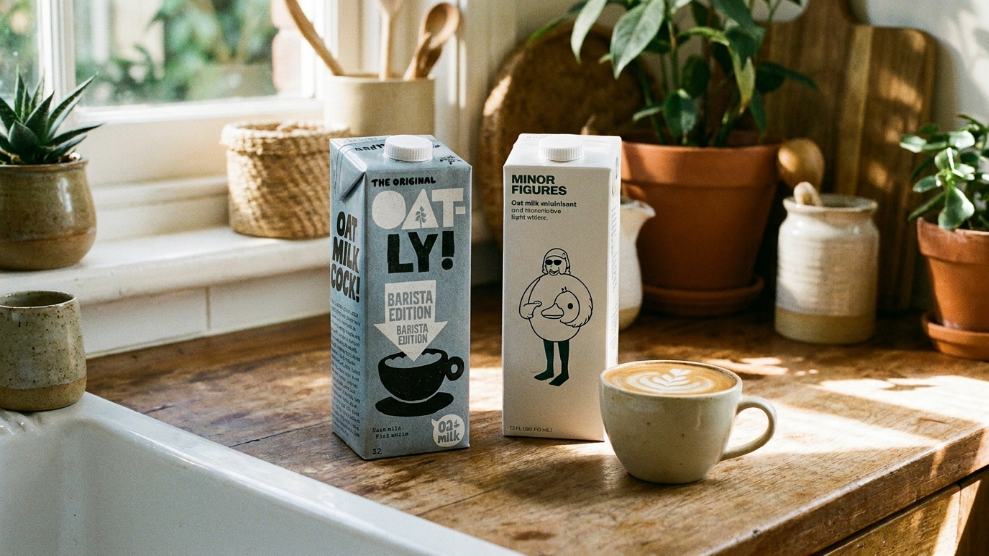
Oat milk is now the dominant alternative milk in Australian specialty cafes. Understanding which oat milks perform best under a steam wand is the most practically useful knowledge for Australian home baristas who prefer dairy-free options.
The essential rule: Barista edition only
Never use standard (non-barista) oat milk for steamed coffee. Standard oat milk lacks the protein structure and stabilisers that barista editions contain. It produces thin, unstable foam and frequently curdles or separates on contact with hot espresso. This is not a brand issue it is a formulation issue. Any oat milk without “barista” designation will underperform for steamed milk drinks.
Best oat milks for steaming in Australia
Oatly Barista Edition: The original barista oat milk, now the global standard. As confirmed by Clive Coffee’s 2026 oat milk comparison: “Oatly delivers the best flavor balance slightly sweet with strong oat notes that complement rather than overpower espresso.” Available at Woolworths, Coles, and specialty stores nationally.
Minor Figures Oat Milk: A UK-origin brand with very strong Australian distribution. Widely used in Australian specialty cafes. As confirmed by Clive Coffee: “Minor Figures is the most forgiving for beginners because it steams consistently and holds microfoam structure well.” Available at Woolworths, Coles, and independent grocery stores.
Note on Minor Figures vs Oatly protein: Minor Figures has approximately one fifth of the protein of Oatly Barista, and 30% less fat yet independent testing shows “virtually no difference in the way they stretch and pour.” This confirms that barista formulation and stabiliser balance matters as much as raw protein/fat content.
Inside Out Oat Milk Barista: An Australian-made barista oat milk. Available at major supermarkets. Strong performance in steaming tests with good microfoam integration.
Alternative Dairy Co: Australian brand. As confirmed by Simply Fresh Foodie’s AU oat milk rankings: “Highly rated for both flavour and frothing ability. Some say it’s on par with The Alternative Dairy Co and MilkLab.” Available nationally.
MilkLab Oat: A professional-grade barista milk originally designed for commercial cafe use, increasingly available for home purchase through specialty retailers and online. MilkLab produces versions for oat, almond, soy, lactose-free dairy, and macadamia specifically designed for steam wand performance.
Oat milk and flat whites: honest assessment
The best barista oat milks produce microfoam that is very good but not identical to full cream dairy. The differences:
- Foam stability: slightly lower the microfoam begins to separate faster than dairy (noticeable if you wait more than 2 to 3 minutes before drinking)
- Latte art difficulty: slightly harder to pour clean patterns, though possible with practice
- Flavour: the mild oat sweetness complements espresso well without overpowering it
- Temperature sensitivity: oat milk foams better at slightly lower temperatures (58 to 62 degrees) than dairy (60 to 65 degrees)
For the flat white recipe and technique: How to Make a Flat White at Home Australia
Soy Milk: Still a Strong Option
Soy milk was the dominant cafe alternative milk in Australia before oat took over. As confirmed by Crema Coffee Garage AU: “Barista oat and soy milks are top performers when it comes to frothing, thanks to their balanced fat and protein content. Soy milk boasts one of the highest protein levels among plant-based options. This allows it to form stable foam.”
Best AU soy milks for coffee:
Bonsoy: The Japanese soy milk brand that became the Australian specialty cafe standard before oat milk arrived. Still used in many AU cafes. Rich, neutral flavour. Available at specialty stores and online.
So Good Barista Soy: Widely available at Woolworths and Coles. Consistent steaming performance. The most accessible soy barista option nationally.
MilkLab Soy: Professional grade. Strong foam performance.
Limitation of soy: Some brands have a noticeable beany aftertaste that clashes with certain espresso profiles. This is brand-specific Bonsoy is the most neutral. Also note that soy milk occasionally reacts with high-acidity espresso and can split or curdle. Always add espresso to the milk (not milk to espresso) when using soy.
Almond Milk: Best for Those Who Want Lighter Milk
Almond milk is lighter in body than oat or soy and produces a thinner microfoam. The slightly nutty flavour works well with certain espresso profiles particularly natural-processed Ethiopian or Colombian coffees with fruit and nut notes.
Best AU almond milks for coffee:
MilkLab Almond: Professional barista formulation. The strongest steaming performance of any barista almond milk available in Australia.
Almond Breeze Barista Blend: Available at most AU supermarkets. As noted in the AU milk comparison from Simply Fresh Foodie: “Works well with an espresso machine frother, holding up under high temperatures.”
Limitation of almond milk: Even barista editions produce a thinner foam than oat, soy, or dairy. Latte art is challenging. The lighter body means the espresso character is more dominant this is a feature for some and a limitation for others.
Macadamia Milk: The Australian Alternative
Macadamia is native to Australia and Queensland macadamia milk represents a genuinely local dairy alternative. As described by Simply Fresh Foodie AU: “Rich, buttery, and subtly sweet, macadamia milk brings a luxurious creaminess to coffee. Thanks to the nut’s high natural oil content, macadamia milk has a velvety texture that complements bold espresso beautifully.”
Best AU macadamia milks for coffee: Milkadamia Barista and MilkLab Macadamia. Available at specialty food stores and online.
Summary: Which Milk for Which Drink
| Drink | Best dairy milk | Best non-dairy AU option |
|---|---|---|
| Flat white | Full cream (Gippsland Jersey or A2) | Oatly Barista or Minor Figures |
| Latte | Full cream | Oatly Barista, Inside Out Oat, or MilkLab Oat |
| Cappuccino | Full cream | Minor Figures (most stable foam) |
| Iced latte / iced flat white | Full cream | Any barista oat milk no steaming needed |
| Cold brew with milk | Full cream or light | Any barista oat, almond, or macadamia |
Frequently Asked Questions
Is oat milk or full cream better for a flat white in Australia? Full cream dairy milk produces the best flat white microfoam it is the gold standard by which all alternatives are measured. For dairy-free flat whites, barista-edition oat milk (Oatly, Minor Figures, Inside Out) is the best available option and produces genuinely cafe-quality results with proper technique. The difference between a well-made oat milk flat white and a full cream flat white is noticeable but smaller than the difference between fresh whole milk and standard supermarket oat milk.
Why does my oat milk curdle in coffee? Curdling happens when non-barista standard oat milk contacts the acidity and heat of espresso. The solution is always to use barista-edition oat milk (Oatly Barista, Minor Figures, Inside Out, Alternative Dairy Co). Standard oat milk from the refrigerated section is not formulated for espresso contact. Also add milk to the cup first, then pour espresso on top this reduces the temperature shock that causes splitting.
What is MilkLab and is it available in Australian supermarkets? MilkLab is a professional barista milk brand originally designed for cafe use. It makes barista-grade versions of oat, almond, soy, lactose-free dairy, and macadamia milks. MilkLab is available online and at specialty food retailers, but less consistently available in major supermarkets than Oatly or Minor Figures. For home baristas who want the most cafe-accurate non-dairy milk, MilkLab is worth sourcing online.
Is A2 milk better for coffee than regular dairy? A2 milk differs in protein composition it contains only A2 beta-casein protein rather than a mix of A1 and A2. For people who have digestive issues with conventional dairy, A2 milk may be easier to digest without being lactose-free. For steaming and microfoam quality, A2 milk performs comparably to conventional full cream dairy of the same fat percentage. The choice between A2 and conventional full cream is primarily a digestive preference rather than a coffee quality consideration.
For making a flat white with your chosen milk: How to Make a Flat White at Home Australia
For the espresso shot that goes with it: Best Espresso Machines Australia 2026
Sources used in this article: Crema Coffee Garage AU Home Barista’s Guide to Alternative Milk / CFTR Roasting Co AU Best Milk to Use for Coffee at Home in Australia / Simply Fresh Foodie AU Best Oat Milk for Coffee in Australia Ranked / House of Coffee AU Best Milk for Coffee Australia / Clive Coffee Oat Milk Battle of the Brands 2026

Munir Ahmed is the founder of Coffee Craft Guide, dedicated to building the most thorough and honest coffee resource for home brewers worldwide. Combining SCA brewing standards with deep-dive research across global coffee communities (like r/espresso and Home-Barista) and thousands of verified reviews, Munir and his team deliver data-backed, expert coffee insights you can trust.