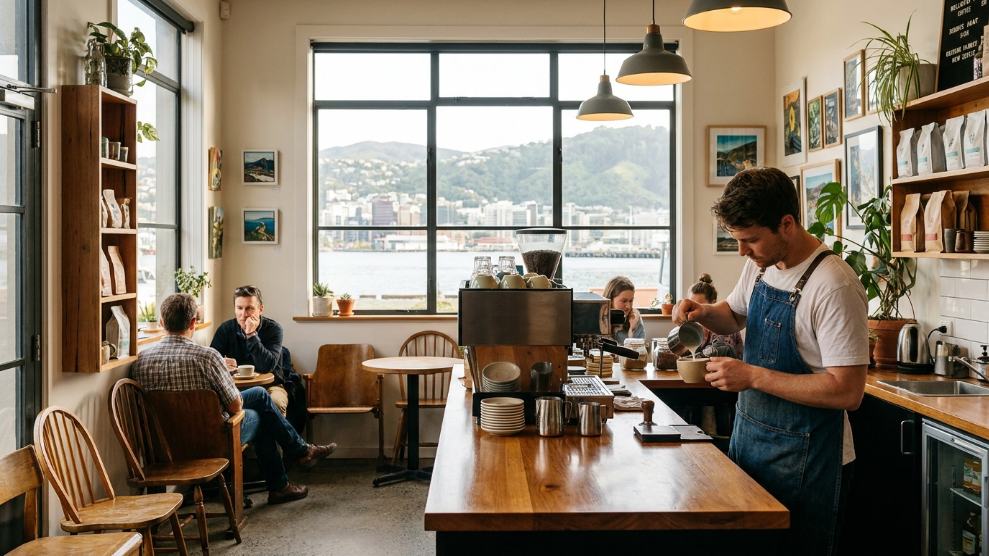
New Zealand is a country of five million people located at the bottom of the Pacific Ocean, geographically isolated from most of the world’s coffee-producing regions and major cafe cities. It has nonetheless produced one of the most quality-consistent coffee cultures on earth, a globally recognised flat white tradition, and a string of roasters that have expanded to the United Kingdom, Japan, and Australia. As confirmed by Bean Merchant NZ’s 2026 roaster guide: “New Zealand’s coffee scene has quietly become one of the most impressive in the world. While we might be a small nation at the bottom of the Pacific, our coffee culture rivals that of Melbourne, Portland, and Copenhagen.”
Wellington alone has more cafes per capita than New York City.
This guide covers the history of NZ coffee, the Wellington and Auckland scenes, the key roasters, the honest flat white origin debate, and how to order correctly whether you are visiting or buying online from anywhere in New Zealand.
Table of Contents
New Zealand Coffee: A Brief History
The Beginning: WW2 Milk Bars and Italian Espresso
New Zealand’s coffee history began with the arrival of American troops during World War II, when milk bars in Wellington served them coffee. The subsequent wave of European immigration in the 1950s brought espresso machines and cafe culture particularly from Italian and Greek communities to Wellington and Auckland.
As confirmed by Infonews NZ’s coffee culture history: “New Zealand’s coffee history is storied, originating with the appearance of milk bars in Wellington to serve American troops during WW2, and the subsequent introduction of espresso by European immigrants in the 1950s.”
The Flat White and the Wellington Claim
In 1989, at Wellington’s Café Bodega, a kiwi barista named Frank McInnes is claimed to have invented the flat white. As documented by New Zealand Trails: “Kiwi barista Frank McInnes claims to have invented the Flat White after botching a cappuccino at Wellington’s Café Bodega in 1989. Not able to get the milk to froth, McInnes apologised to his customer, saying ‘sorry it’s a Flat White.'”
The flat white origin is also claimed by Australia, particularly Melbourne. This debate has been ongoing for decades and is genuinely unresolved. What is not disputed is that both countries had a significant role in defining, standardising, and exporting the flat white to the world. Starbucks added the flat white to its global menu in 2015, crediting it to “Australian and New Zealand” barista tradition which at least resolved the argument by including both countries.
As confirmed by New Zealand Trails: “Since the 90s, the Flat White from ‘down under’ has become a staple in cafes around the UK and USA, including Starbucks.”
The Modern Specialty Era (2000s to Present)
New Zealand’s specialty coffee movement developed in parallel with Australia’s, shaped by many of the same influences and some distinctly NZ roasters who developed their own identities. Havana Coffee Works (Wellington, 1989) was among the earliest pioneers of direct bean trade. Allpress Espresso expanded from Auckland to London and Tokyo. Coffee Supreme became internationally recognised for design-forward specialty roasting.
As confirmed by BrewedLate’s NZ coffee subscription guide 2026: New Zealand’s coffee culture is defined by “quality-over-volume mentality, strong espresso-based drinks (especially flat whites), local roaster loyalty, cafe as community hub, and high barista standards.
Wellington: New Zealand’s Coffee Capital
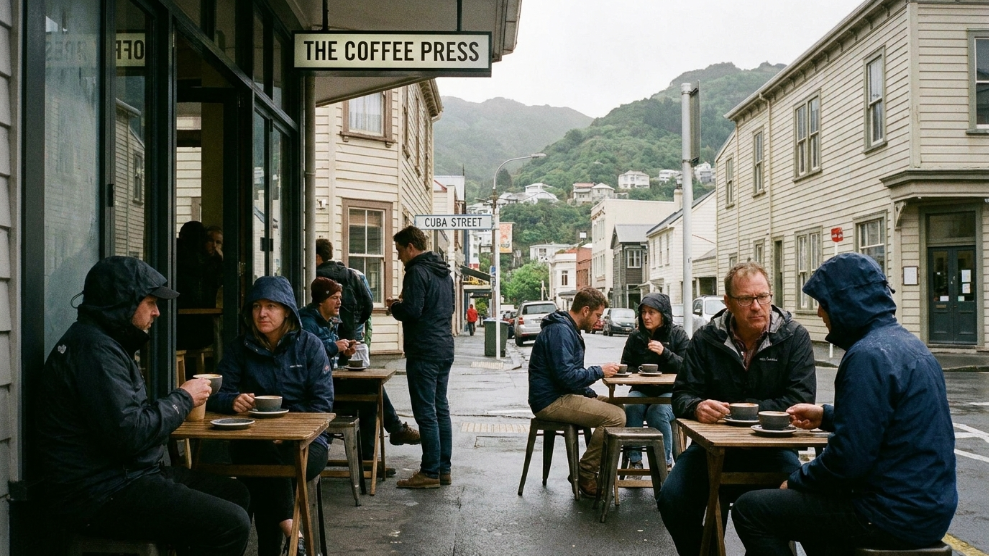
Wellington has more cafes per capita than New York City. This is a verified fact cited consistently across multiple independent sources and is perhaps the most striking single statistic about New Zealand coffee culture given Wellington’s population of approximately 215,000 people.
As confirmed by TravelDaze’s NZ coffee guide: “Wellington holds the title of New Zealand’s coffee capital, with the highest concentration of quality cafes and roasters.”
The BrewedLate NZ guide adds: “Wellington, where it feels like there are more coffee roasters than people, we are really spoilt for choice.”
Why Wellington specifically: Wellington’s compact CBD and harbour waterfront create a high-density cafe culture where walking distances between cafes are small and foot traffic is concentrated. The city’s role as New Zealand’s political and creative capital has also created an informed, quality-conscious customer base a dynamic similar to how Melbourne’s university culture and laneway density shaped its own scene.
Key Wellington areas for coffee:
- Cuba Street: Wellington’s most eclectic street. Independent cafes, creative atmosphere.
- Lambton Quay: CBD commuter coffee, fast and consistent.
- Te Aro: Where many of Wellington’s specialty roasters and their cafes are concentrated.
- Wellington Waterfront: Mojo Coffee’s roastery at Shed 13 on the waterfront.
Key New Zealand Roasters
Coffee Supreme (Wellington)
Founded: 1993, Wellington Website: coffeesupreme.com
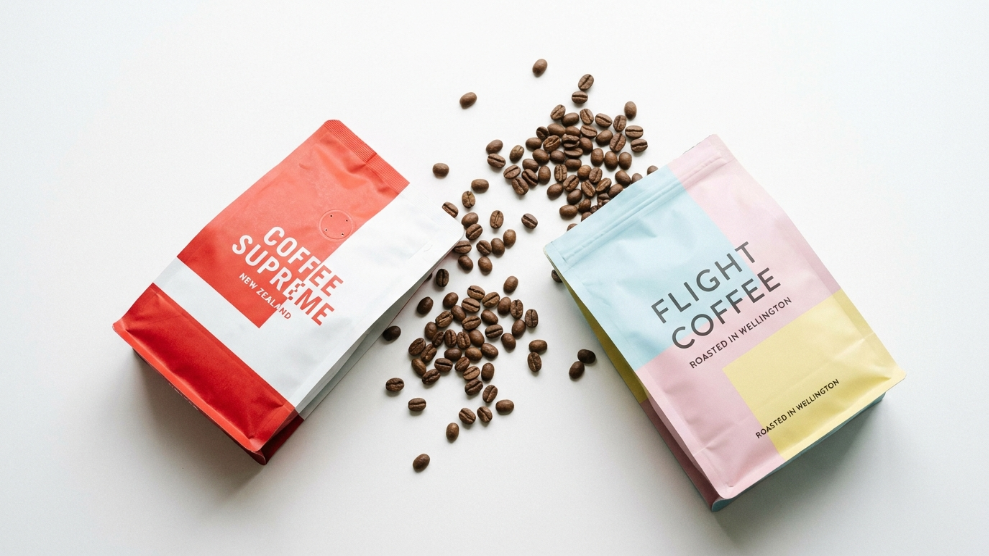
Coffee Supreme is among the most internationally recognised New Zealand specialty roasters. As described by Neat Places NZ’s roaster guide: “Good design comes second only to quality coffee at New Zealand’s best dressed specialty roaster, Coffee Supreme. Their carefully considered minimalist aesthetics are evident from their packaging right through to the fit-outs in their cafes.”
After 24 years in the coffee business, Coffee Supreme has won awards for both roasting and barista craft and expanded its cafe presence to Auckland, Christchurch, Wellington, Brisbane (AU), and Melbourne (AU). Their roastery on Hopper Street in Wellington includes a small espresso bar open weekday mornings.
Why Coffee Supreme is notable: The red and white branding is immediately recognisable in New Zealand cafes. More importantly, Coffee Supreme was one of the roasters that brought New Zealand coffee culture to Australian audiences, helping establish the trans-Tasman specialty coffee relationship.
Flight Coffee (Wellington)
Website: flightcoffee.co.nz
Flight Coffee started as an idea in a garage in classic New Zealand small-business fashion and has grown into one of NZ’s most respected specialty roasters. As confirmed by Remix Magazine’s NZ roasters guide: “In classic kiwi fashion Flight Coffee started as an idea in a garage as a way of doing things better.”
The Bomber Blend: Flight Coffee’s signature espresso blend. As described by the roaster: a mix of Colombia, Rwanda, and Timor-Leste beans producing chocolate and orange notes with an aroma of toasted almonds. The pastel yellow packaging is distinctive. Flight Coffee has earned the title of Best Flat White in New Zealand and ships nationally.
Direct trade focus: Flight Coffee’s sourcing is built on direct relationships with farmers, sourcing beans straight from farms worldwide. This is consistent with the broader New Zealand roaster tendency toward transparency and ethical sourcing.
Allpress Espresso (Auckland)
Website: allpressespresso.com/nz
Allpress Espresso is one of New Zealand’s original specialty roasters. As documented by Remix Magazine: “Allpress coffee is Auckland’s premiere roaster. What started as an inspired tour of Portland during its 1980s coffee boom, Michael Allpress designed the first espresso coffee cart system in New Zealand. After 31 years in business, Allpress Coffee has expanded its reach to as far as the UK and Japan.”
The UK expansion brought Allpress to London’s Shoreditch the same area that became central to London’s specialty coffee scene. The brown and gold Allpress cups are as recognisable in NZ as the brand name. Allpress also supplies many of the best cafes in Melbourne and Sydney.
Kokako Organic Coffee (Auckland)
Location: Grey Lynn, Auckland Website: kokako.co.nz
Kokako specialises in organic, single-origin coffee hand-roasted to order. Based in Grey Lynn, Auckland, Kokako is certified fair trade, organic, and environmentally focused. As confirmed by verified buyer reviews on Google: “My go to coffee in New Zealand, hands down the best beans you can order online. Huge variety of coffee, delicious single origins and fantastic espresso blends. Order online and you will typically get it the next day.”
Kokako’s commitment to organic and fair trade certification makes it the most sustainability-focused major NZ roaster. The slightly higher price point (compared to conventional NZ roasters) is offset by the environmental and social credentials.
Havana Coffee Works (Wellington)
Website: havana.co.nz
Havana Coffee Works is one of New Zealand’s most distinctive roasters eccentric in branding and pioneering in sourcing. As confirmed by Neat Places NZ: “New Zealand’s eccentric brand of coffee roasting, Havana Coffee Works began putting its stamp on the domestic market in 1989. Early pioneers of direct bean trade, origin travel and curious experiences have allowed Havana to establish close relationships with growers across Cuba, Vanuatu, Sumatra and Bolivia.”
The Havana HQ in Wellington functions as a vibrant cafe, roastery, office, and bean dispensary simultaneously an accurate representation of the energetic brand. Havana’s history with direct trade from Cuba and Vanuatu (not standard coffee origins) reflects a commitment to the less-explored edges of the coffee world.
Auckland’s Coffee Scene
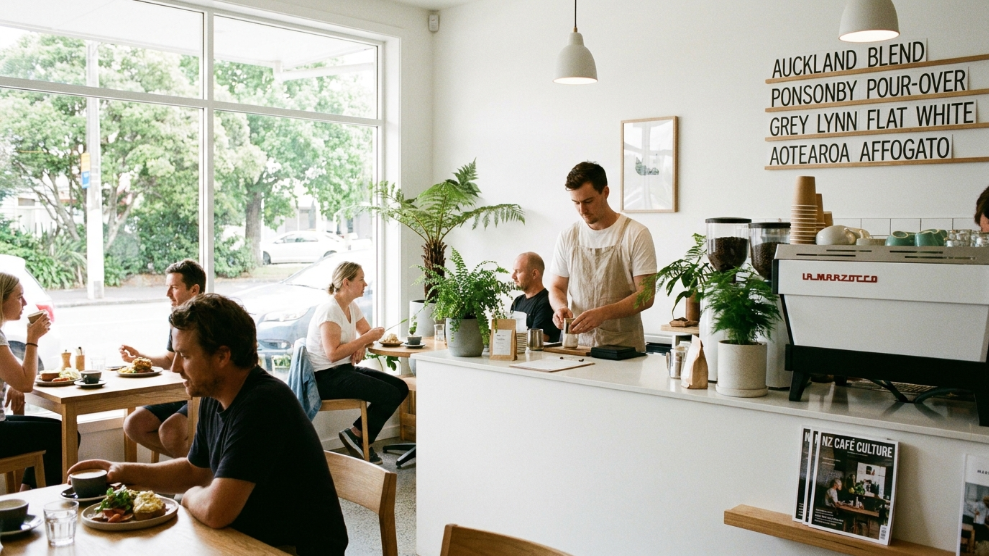
Auckland is New Zealand’s largest city (approximately 1.7 million people) and has a strong specialty coffee scene shaped primarily by Allpress Espresso and Kokako. While Wellington claims the title of NZ coffee capital on density and passion, Auckland provides the volume and the commercial reach.
Key Auckland areas for coffee:
- Ponsonby: Specialty cafes, brunch-focused, quality-conscious clientele
- Grey Lynn: Kokako’s roastery and the most specialty-concentrated residential suburb
- CBD and Britomart: Commuter coffee, Allpress presence, fast espresso service
- Parnell: Neighbourhood cafes with strong local roaster affiliations
- Newmarket / Mount Eden: Growing specialty scene with independent roasters
What makes Auckland coffee different from Wellington: Auckland’s coffee culture is broader and more varied given the larger population. Wellington’s smaller size creates a more intense, concentrated scene where cafe quality is more uniformly exceptional. Auckland has more variation some exceptional, some average but the best Auckland cafes match Wellington’s standards.
What Makes NZ Coffee Culture Distinct
No drip coffee
New Zealand does not have a drip coffee culture. As confirmed by TravelDaze: “Most cafes don’t serve drip coffee. The coffee culture centers around espresso-based drinks.” Some specialty cafes offer pour-over or filter as a premium option, but the default and the expectation is espresso.
Most Kiwi homes have a French press or cafetiere if they do not have an espresso machine. For pour-over and filter culture: Pour-Over Coffee Complete Guide
The double shot as standard
As noted by New Zealand Trails: “All New Zealand coffee starts with the exact same espresso shot (quite often a double shot); this means that you will be getting the same amount of caffeine regardless of what style of coffee you order unless you specify otherwise.” This double-shot default distinguishes NZ from the single-shot cappuccino standard common in Italian cafe culture.
Environmental consciousness
Reusable cups are actively encouraged across New Zealand, with most cafes offering a discount (typically NZD$0.20 to NZD$0.50) for bringing your own cup. New Zealand’s environmental awareness shaped by its clean, green national identity has made the cafe-level sustainability conversation more advanced than in most countries.
Local roaster loyalty
Unlike some markets where large chain coffee dominates, New Zealand cafes typically have an affiliation with a specific local roaster. Most cafes prominently display which roaster they use. Kiwis identify with their roaster of choice in the way that Australians identify with their local football team.
How to Order Coffee in New Zealand
| What you want | What to order in NZ | Approx price 2026 |
|---|---|---|
| Espresso with silky milk, standard size | Flat white | NZD$4.50 to $5.50 |
| Espresso with milk, larger, milkier | Latte | NZD$5 to $6 |
| Espresso with milk and foam | Cappuccino | NZD$4.50 to $5.50 |
| Black coffee, espresso with hot water | Long black | NZD$4 to $5 |
| Pure espresso, no additions | Short black (single) or double shot | NZD$3.50 to $4.50 |
| Strong espresso with small milk amount | Piccolo or macchiato | NZD$4 to $5 |
| Alternative milk in any drink | Add “oat milk” or “soy” when ordering | NZD$0.50 to $1.00 extra |
What not to expect: Drip coffee, filter coffee as a default option, or American-style cup size names (tall, grande, venti). NZ cafes use small and large, or regular and large. Do not use Starbucks sizing terminology.
Reusable cups: Bring your own and save NZD$0.20 to $0.50 at most NZ cafes.
Buying NZ Coffee Online
As confirmed by BrewedLate’s NZ subscription guide, the best NZ subscriptions include Coffee Supreme (Wellington, excellent consistency), Atomic Coffee (Auckland, strong flat white blends), Flight Coffee (specialty focus), and Ozone Coffee (wholesale and retail).
Key NZ roaster online shops:
- Coffee Supreme: coffeesupreme.com ships NZ-wide
- Flight Coffee: flightcoffee.co.nz ships NZ-wide
- Kokako Organic: kokako.co.nz ships NZ-wide, organic certified
- Havana Coffee Works: havana.co.nz ships NZ-wide
- Allpress NZ: allpressespresso.com/nz ships NZ-wide
NZ market context: The NZ coffee market has 10 to 15 serious roasters a smaller, more concentrated market than Australia. As confirmed by BrewedLate: “Less decision fatigue. Higher quality baseline.” The smaller market means less choice but more consistent quality across the options available.
The NZ vs Australia Flat White Debate
The flat white origin debate between New Zealand and Australia is genuinely unresolved and occasionally heated. The honest assessment:
The NZ claim: Frank McInnes at Wellington’s Café Bodega, 1989. A documented individual with a specific story, specific location, and specific year.
The Australian claim: The flat white developed organically across Australian cafes through the 1980s as the espresso culture matured. No single inventor, but an established cultural tradition.
The most accurate answer: Both countries developed the flat white culture simultaneously through the 1980s and 1990s, shaped by shared Italian immigration history, similar espresso cultures, and frequent exchange of baristas and cafe culture across the Tasman. The competitive nature of the debate is itself part of the trans-Tasman cultural relationship.
What everyone agrees on: The flat white as a standard, quality-consistent milk drink is a Australasian contribution to global coffee culture, and both countries have every right to claim it.
Frequently Asked Questions
Why is Wellington the coffee capital of New Zealand? Wellington has more cafes per capita than New York City. The concentration is the result of the city’s compact layout, dense foot traffic through its small CBD, and a creative and politically engaged population that created a discerning customer base. Wellington’s roasters Coffee Supreme, Flight Coffee, Havana Coffee Works, Mojo Coffee, and others form a world-class specialty ecosystem in a city of approximately 215,000 people.
Did New Zealand or Australia invent the flat white? Both countries claim credit and the origin is genuinely unresolved. The New Zealand claim centres on Wellington’s Café Bodega in 1989. The Australian claim is broader a cultural development across Melbourne and Sydney through the 1980s. Starbucks credits “Australian and New Zealand” barista tradition when adding the flat white to its menu. The most accurate answer is that both countries developed the drink independently and simultaneously through shared cultural foundations.
Are NZ coffee roasters available outside New Zealand? Coffee Supreme, Allpress Espresso, and Ozone Coffee all have international operations. Allpress has cafes and wholesale supply in London and Tokyo. Coffee Supreme has cafes in Melbourne and Brisbane. For NZ buyers buying online within New Zealand, all roasters listed in this guide ship nationally.
What is the difference between NZ and Australian coffee? The cultures are closely related and often described together. The key difference is scale Australia’s market is much larger with hundreds of specialty roasters. NZ’s smaller market produces a more concentrated, consistent quality level. NZ cafes almost universally use espresso-based drinks with no drip coffee option. Australia has more drip and pour-over options at specialty cafes. Both countries use the flat white as the signature drink with essentially identical preparation standards.
Is New Zealand coffee expensive? Relative to incomes, NZ coffee is comparable to Australian and UK specialty pricing. A flat white costs NZD$4.50 to NZD$5.50 at most specialty cafes. Alternative milk adds NZD$0.50 to NZD$1.00. Buying beans online from NZ roasters is significantly cheaper per cup than cafe pricing at approximately NZD$1.00 to NZD$1.20 per double shot from a quality roaster.
For the flat white technique: What Is a Flat White?
For Australian coffee culture compared: Melbourne Coffee Culture Guide
For making specialty coffee at home: Best Espresso Machines Australia 2026 applies equally to New Zealand buyers as Breville machines are sold under the same name in NZ.
Sources used in this article: Bean Merchant NZ Best Coffee New Zealand 2026 / BrewedLate Best Coffee Subscription NZ 2026 / New Zealand Trails Guide to NZ Coffee Culture / TravelDaze New Zealand Coffee Guide / Neat Places NZ Guide to NZ Coffee Roasters / Infonews NZ Development of New Zealand’s Coffee Culture / Remix Magazine NZ Best Coffee Roasters / Wise Move NZ New Zealand’s Coffee Culture / Passion Vista Magazine Brew Capital of the World

Munir Ahmed is the founder of Coffee Craft Guide, dedicated to building the most thorough and honest coffee resource for home brewers worldwide. Combining SCA brewing standards with deep-dive research across global coffee communities (like r/espresso and Home-Barista) and thousands of verified reviews, Munir and his team deliver data-backed, expert coffee insights you can trust.