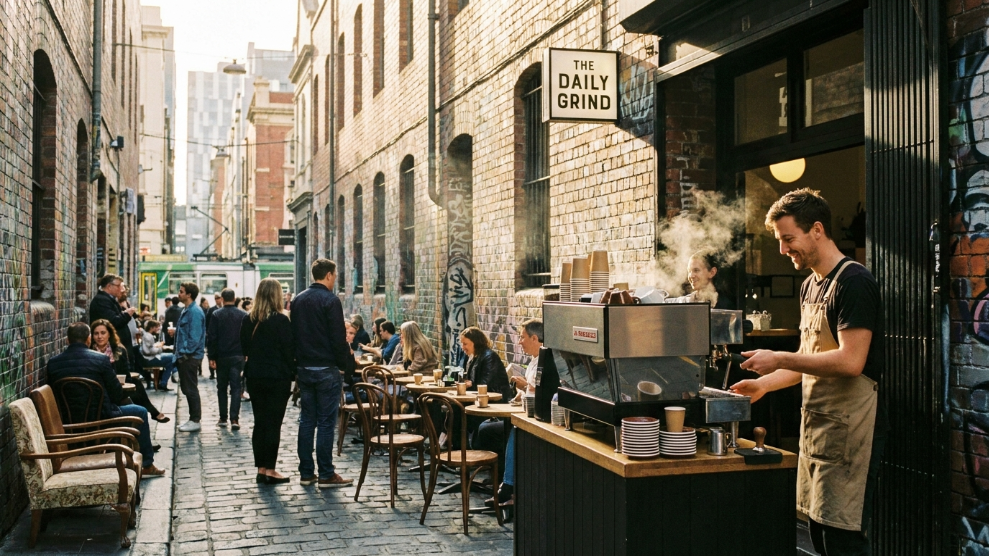
Melbourne did not become the world’s coffee capital by accident or overnight. The city’s coffee story is a 70-year accumulation of immigration, craft, obsession, and a daily standard that has never stopped rising. As confirmed by Travel Arbitrage’s 2026 Melbourne coffee guide: “Over three decades, a generation of obsessive roasters, barista champions, and espresso purists built a culture where a AU$6 flat white is taken as seriously as a Michelin-starred meal. The result: a city where even a suburban train station kiosk might pour a better espresso than a European capital’s finest hotel.”
In 2026, Time Out’s global city ranking placed Melbourne as the world’s best city. The coffee culture was cited as a defining element 94% of Melbourne residents approve of the city’s food scene.
This guide covers the history, the culture, the neighbourhoods, how to order, and why Melbourne coffee is different from anywhere else in the world.
Table of Contents
The History: From Lygon Street to Third Wave
Phase 1: Italian Immigration and the Espresso Foundation (1945 to 1980)
Melbourne’s coffee story begins with post-WWII immigration. As documented by Down Under Cafe’s comprehensive Australian coffee history: “Between 1945 and 1975, Australia received approximately 360,000 Italian immigrants, concentrated particularly in Melbourne and Sydney. The migrants brought with them espresso traditions, the cultural importance of cafe sociability, and the practical infrastructure machines, technique, beans required to establish proper espresso service.”
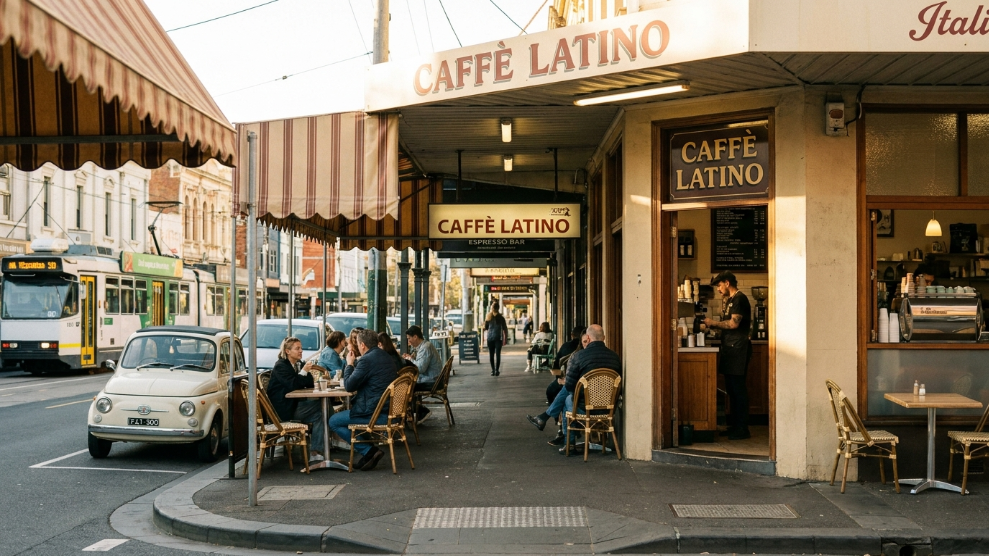
In Melbourne, Italian settlement concentrated in Carlton and the inner northern suburbs. Lygon Street developed as the commercial heart of Italian Melbourne a street that became known as Little Italy, where cafes, restaurants, and food businesses replicated Italian cafe culture in a new setting. University Cafe, Tiamo, and the other Lygon Street espresso bars introduced Australians to properly extracted espresso decades before the specialty coffee movement reached the broader public.
By the 1950s, espresso machines a rare sight in Australia before the Italian arrivals were standard in Italian-run Melbourne cafes. The first generation of Melbourne coffee was properly extracted, milk-forward, and served with the cultural seriousness that Italian cafe tradition demanded.
Phase 2: The Flat White Era (1980s to 2000)
The flat white espresso with fully integrated microfoam milk, served in a small cup emerged as the defining Australian coffee drink through the 1980s and 1990s. Its exact origin is contested: the University of Newcastle’s research traces possible roots to Italian sugar farmers in regional Queensland, while New Zealand also claims the drink’s invention.
What is not contested is Melbourne’s role in making it a standard. By the late 1980s, the flat white had become the default Melbourne cafe order smaller and more coffee-forward than an Italian cappuccino, more integrated and silky than the American café au lait. This established a quality standard that every Melbourne cafe, from the best specialty roaster to the corner takeaway, was expected to meet.
As confirmed by Trafalgar Travel’s Melbourne coffee culture guide: “Melburnians have come to expect the highest quality in their cup, and it’s become a daily routine for many Australians to head to their favourite coffee shop in the morning and fuel up with a perfectly poured cup.”
Phase 3: The Third Wave Specialty Movement (2000s to Present)
The 2000s brought a new generation of Melbourne baristas, roasters, and cafe owners who applied rigorous standards to every stage green bean sourcing, roasting precision, extraction technique, and milk texturing. Key developments of this era included:
St Ali (2005): Founded by Salvatore Malatesta in South Melbourne. A large-format specialty operation that became both a destination and a training ground for award-winning baristas. As described by Time Out Melbourne, St Ali’s owners “ensure that customers get the best flavour out of their beans, which are bought from countries across the world and roasted.”
Seven Seeds (2007): Founded by Mark Dundon in Carlton. The Carlton cafe-roastery established the template for the specialist Australian venue combining retail, roasting, and education in a single space. The name honours the seven seeds of fertile coffee that Sufi Baba Budan reportedly smuggled from Yemen to India in the 17th century.
Market Lane Coffee (2009): Founded with a focus on sustainable sourcing, light roasting, and transparency. Market Lane became B-Corp certified and carbon neutral. As confirmed by their website: “Born and based in Melbourne, our mission is to make great coffee accessible and exciting, simple to understand, and easy to brew and enjoy.”
Proud Mary (Collingwood): As described by Time Out Melbourne: “One of Melbourne’s original specialist coffee cafes is now a caffeine-fuelled empire: Proud Mary stocks some of Melbourne’s best venues with its signature blends, and is also a training ground for award-winning baristas.”
These third-wave Melbourne roasters and cafes inspired what Passion Vista Magazine’s 2026 cultural profile describes: “Coffee shops from Brooklyn to Berlin proudly claim to be Melbourne-inspired Melbourne CBD laneway coffee culture showing a small specialty espresso bar in a narrow bluestone alley with outdoor stools and commuters getting takeaway flat whitesa testament to how a local tradition became a global reference point.”
What Makes Melbourne Coffee Culture Unique
The Laneway Cafe
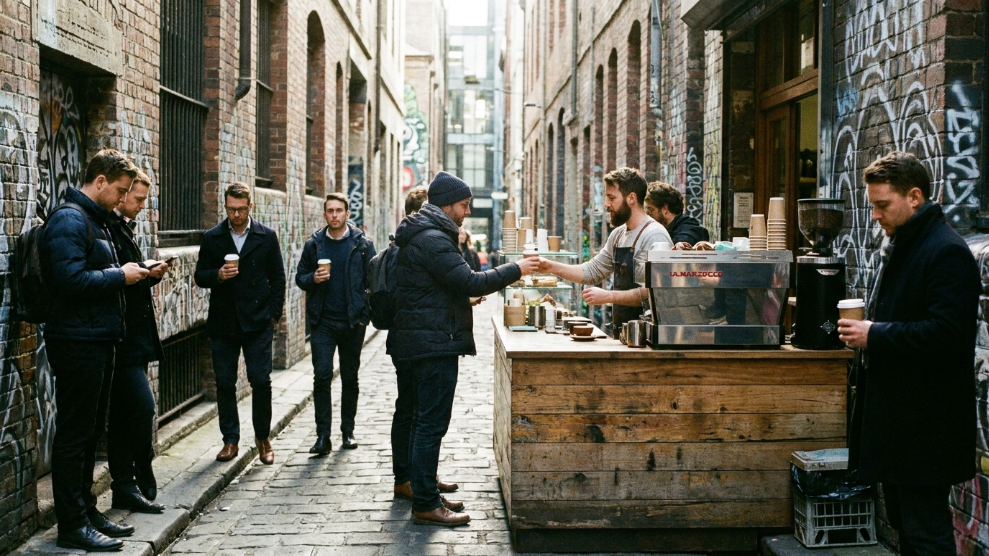
Melbourne’s 19th-century grid was laid out with narrow back-alleys for service deliveries. Over time those lanes were left largely unused. In the 1990s and 2000s, Melbourne’s inner-city cafe culture moved into these spaces, creating the laneway espresso bar as a distinct institution: intimate, standing-only or minimal seating, espresso-focused, fast.
As confirmed by Saltrove’s Melbourne coffee guide: “Melbourne has the highest density of third-wave cafes per capita in the Anglosphere.” The laneways Hardware Lane, Degraves Street, Centre Place, Hosier Lane are where Melbourne’s laneway coffee culture began and remain its most photographed expression.
Coffee on Cue’s Melbourne market analysis confirms the commercial reality: “These laneway cafes generate 34% higher revenue per square metre than conventional shopfronts. Top performers hit AU$2,890 per square metre annually. That’s the power of doing coffee right.”
The Discerning Customer Standard
As noted by Pionear’s guide to Melbourne coffee: “Melburnians will happily queue for a perfect cup, and they can taste the difference. This discerning customer base has pushed baristas and roasters to innovate constantly, making the city a true hub for third-wave coffee.”
This customer standard is the engine of Melbourne coffee quality. A Melbourne cafe that serves a mediocre flat white will lose its regular customers. The daily competitive pressure of an informed customer base has driven consistent improvement for decades.
The Melbourne Magic
The Melbourne Magic is a drink unique to Melbourne not commonly found elsewhere in Australia or internationally. It is a double ristretto with textured whole milk, served in a 148ml (approximately 5oz) cup.
As documented by the University of Newcastle’s coffee history research: “The Melbourne magic is made with a double ristretto (a shorter, more robust espresso shot) and textured milk, and served in a 148ml (5oz) cup. So it’s an even stronger flat white, in a smaller cup.”
The Magic is not on every Melbourne cafe menu. It is a shorthand among coffee-literate Melburnians a signal of the city’s comfort with intensely espresso-forward drinks in small volumes.
Melbourne Coffee by Neighbourhood
| Neighbourhood | Character | Coffee identity |
|---|---|---|
| Carlton / Lygon Street | Italian heritage, university precinct | The origin. Espresso bars with decades of history alongside Seven Seeds’ specialty roastery. Old world meets third wave. |
| CBD Laneways | Commuter, laneway culture | Hardware Lane, Degraves Street. Fastest espresso service in the city. Where laneway cafe culture began. |
| Fitzroy | Creative, independent, eclectic | The experimental heart. New roasters and cafes alongside established names. Proud Mary’s spiritual home. |
| Collingwood | Industrial, warehouse aesthetic | Proud Mary flagship. Specialty roastery spaces in converted warehouses. |
| South Melbourne / Prahran | Market district, village feel | St Ali’s original home. Market Lane at Prahran Market. The ritual of market shopping with a flat white. |
| Richmond / Cremorne | Industrial estates, tech precinct | Veneziano’s Richmond warehouse roastery. Specialty operators in converted industrial spaces. |
| Brunswick | Multicultural, bohemian | Strong neighborhood cafe culture. Independent specialty shops with local community focus. |
As described by MELBZ’s 2026 suburb coffee guide: “The CBD’s coffee scene is shaped by two forces: the laneway culture and the commuter demand for fast, excellent espresso. Market Lane operates several locations, but the Queen Victoria Market site is the most atmospheric a small shopfront serving some of Melbourne’s best filter coffee alongside the market traders.”
How to Order Coffee in Melbourne
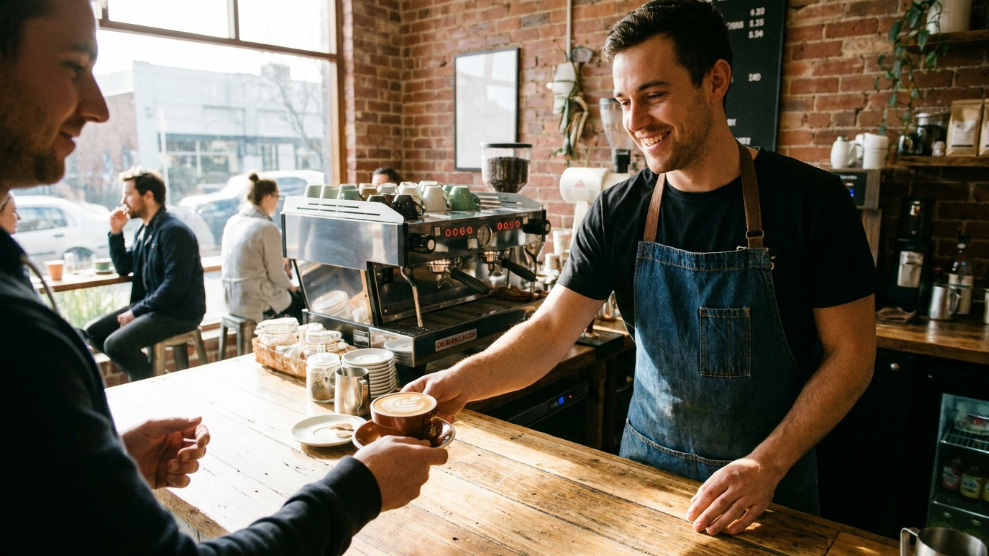
The standard order: A flat white at AU$4.50 to AU$5.50. This is the culturally appropriate default. Every Melbourne cafe makes flat whites. Ordering a flat white signals that you know what you are doing.
If you want no milk: Order a long black espresso diluted with hot water, served in a larger cup than a double shot. Melbourne’s equivalent of an americano, though the pour order may differ.
If you want to taste the bean itself: Order a short black (single espresso) or double shot (double espresso). Some specialty cafes offer pour-over or filter coffee on a separate menu for exploring single-origin character without milk.
The Melbourne Magic: Not on every menu. Ask specifically. Expect a small, very strong espresso-forward milk drink. Do not expect it to be widely understood outside Melbourne specialty circles.
| What you want | What to order in Melbourne | Approx price 2026 |
|---|---|---|
| Espresso with silky milk, standard size | Flat white | AU$4.50 to AU$5.50 |
| Espresso with milk, intense, small cup | Melbourne Magic | AU$4.50 to AU$5.50 |
| Espresso with milk, larger, milkier | Latte | AU$4.50 to AU$6 |
| Espresso with milk, foam layer on top | Cappuccino | AU$4.50 to AU$5.50 |
| Black coffee, no milk, hot water added | Long black | AU$4 to AU$5 |
| Pure espresso, no milk | Short black (single) or double shot | AU$3.50 to AU$4.50 |
| Single-origin filter coffee | Pour-over or batch brew (ask if available) | AU$6 to AU$8 |
| Strong espresso, smaller than flat white | Piccolo latte | AU$4 to AU$5 |
What not to order: Avoid asking for “a regular coffee” without specification this is not a recognised Melbourne order and will receive a clarifying question. Avoid asking for a “medium” or “large” Melbourne does not use American-style size naming. Order the drink, not the size.
Melbourne Coffee at Home: How to Replicate It
The Melbourne flat white standard is achievable at home with the right equipment and technique.
The machine: An espresso machine with a steam wand capable of producing genuine microfoam. The Breville Barista Express (AU$749 RRP) is the most popular home machine in Australia. Full guide: Best Espresso Machines Australia 2026
The grinder: The Breville Smart Grinder Pro (AU$399) for electric or the Timemore C3 Pro (AU$80 to AU$120) for manual are the most recommended pairings in the Melbourne home barista community. Full guide: Best Coffee Grinders Australia 2026
The beans: Medium to medium-dark roast espresso blend from a Melbourne specialty roaster. Seven Seeds House Blend, Market Lane’s seasonal espresso, St Ali’s espresso blend, or Proud Mary’s current espresso. All ship nationally. Full guide: Best Coffee Roasters Sydney and Melbourne
The technique: Double ristretto shots as the base for a flat white. Milk steamed to 60 to 65 degrees with minimal air incorporation velvety and integrated. Full technique guide: How to Make a Flat White at Home Australia
Melbourne Coffee Numbers 2026
- Australia’s coffee market: AU$2.58 billion in 2026, projected to reach AU$3.37 billion by 2031, per Coffee on Cue’s 2026 industry data
- Melbourne laneway cafes: Generate 34% higher revenue per square metre than conventional shopfronts
- Time Out global city ranking 2026: Melbourne ranked world’s best city
- Resident approval of food scene: 94% of Melbourne residents approve
- Specialty roasters in Australia: Over 700, highest concentration in Melbourne, per World Coffee Portal
Frequently Asked Questions
Why is Melbourne coffee famous? Melbourne’s reputation comes from 70 years of accumulated coffee culture: the post-WWII Italian immigration that brought proper espresso to Carlton’s Lygon Street, the flat white as a daily quality standard that Melbourne cafes were expected to meet, and the third-wave specialty movement of the 2000s that produced world-class roasters like Seven Seeds, Market Lane, St Ali, and Proud Mary. The daily competitive pressure from discerning customers who can genuinely taste the difference has driven continuous quality improvement.
What is a Melbourne Magic? A Melbourne Magic is a double ristretto with textured whole milk served in a 148ml (approximately 5oz) cup. It is essentially an even stronger, smaller version of a flat white intensely coffee-forward with just enough milk to create the smooth microfoam texture. The Melbourne Magic is specific to Melbourne and not widely found elsewhere in Australia or internationally.
Is Melbourne or Sydney better for coffee? Both cities are world-class in 2026. Sydney holds four of the seven Australian spots in the World’s 100 Best Coffee Shops 2026 a slight advantage on global rankings. Melbourne has the deeper, more embedded daily coffee culture and higher density of quality cafes per capita. For visiting: Sydney has more internationally acclaimed individual cafes. Melbourne has a more consistently excellent average across the city.
What coffee do Australians drink the most? The flat white is the most culturally significant Australian coffee drink. Lattes and cappuccinos are also widely consumed. Long blacks (espresso with hot water) are the most common black coffee order. Approximately 75% of Australians drink at least one coffee daily, per market research cited by Coffee on Cue.
Is Melbourne coffee more expensive than London or New York? Comparable at specialty cafes. A Melbourne flat white costs AU$4.50 to AU$5.50 (approximately £2.20 to £2.70 or USD$2.80 to USD$3.50 at current exchange rates) generally cheaper than equivalent quality specialty coffee in London (£4 to £5.50) or New York (USD$5.50 to USD$7). Melbourne’s quality-to-price ratio at specialty cafes is among the best of any major global city.
Can I buy Melbourne specialty coffee online if I don’t live in Melbourne? Yes. Seven Seeds, Market Lane (free shipping over AU$60), Proud Mary, St Ali, and Veneziano all ship nationally across Australia. For a complete guide: Best Coffee Roasters Sydney and Melbourne
For replicating Melbourne quality at home: How to Make a Flat White at Home Australia and Best Espresso Machines Australia 2026
For ordering Melbourne coffee online from anywhere in Australia: Best Coffee Roasters Sydney and Melbourne
Sources used in this article: Down Under Cafe How Australian Coffee Became World Class: Full History / Coffee on Cue Melbourne Wins Best City: What It Means for Coffee 2026 / Travel Arbitrage Melbourne Coffee Culture Guide 2026 / Passion Vista Magazine Inside the Brew Capital of the World 2026 / Saltrove Melbourne Coffee Crawl Guide 2026 / MELBZ Best Suburbs for Coffee Melbourne 2026 / University of Newcastle Who Invented the Flat White / Trafalgar Travel Inside Melbourne’s Coffee Culture / Time Out Australia Best Coffee in Australia 2026 / World Coffee Portal Specialty Roaster Data

Munir Ahmed is the founder of Coffee Craft Guide, dedicated to building the most thorough and honest coffee resource for home brewers worldwide. Combining SCA brewing standards with deep-dive research across global coffee communities (like r/espresso and Home-Barista) and thousands of verified reviews, Munir and his team deliver data-backed, expert coffee insights you can trust.