Hard water affects coffee in two separate ways. It damages your machine through limescale buildup over time. And it changes the taste of your coffee in the cup, in ways that are often misattributed to poor beans or bad brewing technique.
This guide focuses on what hard water does to the flavour of your coffee, which types of coffee and roast levels perform better in hard water, and what filtration options UK buyers can use to improve results without buying a specialist water system.
For the full guide to limescale, machine damage, and descaling: Hard Water and Coffee: Complete UK Guide
Table of Contents
What Hard Water Does to Coffee Flavour
The Specialty Coffee Association’s water quality standards specify target water for brewing at 75 to 250 parts per million (ppm) of total dissolved solids (TDS). London’s water averages 260 to 350 ppm. Most of the South East exceeds this range.
When water is too hard, the high calcium and magnesium content causes two specific flavour problems:
Suppressed sweetness and acidity. Calcium and magnesium ions bind to the acidic compounds in coffee during brewing, partially neutralising the brightness and sweetness that make specialty coffee distinctive. A well-roasted Ethiopian Yirgacheffe that tastes of blueberry and jasmine in soft water can taste flat and lifeless in very hard London water from the same equipment.
Amplified bitterness. Hard water also extracts bitter compounds more aggressively than soft water at the same temperature and contact time. Coffee that tastes balanced with filtered water can taste noticeably more bitter with hard tap water.
These effects are measurable. World Coffee Research’s water quality data confirms that water mineral composition is among the most significant variables in coffee extraction quality.
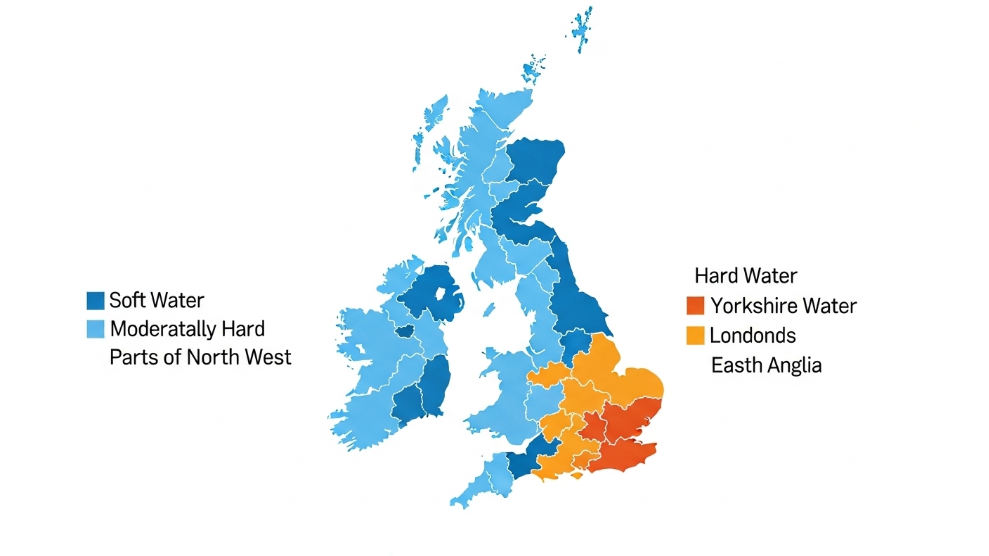
UK Water Hardness by Region
| UK Region | Hardness (ppm) | Coffee impact |
|---|---|---|
| Scotland, Wales, Northern Ireland | 0 to 100 | Minimal. Any coffee, any roast works well. |
| North West England, parts of South West | 100 to 200 | Slight. Light roasts may taste marginally flatter. Filter water recommended. |
| Midlands, Yorkshire, South East | 200 to 300 | Noticeable. Filter water clearly improves results. Medium roast preferred. |
| London, East Anglia | 300+ | Significant. Filtered water essential. Avoid very light roasts. Low-acid coffees recommended. |
You can check your exact local water hardness using the UK Drinking Water Inspectorate postcode checker or contacting your water company.
The Best Roast Level for Hard Water
This is the most actionable advice for most UK buyers: choose medium to medium-dark roast rather than light roast if you are in a hard water area.
Why light roast struggles in hard water. Light roast coffees retain more of the delicate acidic compounds (citric acid, malic acid) that create their characteristic brightness and fruit notes. Hard water suppresses these acids through mineral binding, leaving a flat, underexpressive cup. The floral and berry notes that make a good Ethiopian Yirgacheffe distinctive largely disappear in very hard London water.
Why medium and dark roast holds up better. Medium and dark roasts have undergone more caramelisation during roasting, producing more robust chocolate, caramel, and nut flavour compounds. These compounds are less sensitive to the acid-suppressing effects of hard water. A good Colombian medium roast or a Brazilian medium-dark retains its character in hard water far better than the same beans roasted light.
For the full roast level guide: Light Roast vs Dark Roast: Real Differences
The Best Coffee Brands and Origins for UK Hard Water

Best Origins for Hard Water
Colombian (medium roast): The most consistently recommended origin for hard water brewing. The caramel sweetness and balanced acidity of Colombian Arabica is robust enough to come through hard water without losing its essential character. A Colombian medium from any quality roaster performs reliably in London water.
Brazilian natural (medium-dark): Low acid, full body, chocolate and nut notes. Brazilian natural processed coffee is one of the best origins for hard water because its flavour profile does not rely on the delicate acids that hard water suppresses. The sweetness comes from the natural processing and robust roast character rather than from chlorogenic acid brightness.
Guatemalan (medium-dark): Similar to Brazilian in hard water performance. Chocolate, brown spice, medium-full body. Holds up well through mineral interference.
Sumatra (dark): Very forgiving of hard water. Earthy, full body, low acid. The Sumatran profile, which already has minimal brightness, is not significantly diminished by hard water minerals.
Origins to avoid in very hard water without filtration: Ethiopian Yirgacheffe (light roast), Kenyan AA, Colombian light roast. These origins are excellent coffees that simply do not express their best qualities through very hard water.
Best Brands for Hard Water UK
Lifeboost Coffee: Specifically engineered for lower acidity. The pH 4.8 to 5.0 of Lifeboost (versus typical 4.5 to 4.7 for other coffees) means the lower starting acidity, combined with hard water’s acid-suppressing effect, still leaves a pleasant cup rather than flat mineral-tasting coffee. Full review: Lifeboost Coffee Review
Pact Coffee (darker roast tiers): Pact’s House and medium-dark single-origin tiers perform better in hard water than their lighter microlot offerings. Their subscription allows selecting darker roast profiles specifically. Full UK subscription guide: Best Coffee Subscriptions UK 2026
Clumsy Goat Brazilian Super Crema: The Brazilian Super Crema from this Lancashire roaster is specifically well-suited to hard water. Medium-dark roast, full body, low acid, chocolate and nut character. Full review: Clumsy Goat Coffee Review UK
Water Filtration: The Most Effective Fix
Filtering your water is the single most impactful improvement available for UK hard water coffee brewing. It improves every brew method, works with any coffee, and produces more consistent results than changing beans.
Option 1: Brita Filter Jug (Most Accessible)
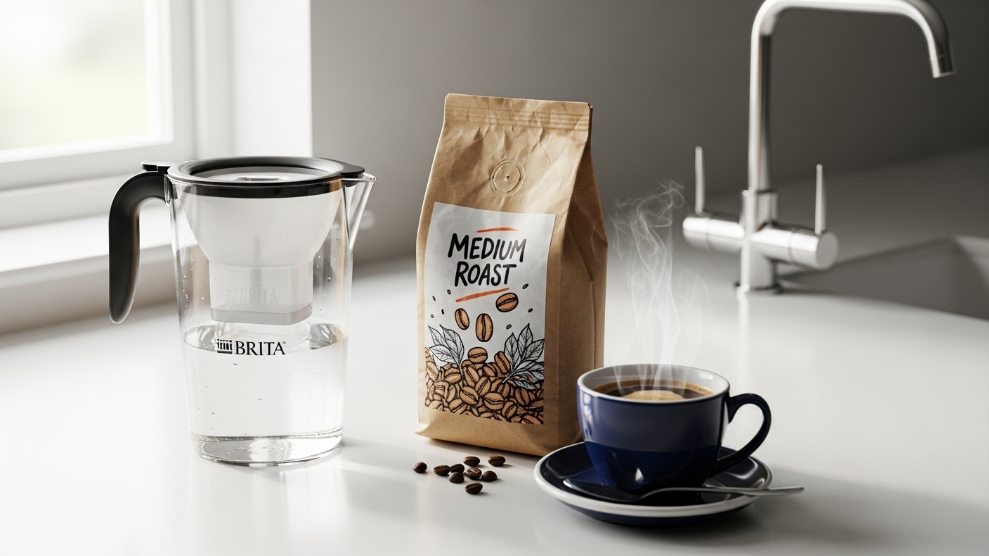
Brita Maxtra+ filter jugs on Amazon UK approximately £20 to £30 for the jug, £15 to £20 for a 3-pack of filters.
Brita Maxtra+ filters reduce the calcium and magnesium content in hard water through ion exchange. Independent testing shows filtered London water at approximately 100 to 150 ppm TDS within the SCA’s recommended brewing range. The improvement in coffee flavour when brewing with Brita-filtered versus straight London tap water is clearly noticeable.
The filter requires replacement every 4 weeks under normal use.
Option 2: BWT Penguin Filter Jug
The BWT Penguin jug uses a different filtration technology that specifically adds magnesium during the filtration process. Magnesium in water has been shown to enhance coffee flavour extraction compared to calcium-dominated water. BWT markets specifically to coffee enthusiasts and the magnesium-enhanced output is popular in specialty coffee circles.
Price: approximately £25 to £35 for the jug.
Option 3: Machine Water Filters
Most quality espresso machines and bean-to-cup machines sold in the UK include an internal water filter. Using these filters correctly provides partial protection:
Sage/Breville: The included filter reduces hardness before water reaches the boiler. Replace every 2 to 3 months in hard water areas.
Jura CLARIS: More effective than most machine filters. Reduces mineral content more significantly, extending descaling intervals.
De’Longhi Magnifica: Standard machine filter provides basic protection. Philips AquaClean filter (in 5400 series) is more effective.
Machine water filters reduce the impact on your machine but do not filter the water used in the brew itself as thoroughly as a separate filter jug does.
Option 4: Third Wave Water
Third Wave Water is a mineral packet product designed to be mixed with distilled water to create SCA-optimal brewing water. Used by specialty coffee enthusiasts who want the most precise control over mineral composition. Available online in the UK. At approximately £20 to £25 for a pack, it is the most involved and most precise option.
Brewing Methods and Hard Water
Some brew methods are more forgiving of hard water than others.
Most affected: Pour-over (V60, Chemex). These methods are specifically designed to highlight delicate aromatic compounds that hard water suppresses most. Filter your water for pour-over brewing in London and the South East.
Moderately affected: AeroPress, drip machines.
Least affected: French press, cafetiere, espresso. The concentrated nature of espresso and the full-immersion body of cafetiere partially mask hard water effects. Still noticeably better with filtered water, but more forgiving.
For pour-over brewing: Pour-Over Coffee Complete Guide For cafetiere brewing: Cafetiere vs French Press Guide
Frequently Asked Questions
Does hard water make coffee bitter? Yes, measurably. Hard water amplifies bitter compound extraction and suppresses the acids that create balance and sweetness. The result is coffee that tastes harsher and less sweet than the same beans brewed with softer water. Filtering your tap water or using a machine water filter reduces this effect.
What is the best water filter for coffee in the UK? For everyday use: the Brita Maxtra+ filter jug. For specialty coffee enthusiasts who want maximum flavour improvement: the BWT Penguin filter. Both are widely available in UK supermarkets and online.
Can I use bottled water for coffee in the UK? Yes, and it produces noticeably better results than hard tap water. However, bottled water is expensive at daily coffee volumes. Choose still mineral water with 75 to 150 mg/l TDS shown on the label. Highland Spring, Volvic, and Harrogate Spring are all suitable. Avoid distilled water which has no minerals at all and produces flat coffee.
Does decaf coffee work better in hard water? Decaf and caffeinated coffee respond to hard water in the same way. The mineral composition of the water affects extraction chemistry regardless of caffeine content.
For the full hard water guide including machine damage and descaling: Hard Water and Coffee: Complete UK Guide For how to descale your machine: How to Descale a Coffee Machine UK
Sources: Specialty Coffee Association Water Quality Standards / UK Drinking Water Inspectorate Water Quality Data / World Coffee Research Water Quality and Extraction / Brita UK Maxtra+ Filter Documentation

Munir Ahmed is the founder of Coffee Craft Guide, dedicated to building the most thorough and honest coffee resource for home brewers worldwide. Combining SCA brewing standards with deep-dive research across global coffee communities (like r/espresso and Home-Barista) and thousands of verified reviews, Munir and his team deliver data-backed, expert coffee insights you can trust.