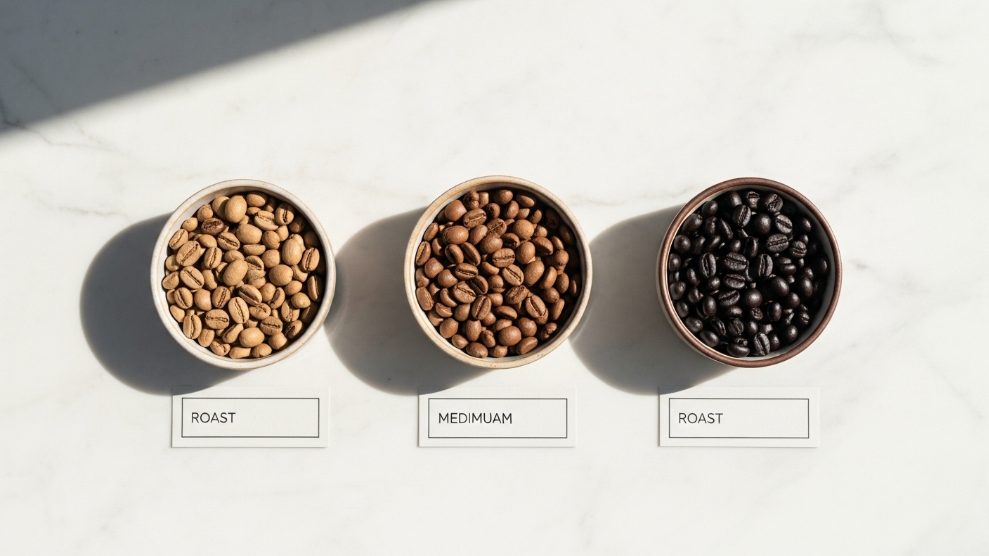
Most coffee packaging uses roast level as its primary identity. But the terms light, medium, and dark are not standardised across the industry. One roaster’s “medium” is another’s “dark.” Without understanding what these terms actually describe, buying coffee by roast label alone produces inconsistent results.
This guide covers what the three roast levels genuinely mean in terms of temperature and time, the real differences in caffeine and acidity, which flavour profiles each produces, the best brewing methods for each, and the two most widely believed myths about coffee roasting that are incorrect.
Table of Contents
What Roasting Actually Does
Before the differences, a brief explanation of the process itself.
Green coffee beans have no coffee flavour or aroma. The familiar roasted coffee taste is entirely a product of the roasting process specifically, a series of chemical reactions that occur as beans are heated. These include the Maillard reaction, caramelisation, and pyrolysis, which together transform green beans into the roasted product.
The key transformation temperatures:
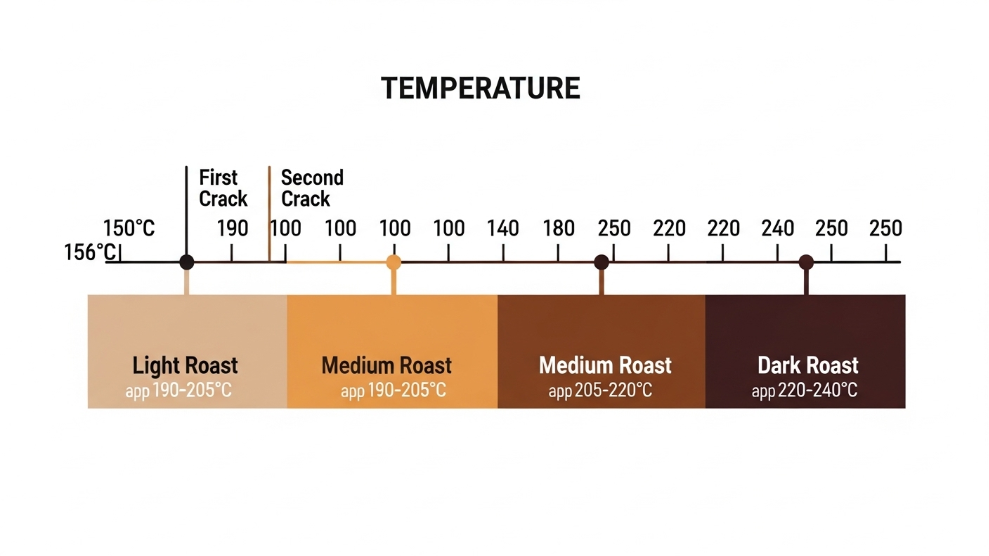
First crack: At approximately 196°C (385°F), the bean undergoes rapid expansion as trapped moisture and CO2 escape. A cracking sound is audible. This is the minimum threshold for drinkable coffee. Light roasts are typically stopped shortly after first crack.
Second crack: At approximately 224°C (435°F), the cellular structure of the bean begins to fracture. Another cracking sound occurs. Dark roasts are typically taken into or past second crack.
The roast master controls how far the beans progress through these stages by adjusting the drum temperature, airflow, and time. These decisions determine which flavour compounds develop, which are preserved, and which are burned off.
The Three Roast Levels: What They Are
Light Roast
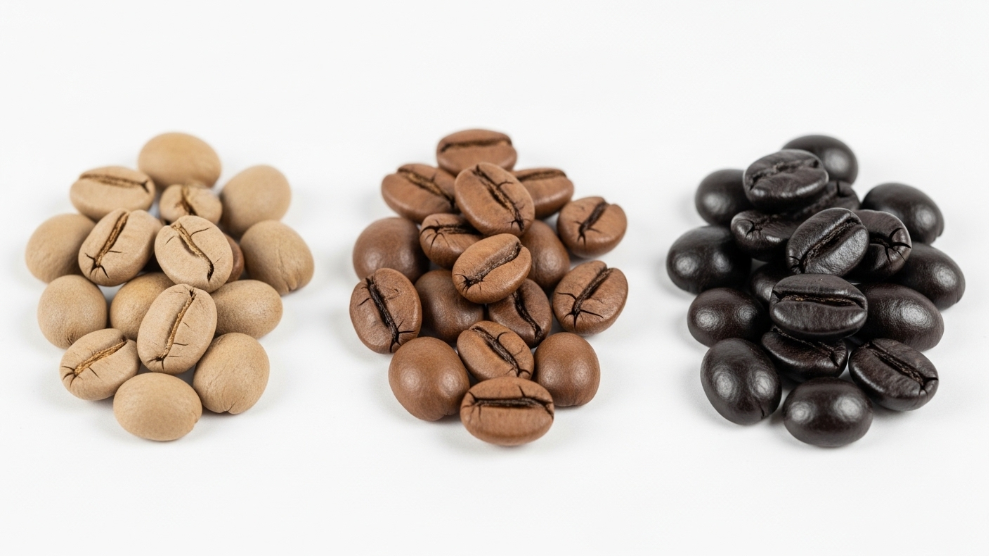
Internal bean temperature at end of roast: 180 to 205°C (356 to 401°F) When stopped: Shortly after or at first crack, before second crack Appearance: Light brown, dry surface, no visible oils on the bean Surface texture: Matte, no shine
Light roast is stopped early, which means:
- More of the bean’s original flavour compounds are preserved
- Less roast character has developed
- The bean’s origin flavours dominate the cup
Light roast coffees taste most strongly of their origin. An Ethiopian Yirgacheffe lightly roasted tastes of blueberry and jasmine. The same beans taken to a dark roast lose most of these origin notes and taste primarily of roast character.
Light roast is not universally “better” it is the appropriate roast level for drinkers who want to experience where the coffee came from and are comfortable with the brighter, more acidic flavour profile it produces.
Medium Roast
Internal bean temperature at end of roast: 210 to 220°C (410 to 428°F) When stopped: Between first and second crack Appearance: Medium brown, dry to slightly less matte surface Surface texture: Minimal to no surface oils
Medium roast represents the balance point between origin flavour and roast character. Neither dominates entirely. Caramel, chocolate, and mild sweetness from the roasting process blend with remaining origin characteristics.
Medium roast is the most versatile roast level. It performs well across the widest range of brewing methods, from espresso to pour over to drip. This is why medium roast dominates the commercial specialty market and why most subscription services send medium roast as a default unless you specify otherwise.
Dark Roast
Dark roast is taken far enough that roast character overwhelms origin character. The oils visible on the bean surface have been driven from inside the bean to the surface by the intense heat. These oils are what produce the glossy appearance.
Internal bean temperature at end of roast: 225 to 245°C (437 to 473°F) When stopped: At or past second crack Appearance: Dark brown to near-black, oily surface Surface texture: Glossy, shiny from surface oils
Dark roast coffee tastes of bold, intense roast character: dark chocolate, smokiness, bitterness, and low acidity. The specific origin of the beans matters much less than at lighter roast levels because origin character has been largely replaced by roast character.
Dark roast does not mean “stronger.” It means the roasting process has advanced further. Strength in the cup is controlled by the coffee to water ratio, not by roast level. See: Coffee to Water Ratio Guide
The Caffeine Myth: Which Roast Has More?
This is the most widely misunderstood fact in coffee. The popular belief is that dark roast contains more caffeine because it tastes stronger. This is incorrect.
The truth: Light roast contains marginally more caffeine per gram than dark roast.
Roasting burns off a small amount of caffeine. The longer and hotter the roast, the more caffeine is lost. By weight (grams), light roast consistently has 5 to 10% more caffeine than the same beans taken to a dark roast.
Why people believe the opposite:
The confusion comes from measuring coffee by volume rather than by weight. Dark roast beans are physically larger because the roasting process causes them to expand and lose density. A tablespoon of dark roast beans contains fewer individual beans than a tablespoon of light roast beans, and therefore fewer grams of coffee overall. Fewer grams equals less total caffeine, which is the opposite of what most people assume.
When coffee is measured by weight which is the recommended approach for consistent brewing light roast produces a cup with slightly more caffeine than dark roast.
In practice: The difference is 5 to 10% maximum and is negligible in everyday brewing. Switching from dark to light roast to reduce caffeine intake produces almost no measurable reduction. For genuine caffeine reduction, switch to decaf or reduce your dose.
For exact caffeine content by brew method: Caffeine Content in Every Coffee Type
☕ Free Tools & Printables
Roast level changes flavour and your ideal recipe. Our Espresso Ratio Calculator includes roast guidance, and the Caffeine Calculator covers caffeine differences. Free download: the Coffee Flavor Wheel (PDF).
Acidity: The Real Difference
Acidity is where roast level creates a genuinely significant and predictable difference.
Light roast: Highest acidity. Chlorogenic acids, which are present in green beans, are partially preserved through light roasting. They contribute to the bright, sometimes sharp acidity that characterises light roast coffee.
Medium roast: Moderate acidity. A significant portion of chlorogenic acids have broken down but a meaningful amount remains.
Dark roast: Lowest acidity. Most chlorogenic acids have broken down at dark roast temperatures. This is why dark roast is typically recommended for people with acid reflux or sensitive stomachs the lower acid content is a measurable physical difference, not a perception.
The practical implications:
If you experience acid reflux or heartburn from coffee, dark roast reduces but does not eliminate acidity. Cold brew made from dark roast beans further reduces acidity because cold extraction pulls fewer acidic compounds. See: Cold Brew Coffee Complete Guide
If you use a Lifeboost Coffee subscription, their low-acid claim is supported by their roasting approach and single origin sourcing. Read our review: Lifeboost Coffee Review
Flavour Profiles by Roast Level
The flavour differences between roast levels are the most subjective and also the most dramatic of all the differences discussed here.
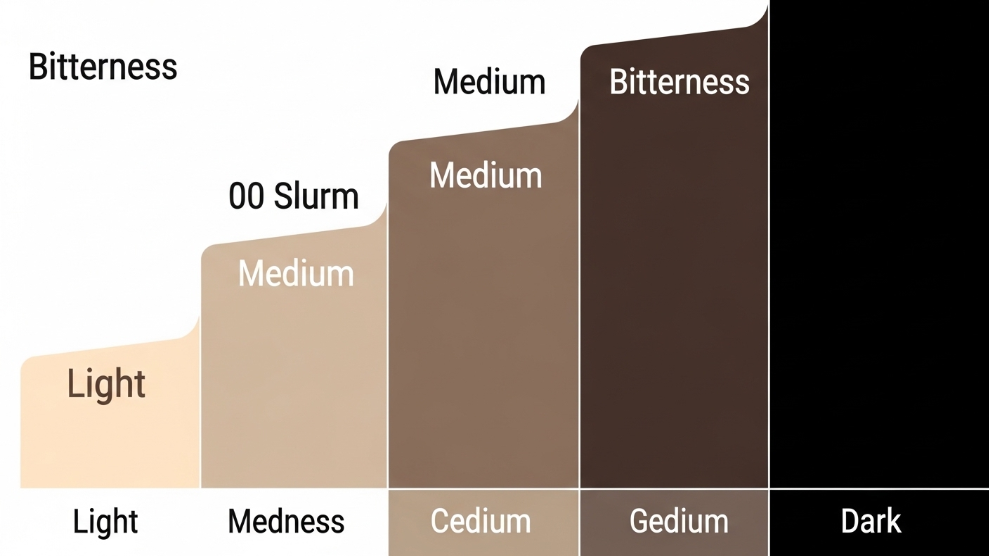
Light roast flavour profile:
- Dominant notes: Floral, fruity, berry, citrus, stone fruit, tea-like
- Acidity: High, bright, sometimes sharp
- Sweetness: Present but less developed than medium
- Bitterness: Very low to none
- Body: Light, tea-like texture
- Origin character: Strongly expressed
Medium roast flavour profile:
- Dominant notes: Caramel, milk chocolate, brown sugar, nuts, stone fruit
- Acidity: Moderate, balanced
- Sweetness: Well developed peak sweetness typically occurs at medium roast
- Bitterness: Low to moderate
- Body: Medium, pleasant mouthfeel
- Origin character: Partially expressed, partially replaced by roast character
Dark roast flavour profile:
- Dominant notes: Dark chocolate, smokiness, roasted nuts, tar (in very dark roasts), bold bitterness
- Acidity: Low
- Sweetness: Diminished most sugars have been caramelised or carbonised at dark roast
- Bitterness: High
- Body: Full, heavy
- Origin character: Largely replaced by roast character
Best Brewing Methods by Roast Level
Roast level affects how a coffee extracts, which makes some brew methods better suited to each level.
Light Roast: Best Brewing Methods
Pour-over (V60, Kalita Wave, Chemex) at 94 to 96°C is the optimal method for light roast. The slow, controlled extraction preserves delicate aromatic compounds. Many specialty roasters specifically recommend their light roast beans for pour-over.
AeroPress at 85 to 90°C also works well. The lower temperature reduces the risk of extracting the bitter compounds that emerge if light roast is brewed too hot.
What to avoid with light roast: Drip machines that cannot reach 92°C consistently under-extract light roast, producing sour, thin cups. Dark roast is more forgiving of lower brew temperatures.
Full pour-over guide: Pour-Over Coffee Complete Guide
Medium Roast: Best Brewing Methods
Medium roast is the most versatile and works well across all methods.
Espresso: Medium roast is ideal for home espresso. It extracts predictably and produces good crema. Light roast can be used for espresso but requires more precise dialling-in. Very dark roast espresso is standard in traditional Italian and commercial settings.
Drip machines and Keurig: Medium roast is what most drip machines are calibrated to handle at their default settings.
Pour-over, French press, AeroPress: All work well with medium roast.
Dark Roast: Best Brewing Methods
French press and cafetière: Dark roast’s bold body and low acidity suit the full-immersion extraction of French press, which also produces a fuller body that complements the roast character.
Cold brew: Dark roast makes outstanding cold brew. The cold extraction further reduces acidity, and the bold chocolate and caramel notes of dark roast translate beautifully into cold brew’s naturally sweet, smooth profile. Cold brew at 1:8 ratio with dark roast is one of the most crowd-pleasing home coffee preparations.
Espresso (traditional style): Classic Italian espresso is dark roast. The low acidity and bold body create the thick, intense espresso shot associated with traditional Italian and commercial espresso.
Cold brew guide: Cold Brew Coffee Complete Guide
Roast Level and Coffee Freshness
All roasted coffee stales over time, but roast level affects the rate slightly.
Light roast beans retain more moisture after roasting and degas more actively in the days after roasting. The delicate aromatic compounds that make light roast distinctive are also more volatile and fade faster than the bolder, more stable roast character of dark roast.
In practical terms: light roast is more time-sensitive than dark roast. A 3-week-old bag of light roast has lost more of its distinguishing character than a 3-week-old bag of dark roast from the same starting point.
Buy light roast beans in smaller quantities and use them within 2 to 3 weeks of the roast date for best results.
For storage guidance: How to Store Coffee Beans
UK and Australian Roast Preferences
UK: UK specialty cafes have moved strongly toward lighter roasts over the past decade, influenced by Scandinavian specialty coffee culture. Most third-wave cafes in London, Manchester, Edinburgh, and Bristol now offer light to medium roast single-origins alongside a house espresso blend at medium-dark.
Supermarket coffees in the UK tend to be medium-dark to dark. Brands like Lavazza, illy, and most own-brand supermarket options are medium-dark and designed for the flavour profile associated with Italian espresso culture.
Australia and New Zealand: Australian and New Zealand cafe culture has always been espresso-focused, which traditionally favoured medium to medium-dark roasts. The specialty wave brought lighter roasts to the conversation, but medium roast remains the dominant preference for flat white and latte consumption.
Exploring Different Roast Levels with Subscriptions
The most effective way to understand roast level differences is to taste the same origin at different roast levels in succession. Some specialty roasters offer this explicitly.
Atlas Coffee Club sends a single origin from a different country each month. You can specify your roast preference in your subscription settings light, medium, or dark. Shipping confirmed for USA, UK, Australia, New Zealand, and Canada.
Atlas Coffee Club Official Website
Trade Coffee (USA only) uses a quiz that specifically asks your roast preference and caffeine sensitivity, then matches you to roasters whose output suits your preferences.
Pact Coffee (UK and EU) allows roast selection and offers a range from light to dark with each origin described in terms of roast character.
Full subscription guide: Best Coffee Subscriptions 2026
Frequently Asked Questions
Does dark roast coffee have more caffeine?
No. This is the most common misconception about coffee roasting. By weight, light roast has marginally more caffeine because the roasting process burns off a small amount of caffeine, and dark roast goes through a longer roasting process. By volume (tablespoon), dark roast may appear similar because dark roast beans are larger and less dense, meaning a tablespoon contains fewer beans and grams. The difference is 5 to 10% at most and not practically significant.
Which roast level is best for espresso?
Medium to medium-dark roast is the most forgiving and widely recommended for home espresso. The Specialty Coffee Association’s espresso extraction standards are calibrated around medium roast. Light roast can be used for espresso but requires more precise temperature control (higher temperature, 95 to 96°C) and finer grind adjustment. Very dark roast produces the classic Italian espresso profile but can over-extract quickly, requiring careful timing.
Is light roast better for health?
Light roast retains more chlorogenic acids, which are antioxidants that have been associated with health benefits in some research. However, the practical health difference between roast levels is minimal for a typical coffee drinker. Dark roast is lower in acidity and may be more comfortable for people with acid reflux. Neither is dramatically healthier than the other for the general population.
Why is my light roast coffee sour?
Sour light roast is almost always under-extraction. Light roast requires more precise extraction than dark roast because its desirable compounds are more difficult to extract. Solutions: grind finer, increase water temperature (96°C for light roast), and ensure your pour-over drain time is between 2.5 and 3.5 minutes. Do not simply switch to dark roast to avoid sourness fix the extraction.
For a full troubleshooting guide: Why Does My Espresso Taste Sour?
Can I use dark roast beans for cold brew?
Yes dark roast is an excellent choice for cold brew. The low acidity of dark roast is further reduced by cold extraction, producing an extremely smooth, low-acid result. The bold chocolate and caramel notes of dark roast translate very well into cold brew’s naturally sweet, concentrated profile. Medium-dark is equally popular for cold brew.
What does the roast date on my coffee bag mean?
The roast date is the date the green beans were roasted. It is the most important date on a specialty coffee bag. The peak brewing window for most coffees is 7 to 21 days after the roast date. Light roast benefits from 7 to 14 days of rest after roasting. Dark roast is often excellent from 3 to 4 days after roasting and remains good for 3 to 4 weeks.
Summary: Which Roast Should You Choose?
Choose light roast if you want to experience the origin character of the coffee, you enjoy bright, fruity, floral flavours, you brew primarily with pour-over or AeroPress, and you are comfortable with higher acidity.
Choose medium roast if you want versatility across all brewing methods, you prefer a balanced cup with caramel sweetness, you brew espresso or drip coffee alongside filter methods, and you are exploring specialty coffee without a strong preference yet.
Choose dark roast if you prefer bold, low-acid coffee, you experience acid reflux from lighter roasts, you primarily brew French press or cold brew, or you like the classic espresso profile associated with Italian coffee culture.
Sources used for this article: National Coffee Association / Specialty Coffee Association / USDA FoodData Central / Sweet Maria’s Home Roasting Guide

Munir Ahmed is the founder of Coffee Craft Guide, dedicated to building the most thorough and honest coffee resource for home brewers worldwide. Combining SCA brewing standards with deep-dive research across global coffee communities (like r/espresso and Home-Barista) and thousands of verified reviews, Munir and his team deliver data-backed, expert coffee insights you can trust.