
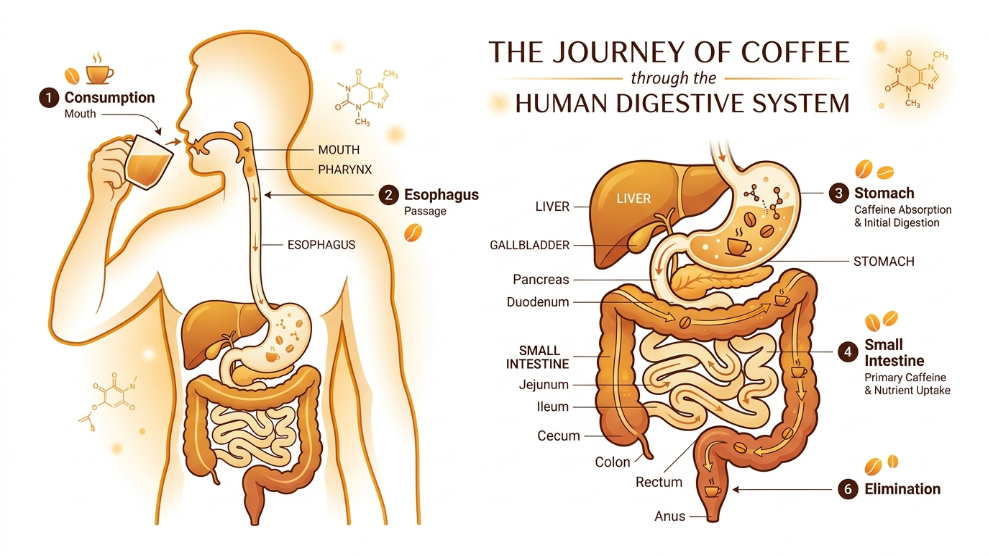
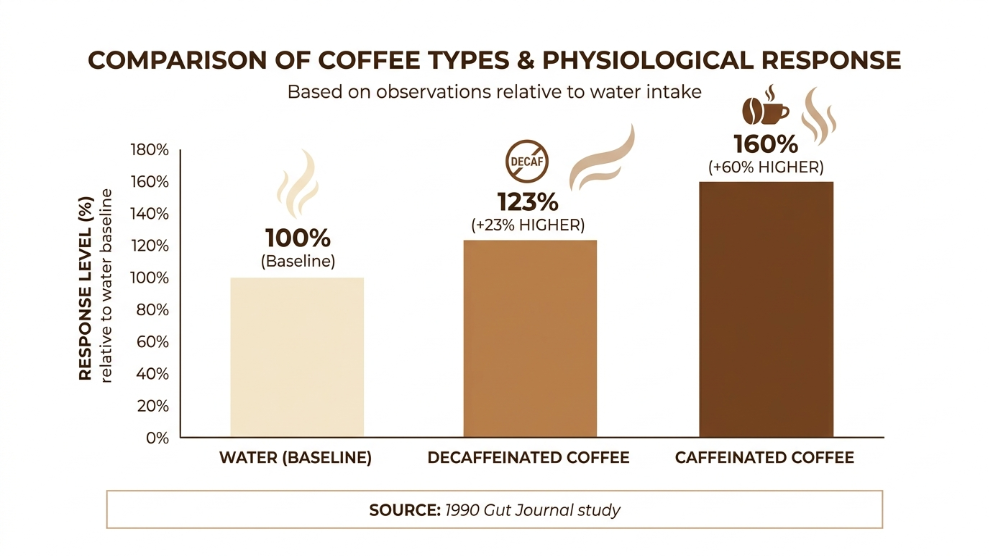
If you need the bathroom within 20 minutes of your morning coffee, you are not imagining it and you are not alone. A 1990 study published in the medical journal Gut surveyed 99 healthy volunteers and found that 29% reported an urge to defecate after drinking coffee. The same study measured actual colon activity and confirmed that caffeinated coffee stimulates the colon 60% more than water and 23% more than decaffeinated coffee.
This is one of the best studied effects of coffee on the body, and the science behind it is more interesting than the headline suggests. Caffeine is not the only reason, which is why decaf coffee causes the same effect in many people.
This article explains exactly what happens in your digestive system after you drink coffee, which compounds are responsible, why not everyone experiences it, and whether it is beneficial or harmful.
Table of Contents
The Direct Answer
Yes, coffee stimulates bowel movements in many people. It does this through several mechanisms simultaneously:
- Coffee triggers the gastrocolic reflex, which causes the colon to contract
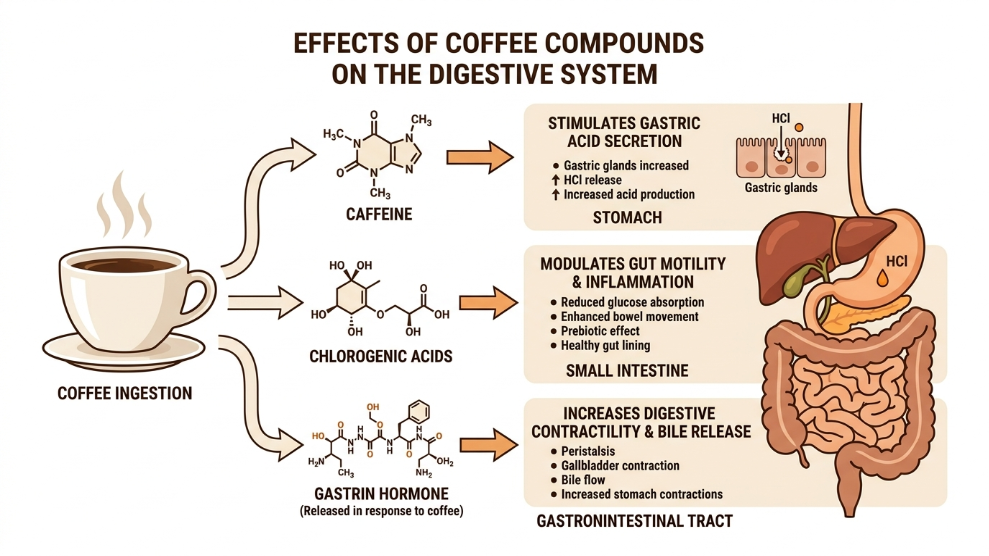
- Coffee stimulates the release of gastrin, a hormone that increases digestive activity
- Coffee stimulates cholecystokinin, a hormone that activates the gallbladder and speeds digestion
- Chlorogenic acids and other non caffeine compounds in coffee directly stimulate colon activity
The effect is real, measurable, and documented in peer reviewed research. It is not a placebo effect, not caused purely by caffeine, and not the same as the simple warming effect of any hot drink.
The Research Behind the Effect
The foundational study on this topic was published in Gut, a peer reviewed British Medical Journal gastroenterology publication, in 1990. Dr. Steven Brown and colleagues at Royal Hallamshire Hospital measured the colonic activity of 14 volunteers after they drank caffeinated coffee, decaffeinated coffee, hot water, and after eating a 1,000-calorie meal.
The findings were specific and measurable:
Caffeinated coffee stimulated colon activity to a level similar to eating a full meal, which is a significant physiological response to a liquid.
Caffeinated coffee stimulated colon activity 60% more than plain water.
Decaffeinated coffee stimulated colon activity 23% more than plain water.
Hot water alone did not alter colon activity in any participant.
The last two findings together reveal something important: caffeine is not the only or even the primary mechanism. Since hot water produced no effect but decaf coffee did, something in coffee other than caffeine and other than heat is causing the bowel response.
A 2022 meta-analysis by Tzu-Wei Yang, published in a gastroenterology journal, reviewed four randomised controlled trials and confirmed that caffeine reduces the time to first bowel movement. This adds to the evidence that caffeine contributes to the effect, but the decaf data from the 1990 Brown study confirms it is one of multiple mechanisms rather than the sole cause.
Mechanism 1: The Gastrocolic Reflex
The gastrocolic reflex is a normal physiological process that has nothing to do with coffee specifically. When your stomach stretches after consuming food or drink, the nervous system sends a signal that causes the colon to increase its contractions. This is the body’s way of making room for incoming food by moving existing contents toward the rectum.
When people drink coffee, the beverage sparks the release of gastrin, a hormone in the stomach, and cholecystokinin, a hormone in the gallbladder. Both are digestive hormones. Ultimately, the effect of these hormones activates the gastrocolic reflex, which stimulates gut motility.
This reflex is triggered by eating and drinking in general, which is why many people feel the need to use the bathroom after breakfast regardless of whether coffee is involved. But research shows coffee amplifies this reflex significantly beyond what water or most other beverages produce.
Why hot coffee might work faster than cold coffee:
Drinking cold coffee still produces this effect, but it is not as strong as a warm cup of coffee because heat itself has a minor stimulating effect on the gastric lining and the gastrocolic reflex is partially temperature-dependent.
Mechanism 2: Gastrin and Cholecystokinin
Coffee, both caffeinated and decaffeinated, stimulates the stomach to release gastrin. This hormone:
Triggers the stomach to produce more hydrochloric acid and digestive enzymes.
Increases the rate of stomach contractions.
Relaxes the valve between the small and large intestines, allowing contents to move more freely.
Relaxes the valve between the stomach and small intestine.
All of these effects speed up the overall digestive process. When digestion accelerates throughout the upper digestive tract, the colon experiences more pressure and activity, which accelerates the movement of contents toward the rectum.
☕ Track Your Caffeine
Curious how much caffeine you actually drink? Our Caffeine Calculator shows your daily total and safe limit.
Mechanism 3: Chlorogenic Acids and Non-Caffeine Compounds
The 1990 Gut Journal study by Dr. Steven Brown identified chlorogenic acids as important contributors to bowel stimulation. These bioactive substances act independently of caffeine.
Chlorogenic acids are polyphenol compounds found in high concentrations in coffee. They are also present in decaffeinated coffee, which explains why decaf produces a colonic effect despite having minimal caffeine.
A second group of compounds, N-alkanoyl-5-hydroxytryptamides (sometimes called NHT or C5HT compounds), also appear in research as contributors to colon stimulation. These compounds affect the production of stomach acid and accelerate movement through the gut independently of caffeine.
The combined presence of chlorogenic acids, NHT compounds, gastrin stimulation, and caffeine creates multiple simultaneous pathways to colon stimulation, which is why coffee is more effective at triggering bowel movements than most other beverages including caffeine containing drinks like cola or energy drinks that lack these coffee specific compounds.
Does Decaf Coffee Make You Poop?
Yes. The 1990 study showed that both caffeinated and decaffeinated coffee stimulate the production of gastrin and the gastrocolic reflex.
The decaf effect is weaker than caffeinated coffee (23% above water compared to 60% for caffeinated), but it is clearly measurable and not a placebo. If you have switched to decaf to avoid the bowel-stimulating effect of regular coffee, you will likely find the switch reduces but does not eliminate the effect.
Why Does Not Everyone Experience This?
The 1990 study surveyed 99 healthy young adults to measure how beverages affect bowel habits. The questionnaire showed that not everyone experiences the bathroom urge after drinking coffee. Only 29% of participants reported coffee caused the urge to defecate.
Several factors explain individual variation:
Gut microbiome composition: Individual differences in gut bacteria populations affect how coffee compounds are processed in the digestive tract. People with different microbiome profiles respond differently to the same compounds.
Hormonal sensitivity: Individual variation in how strongly the body responds to gastrin and cholecystokinin signalling affects whether the gastrocolic reflex triggers a strong bowel response or a mild one.
Baseline colon activity: People with naturally more active colons or those who are already prone to looser stools are more likely to experience the coffee effect. People with slower baseline motility may experience the stimulation without it reaching the threshold for an urgent bowel movement.
Sex difference: Most people who reported a bowel response to coffee were female in the Brown study. Research in gastroenterology consistently shows women have more reactive gastrointestinal responses to food and drink stimuli than men, though the precise hormonal mechanisms are still being studied.
Tolerance: Regular coffee drinkers may develop reduced sensitivity to coffee’s digestive effects over time, similar to caffeine tolerance developing with regular consumption.
How Quickly Does Coffee Work?
The gastrocolic reflex activates the intestines after just one 150ml cup of black coffee, as shown in the 1990 study.
In practical terms, most people who experience the coffee-bowel effect report it occurring within 20 to 30 minutes of drinking. Some report it within 4 minutes, which is consistent with how quickly gastrin is released and how quickly the gastrocolic reflex can trigger colon contractions once activated.
The speed is partly why many people incorporate their morning coffee into their bathroom routine deliberately. The predictable timing makes it practically useful for establishing a morning bowel habit.
Is This Good or Bad for Your Digestive Health?
For most people, the coffee-bowel connection is neutral to mildly positive. Stimulating regular bowel movements reduces the risk of constipation and the discomfort that accompanies it. Coffee’s broader effect on gut health appears to be positive in population research.
Potential benefits:
Regular coffee consumption is associated with a more diverse gut microbiome in observational studies. A diverse microbiome is consistently associated with better overall digestive and immune health in current research.
Coffee, including decaf, is associated with reduced risk of gallstones in multiple population studies.
For people who struggle with constipation, the predictable bowel-stimulating effect of morning coffee can be a useful tool.
Potential concerns:
For people with irritable bowel syndrome (IBS), particularly diarrhoea-predominant IBS (IBS-D), coffee’s stimulating effect can worsen symptoms. People with IBS should experiment with their coffee consumption and potentially reduce intake if coffee reliably triggers uncomfortable urgency.
People with Crohn’s disease or ulcerative colitis may find that coffee exacerbates symptoms during flare-ups. During remission, moderate coffee consumption is generally tolerated by most people with inflammatory bowel disease.
For people with acid reflux or GERD, coffee’s stimulation of gastric acid production can worsen reflux symptoms independently of the bowel effect. Low-acid coffee options such as Lifeboost Coffee may reduce this effect for sensitive individuals.
Important: If you experience sudden changes in bowel habits, blood in stool, severe cramps, or unexplained weight loss, these are not related to coffee and require medical evaluation. Coffee’s bowel effect is mild, predictable, and does not cause these symptoms.
Coffee and IBS
For people with irritable bowel syndrome, coffee’s digestive effects require individual assessment. There is no universal recommendation.
For IBS-C (constipation predominant): Coffee’s bowel-stimulating effect can be genuinely helpful and is sometimes used intentionally to manage the condition.
For IBS-D (diarrhoea predominant): Coffee’s stimulation of colon motility can worsen urgency and frequency. Reducing or eliminating coffee is often recommended for IBS-D management.
For IBS-M (mixed type): Individual response varies. Tracking symptoms in relation to coffee consumption over several weeks is the most reliable way to identify your personal response.
The NHS IBS dietary guidance suggests reducing caffeine intake as a potential management strategy for some IBS sufferers. This does not mean eliminating coffee entirely, as decaf’s reduced but still present stimulating effect may be tolerable for some IBS-D patients.
Coffee and Constipation
For people who are not regularly constipated, coffee is not a significant therapeutic tool. Its stimulating effect is mild enough that it works predictably within the range of normal bowel function.
For people with occasional constipation, a cup of caffeinated coffee in the morning can genuinely help stimulate a bowel movement. This is not a medical treatment and does not address the underlying cause of constipation, but it is a practical tool that many people use effectively.
Chronically constipated individuals should address dietary fibre intake, hydration, and physical activity as primary interventions before relying on coffee. Using coffee as a chronic constipation remedy can also contribute to caffeine dependence.
Frequently Asked Questions
Why does coffee make me poop immediately?
The fastest response occurs when gastrin is released quickly after coffee reaches the stomach, triggering a strong gastrocolic reflex. Some people experience this within 4 minutes. The speed depends on individual hormonal sensitivity, baseline colon activity, and whether the stomach was empty when you drank the coffee. An empty stomach generally produces a faster and stronger response than drinking coffee with food.
Does milk in my coffee affect the bowel-stimulating effect?
Adding milk, cream, or a plant-based milk to coffee dilutes the concentration of chlorogenic acids and other stimulating compounds. It may reduce the intensity of the effect for some people. However, for people who are lactose intolerant, adding dairy milk adds another bowel-stimulating factor (lactose intolerance causes its own digestive urgency) which can amplify rather than reduce the overall effect.
Does cold brew coffee make you poop?
Yes, though potentially with slightly less intensity than hot coffee because heat appears to amplify the gastrocolic reflex. Cold brew also contains more caffeine per serving than standard drip coffee, which adds to its colon-stimulating effect. See our Caffeine Content in Every Coffee Type guide for cold brew caffeine amounts.
Is the coffee-poop effect a sign of caffeine sensitivity?
Not necessarily. Since the effect occurs with decaf coffee as well, experiencing bowel urgency after coffee does not mean you have caffeine sensitivity. It may simply mean you have a normally reactive gastrocolic reflex and that your gut responds strongly to coffee’s non-caffeine compounds. Caffeine sensitivity manifests as anxiety, heart palpitations, and sleep disruption, not primarily as digestive urgency.
Can I build a tolerance to coffee’s bowel-stimulating effect?
Partially. Regular coffee drinkers often report reduced intensity of the bowel effect over time, consistent with the tolerance that develops for caffeine’s other effects. However, total tolerance is unlikely. If you drink coffee daily, the effect typically moderates over several weeks but rarely disappears entirely in people who experienced it initially.
Does coffee make you poop more if you drink more of it?
Generally yes, within reason. More coffee means more chlorogenic acids, more caffeine, and stronger gastrin stimulation, all of which amplify the bowel response. However, very high caffeine intake has diminishing returns and the bowel effect does not increase proportionally with dose beyond a certain point. Drinking four or five cups is not significantly more bowel-stimulating than two or three cups for most people.
Summary
Coffee makes some people poop through multiple simultaneous mechanisms. The gastrocolic reflex is triggered by coffee’s stimulation of gastrin and cholecystokinin hormones. Chlorogenic acids and other coffee-specific compounds directly stimulate colon activity independently of caffeine. Caffeine adds to the effect but is not the sole cause, as proven by decaf coffee’s demonstrable effect.
Only 29% of people in research studies report the urge to defecate after coffee, so the majority of coffee drinkers do not experience this effect or experience it only mildly. Individual variation is explained by microbiome differences, hormonal sensitivity, sex, and baseline colon activity.
For most people, the effect is harmless and for some it is practically useful. For people with IBS-D or acid reflux, reducing coffee consumption may be worth trialling.
For calculating how much caffeine your coffee habit involves: Daily Caffeine Calculator
For understanding caffeine amounts across different coffee types: Caffeine Content in Every Coffee Type
For low-acid coffee options that may reduce gastric stimulation: Lifeboost Coffee Review
Sources used for this article: https://pubmed.ncbi.nlm.nih.gov/2338271 / https://www.mcgill.ca/oss/article/health-nutrition/why-does-coffee-make-you-poop / https://www.healthline.com/nutrition/why-does-coffee-make-you-poop / https://seed.com/cultured/why-does-coffee-make-you-poop/ / https://www.nhs.uk/conditions/irritable-bowel-syndrome-ibs/diet-lifestyle-and-medicines/

Munir Ahmed is the founder of Coffee Craft Guide, dedicated to building the most thorough and honest coffee resource for home brewers worldwide. Combining SCA brewing standards with deep-dive research across global coffee communities (like r/espresso and Home-Barista) and thousands of verified reviews, Munir and his team deliver data-backed, expert coffee insights you can trust.