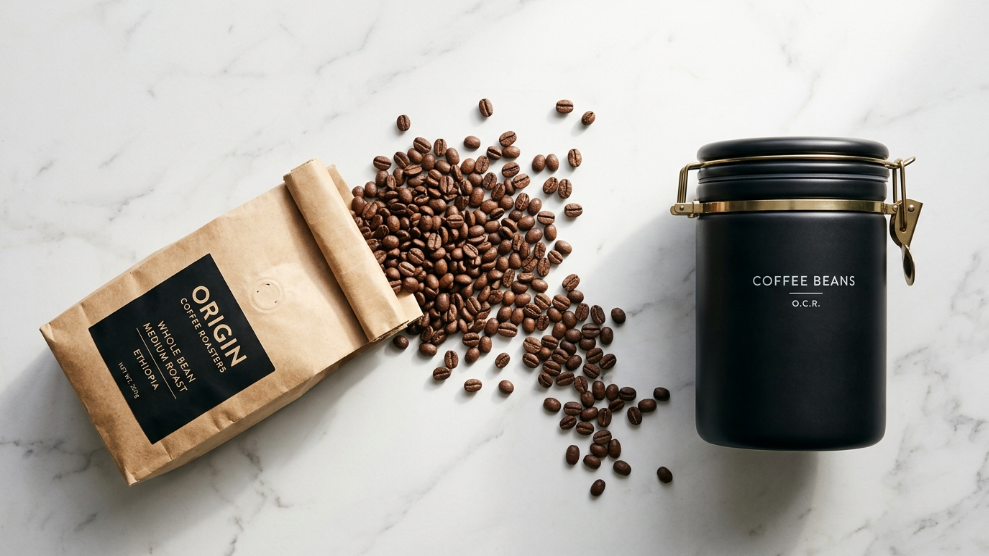
You can buy the best specialty coffee beans in the world and ruin them in a week through poor storage. The flavour compounds that make a fresh Ethiopian Yirgacheffe taste like blueberry and jasmine are volatile they evaporate, oxidise, and absorb moisture at room temperature if not properly protected.
Most people store coffee incorrectly without knowing it. This guide covers the seven most common mistakes, exactly what each one does to your coffee, and the practical fix for each.
Table of Contents
Why Coffee Goes Stale: The Science in Two Minutes
Freshly roasted coffee beans are alive in a chemical sense. Roasting drives out moisture and creates hundreds of volatile aromatic compounds. It also creates significant amounts of carbon dioxide, which remains trapped in the bean and slowly releases over 7 to 14 days after roasting a process called degassing.
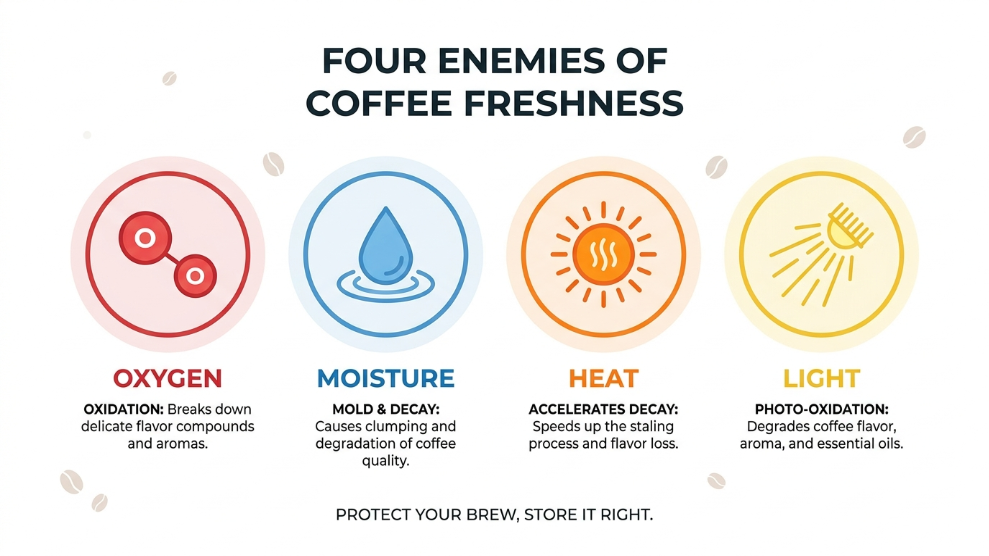
These aromatic compounds are what make fresh coffee taste exceptional. They are destroyed by four things:
Oxygen: Oxidation degrades aromatic compounds rapidly. Oxygen is the primary enemy of stored coffee. Once a bag is opened, the clock starts.
Moisture: Water molecules bind to coffee compounds and accelerate staling. Moisture also promotes mould in extreme cases. Even small amounts of humidity noticeably affect flavour.
Heat: Higher temperatures accelerate all chemical reactions, including the oxidation and degradation of aromatic compounds. Storing coffee near a stove or in a warm kitchen cupboard above the kettle accelerates staling significantly.
Light: UV light degrades coffee compounds through photodegradation. Clear glass containers placed on a kitchen counter in sunlight are particularly problematic.
All four can be controlled with correct storage. The solution is simpler than most people expect.
How Long Do Coffee Beans Stay Fresh?
Whole bean coffee: 2 to 4 weeks after the roast date if stored correctly in an airtight opaque container at room temperature.
Ground coffee: 1 to 2 weeks maximum after grinding. Ground coffee has dramatically more surface area than whole beans, exposing far more of the bean to oxygen. Grinding is the single biggest accelerator of staling.
Pre-ground supermarket coffee: Already stale when purchased in most cases. Mass-market coffee is often packaged months after roasting and has been in distribution, warehousing, and on store shelves before reaching you. The nitrogen-flushed packaging preserves it somewhat but cannot replicate the freshness of freshly roasted whole beans.
The roast date vs best-before confusion: Specialty coffee bags show a roast date. The relevant freshness window is calculated from this date, not from a best-before date. A bag showing a best-before date of next year gives you no useful information about freshness it was likely roasted months ago.
Optimal brewing window for most coffee: 7 to 21 days after the roast date. Within the first 3 to 7 days, beans may still be degassing significantly and some brewers prefer to wait. After 4 to 6 weeks, most aromatic complexity has diminished noticeably.
Mistake 1: Storing Coffee in the Refrigerator
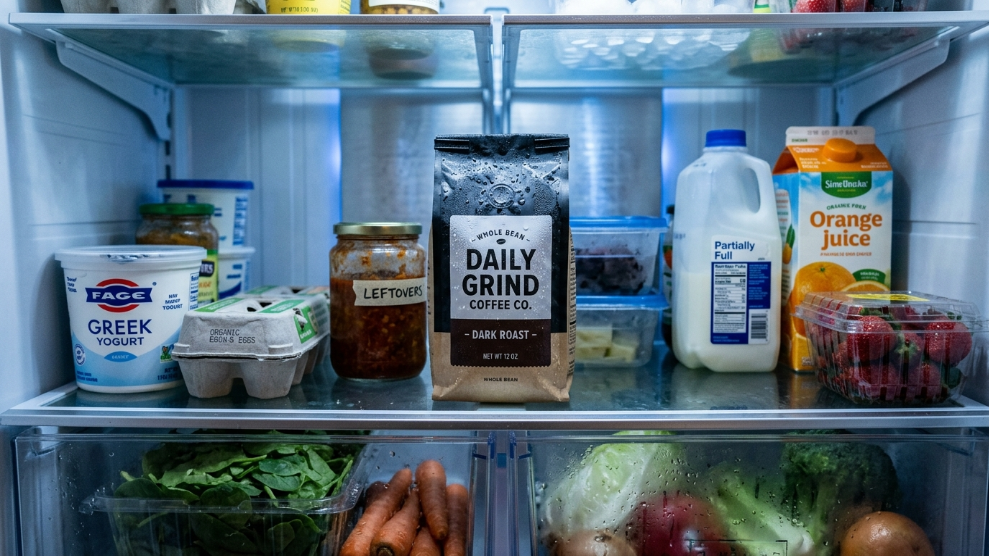
The refrigerator seems logical it is cold and dark, which addresses heat and light. The problem is moisture. A refrigerator is a humid environment, and every time you remove the coffee container and bring it to room temperature, condensation forms on the beans as cold air meets warmer ambient air. This moisture directly contacts the coffee surface and accelerates staling.
The refrigerator also contains odours from other foods. Coffee is highly porous and absorbs surrounding smells readily. Refrigerated coffee often develops off flavours absorbed from other fridge contents.
The fix: Store coffee at room temperature in an airtight, opaque container. A standard kitchen cupboard away from heat sources is ideal. The fridge is not necessary and actively harms coffee quality.
☕ Free Coffee Tool
Grinding fresh before brewing? Our Coffee Grind Size Chart shows the ideal grind for your method.
Mistake 2: Storing Coffee in the Freezer (Most of the Time)
The freezer is more nuanced than the fridge. Used correctly, it can extend the shelf life of coffee significantly. Used incorrectly, it causes the same condensation problems as the fridge, only more severely.
When freezer storage works: Storing an unopened, sealed bag of specialty coffee in the freezer for long-term storage (more than 4 weeks). The sealed bag prevents moisture contact. Freezing dramatically slows all chemical reactions, preserving the coffee close to its freshly roasted state. When ready to use, remove the entire bag from the freezer and allow it to reach room temperature completely without opening it before opening. This prevents condensation forming on the beans.
When freezer storage fails:
- Repeatedly removing and returning coffee to the freezer. Each removal-and-return cycle causes condensation and accelerates staling.
- Freezing opened bags without a truly airtight seal.
- Opening the bag before it has fully warmed to room temperature.
The recommendation for most home brewers: Do not freeze coffee unless you are storing a surplus you will not use for more than 3 to 4 weeks. Buy smaller quantities more frequently from a fresh roaster instead.
Mistake 3: Using a Clear Glass Container
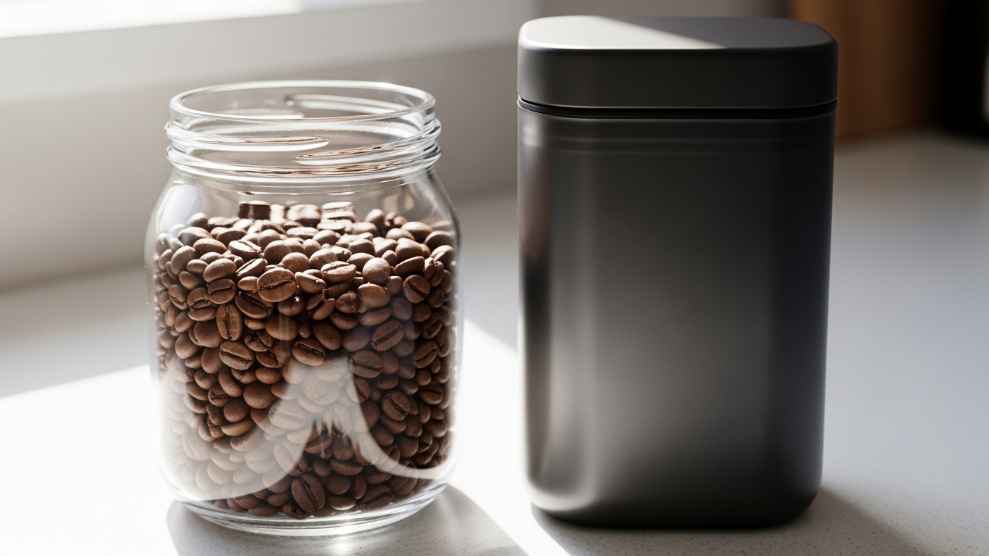
Clear glass jars are visually appealing on a kitchen counter. They are also one of the worst ways to store coffee. UV light and visible light both degrade aromatic compounds through photodegradation. Coffee in a clear glass jar on a sunlit counter stales measurably faster than the same coffee in an opaque container in a dark cupboard.
This is why specialty coffee bags use opaque kraft paper or foil rather than transparent packaging.
The fix: Use an opaque container matte black, stainless steel, or ceramic. If you prefer a clear container because you like seeing the beans, store it in a dark cupboard rather than on the counter.
Mistake 4: Buying Too Much Coffee at Once
Buying a kilogram bag of coffee to save money is counterproductive if you drink one cup per day. A kilogram bag takes a solo drinker approximately 55 to 65 days to finish. By day 30, most of the aromatic complexity has staled regardless of how the coffee is stored.
The maths:
- 1 double espresso per day: 18g per day, 500g bag lasts 27 days
- 2 pour overs per day: 34g per day, 500g bag lasts 14 days
- 4 drip coffees per day: 55g per day, 500g bag lasts 9 days
The fix: Buy in quantities that match your consumption rate. For single person households drinking 1 to 2 coffees per day, 250g every 2 weeks is the optimal purchase cycle. Specialty subscriptions from Atlas Coffee Club and Pact Coffee (UK) are calibrated to this kind of regular frequency, delivering fresh roasted beans just before you run out.
Mistake 5: Leaving Coffee in the Original Bag
Most specialty coffee bags include a one way degassing valve the small round disc on the bag that allows CO2 to escape from freshly roasted beans while preventing oxygen from entering. This valve is effective when the bag is sealed.
Once you open the bag, the seal is compromised. Most coffee bags do not re seal adequately with a fold and clip. The bag design was optimised for shipping and initial storage, not for ongoing daily use by the consumer.
Rolling the bag down tightly and using a bag clip reduces oxygen exposure but does not eliminate it. The valve is no longer functional once the bag is open.
The fix: Transfer opened beans to a purpose built airtight canister as soon as you open the bag. Leave the original bag empty or discard it. The canister becomes the primary storage vessel.
Mistake 6: Storing Coffee Near Heat Sources
The top of the fridge, the cupboard above the kettle, the shelf above the stove, the counter next to the coffee machine all of these are common storage spots and all are problematic for the same reason: heat exposure.
The cupboard above the kettle in a UK kitchen is a particularly common mistake. Every time the kettle boils, steam and heat rise into the cupboard. The temperature fluctuation between kettle use and non use accelerates staling through repeated thermal cycling.
The fix: Store coffee in a cupboard that does not experience regular heat from appliances. A low cupboard away from the stove and kettle is ideal. Consistent cool room temperature (15 to 20°C) is significantly better than a location with daily temperature swings.
Mistake 7: Grinding All Your Coffee at Once
Pre grinding a week’s worth of coffee when you buy a new bag seems efficient. It eliminates the daily grind step and makes brewing faster each morning. The problem is the dramatic acceleration of staling.
Ground coffee has 10 to 20 times the surface area of whole beans. Every particle of ground coffee is exposed to oxygen simultaneously rather than just the outer surface of the bean. Aromatic compounds evaporate and oxidise within hours to days of grinding rather than within weeks as with whole beans.
A bag of pre ground coffee that is 2 weeks old and was ground fresh 2 weeks ago is noticeably inferior to whole beans stored for the same period and ground immediately before brewing.
The fix: Grind immediately before brewing. Every time. This is the single most impactful storage decision you can make for cup quality. A quality burr grinder used daily for years costs less per day than the quality improvement it provides.
Full grinder guide: Best Coffee Grinders 2026
Best Coffee Storage Containers 2026
The ideal coffee storage container is airtight, opaque, and sized appropriately for your consumption rate. Here are the most recommended options in home barista communities:
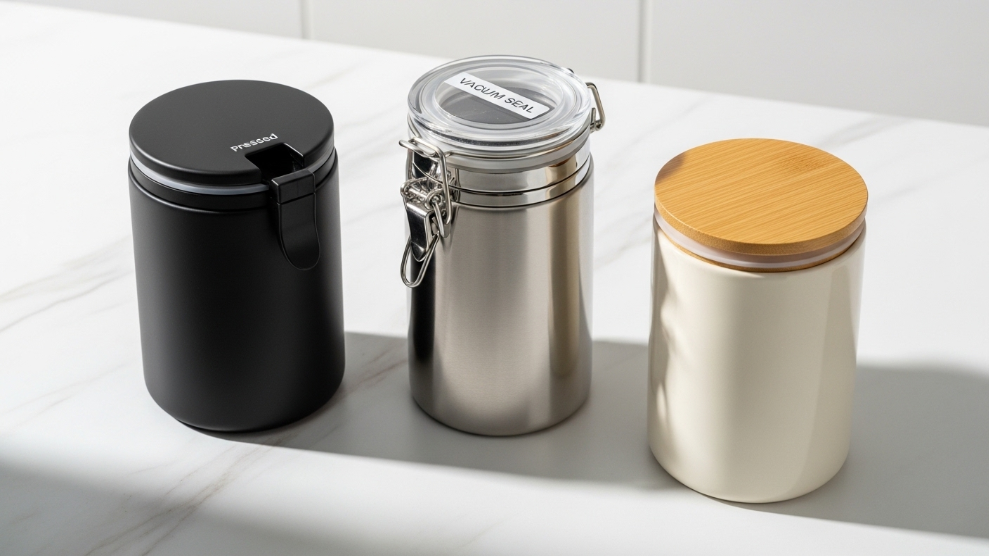
Airscape Coffee Container Best Overall
Check current price: Amazon US Airscape Coffee Container / Amazon UK Airscape Coffee Canister / Amazon AU Airscape Coffee Container
Price: $30 to $40 USA / £25 to £35 UK / AU$45 to AU$55
The Airscape is the most recommended coffee storage canister in home barista communities. Its patented inner lid pushes down to the level of the coffee beans and expels air upward as it descends, creating an oxygen free environment above the beans. A valve releases the expelled CO2 and oxygen from the top.
Available in 64oz (1.8L), 32oz (946ml), and small sizes. The 32oz is appropriate for 250 to 500g of beans. Available in stainless steel (most durable), ceramic, and plastic versions.
Who it is for: Anyone who wants a reliable, proven storage solution and does not mind a slightly higher price. The Airscape is a one time purchase that lasts years.
Fellow Atmos Vacuum Canister Best Vacuum Seal
Check current price: Amazon US Fellow Atmos Vacuum Coffee Canister / Amazon UK Fellow Atmos Canister
Price: $35 to $50 USA / £30 to £45 UK
The Fellow Atmos uses a twist lid mechanism to create a vacuum inside the canister. Twisting the lid pumps air out until a vacuum is reached, indicated by the lid depressing slightly. The vacuum dramatically reduces oxygen contact with the beans.
Fellows visual design is more minimalist than the Airscape and the vacuum mechanism creates a more complete oxygen barrier. However, some users report the vacuum degrades over time with the older generation, and fresh beans that are actively degassing can break the seal as CO2 escapes.
Note: Very freshly roasted beans (1 to 3 days post roast) still releasing significant CO2 may be better stored in a bag with a degassing valve first. Transfer to the Fellow Atmos once active degassing has slowed (after 3 to 7 days).
Coffeevac Best Budget Option
Check current price: Amazon US Coffeevac Coffee Container / Amazon UK Coffeevac
Price: $12 to $18 USA / £10 to £15 UK
The Coffeevac uses a button-press mechanism to push air out of the container. Less sophisticated than the Airscape or Atmos but significantly better than a folded bag or clip. For buyers who want improved storage without a large investment, the Coffeevac is a practical entry point.
UK Storage Note: Humidity
UK homes, particularly in autumn and winter, tend to have higher ambient humidity than many US or Australian homes. The moisture enemy of coffee is more relevant in the UK climate.
Storing coffee in an airtight container is more important in a typical British kitchen than in a dry US or Australian climate. Kitchens with poor ventilation, near washing machines, or in basements have the highest humidity risk for coffee storage.
Australia and New Zealand Storage Note: Heat
Australian summers in cities like Sydney, Melbourne, Brisbane, and Perth regularly reach 35 to 40°C. Kitchen temperatures above 25°C significantly accelerate staling. During summer months, the storage spot that works in winter (a kitchen cupboard) may become problematic.
During hot Australian summer weeks, if you do not have air conditioning in your kitchen, storing coffee in the coolest room in the house (not the fridge, but away from direct heat) is worth considering. A cool pantry, a lower cupboard, or a storage area away from west-facing walls that receive afternoon sun.
Frequently Asked Questions
Should I store coffee beans in the fridge?
No. The refrigerator introduces moisture through condensation and can transfer food odours to coffee. Store coffee beans at room temperature in an airtight, opaque container away from heat sources. The fridge is consistently contraindicated in coffee storage guidance from the Specialty Coffee Association and the National Coffee Association.
How long do coffee beans last?
Whole bean coffee stored correctly in an airtight container stays at peak flavour for 2 to 4 weeks after the roast date. It remains drinkable for up to 6 to 8 weeks but with noticeably diminished complexity. Ground coffee stales much faster within 1 to 2 weeks of grinding. Pre ground coffee purchased from a supermarket may already be weeks or months past optimal freshness.
Can you freeze coffee beans?
Yes, but only if done correctly. Freeze an unopened, sealed bag for long term storage (more than 4 weeks). When ready to use, allow the entire sealed bag to reach room temperature before opening to prevent condensation. Never repeatedly freeze and thaw coffee each cycle accelerates staling through moisture introduction.
What is the one way valve on my coffee bag?
It is a degassing valve that allows CO2 to escape from freshly roasted beans without allowing oxygen to enter. This is a deliberate design feature because freshly roasted beans emit significant CO2 for 7 to 14 days. Without the valve, the bag would inflate and potentially rupture. The valve is effective only when the bag is sealed.
Is an Airscape worth the money?
For someone who buys specialty coffee regularly, yes. At $30 to $40, an Airscape costs approximately the same as one bag of quality specialty coffee. If it extends the peak freshness of your beans by even one extra week per bag, it pays for itself quickly. If you buy supermarket coffee and drink it within a few days regardless, a purpose-built canister provides less obvious benefit.
Does ground coffee go stale faster than whole beans?
Dramatically faster. Grinding increases the surface area of coffee exposed to oxygen by 10 to 20 times. Aromatic compounds begin evaporating immediately after grinding. Coffee ground fresh immediately before brewing is noticeably superior to the same coffee ground 30 minutes earlier, and far superior to coffee ground the previous day. This is the single strongest argument for owning a burr grinder and grinding fresh every time.
Summary: The Correct Way to Store Coffee
Buy in quantities you will use within 2 to 3 weeks of the roast date. Transfer to an airtight, opaque container immediately upon opening the bag. Store at room temperature away from heat sources, moisture, and light. Grind immediately before brewing, not in advance. Do not use the fridge. Only use the freezer for long term storage of completely sealed, unopened bags.
Following these six guidelines costs nothing additional if you already own any airtight container, and extends the peak flavour window of every bag of coffee you buy.
For more on getting the best from your beans once stored correctly: Coffee to Water Ratio Guide
For finding the freshest coffee through a subscription: Best Coffee Subscriptions 2026
Sources used for this article: National Coffee Association / Specialty Coffee Association / Sweet Maria’s Coffee

Munir Ahmed is the founder of Coffee Craft Guide, dedicated to building the most thorough and honest coffee resource for home brewers worldwide. Combining SCA brewing standards with deep-dive research across global coffee communities (like r/espresso and Home-Barista) and thousands of verified reviews, Munir and his team deliver data-backed, expert coffee insights you can trust.